 Vietnamnet.vn

 Podcast



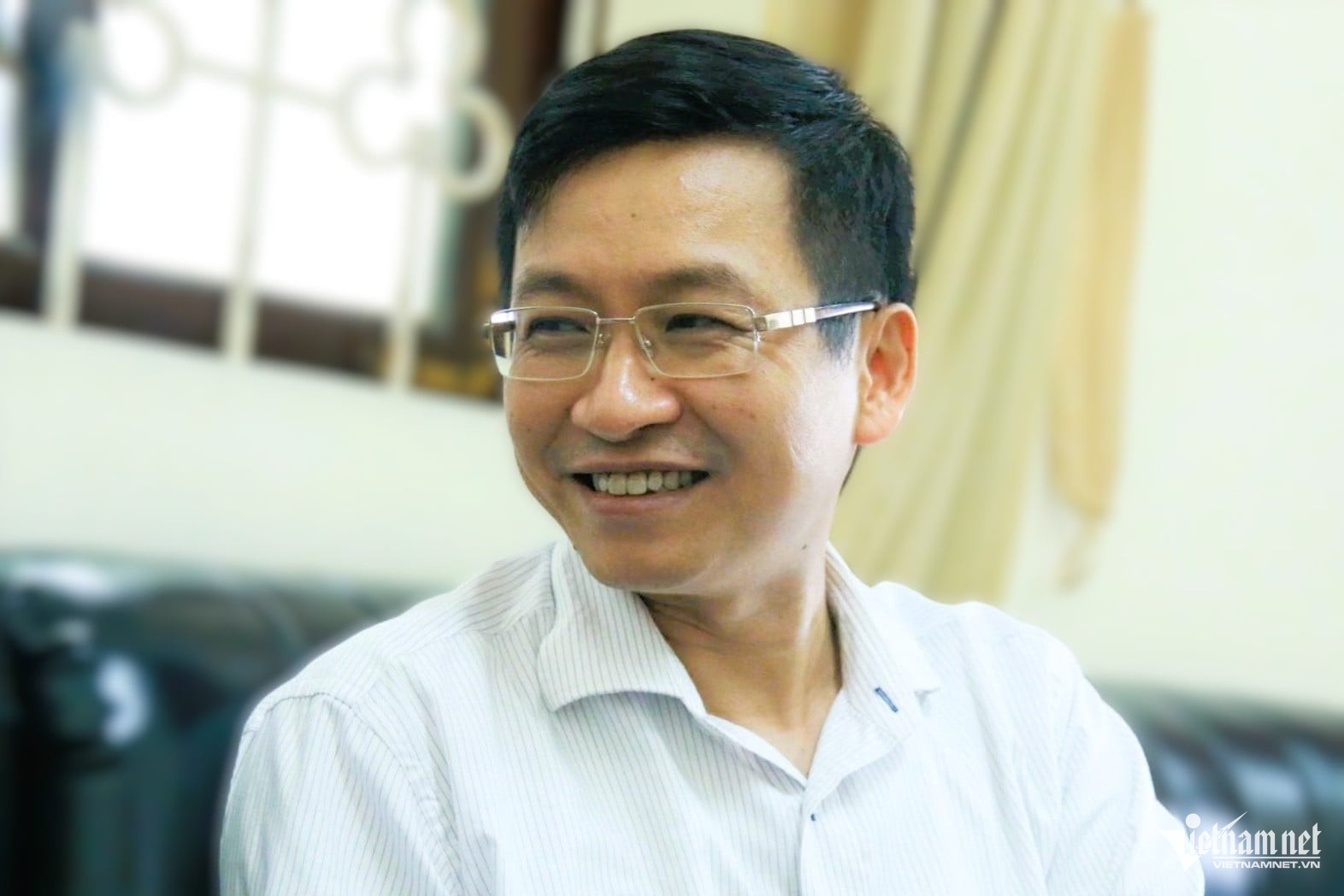
According to the Vietnam Academy of Science and Technology, the award was granted following a nomination by German mathematician Professor Christopher Deninger, honoring Professor Hai’s lifetime achievements in the field.
The Humboldt Research Award is presented to internationally recognized scholars whose work has made a significant impact over the course of their careers. Each award carries a value of €80,000 (US$87,000), and recipients are invited to collaborate with leading research institutions in Germany. Established in 1972, the program is one of the foundation’s flagship initiatives. Many past recipients have gone on to receive Nobel Prizes, underscoring its global prestige.
Professor Phung Ho Hai previously received the Von Kaven Award from the German Research Foundation (DFG) in 2006. He is also the lead author of the outstanding 2023 work titled “Finite torsors on projective schemes defined over a discrete valuation ring.”
Born in 1970, Professor Hai is a specialist in algebra and algebraic geometry. He served as director of the Institute of Mathematics under the Vietnam Academy of Science and Technology from 2017 to 2022, and is currently Secretary General of the Vietnam Mathematical Society.
He graduated from Lomonosov Moscow State University, earned his PhD from Ludwig Maximilian University of Munich in 1996, and obtained his Doctor of Science degree from University of Duisburg-Essen in 2005.
Throughout his academic career, Professor Hai has focused on areas such as quantum groups, Hopf algebras and category theory, publishing extensively in leading international mathematics journals. He is considered one of Vietnam’s prominent young scientists, having been exceptionally promoted to full professor in 2012. Notably, he was also the first Vietnamese to be elected as a Young Affiliate of The World Academy of Sciences.
Beyond research, Professor Hai has played an active role in mentoring young mathematicians and fostering international scientific collaboration. He has worked and taught at several prestigious institutions in Germany and abroad before returning to Vietnam to contribute long-term to the country’s mathematical development.
Thanh Hung
.svg)
