 Vietnamnet.vn

 Podcast


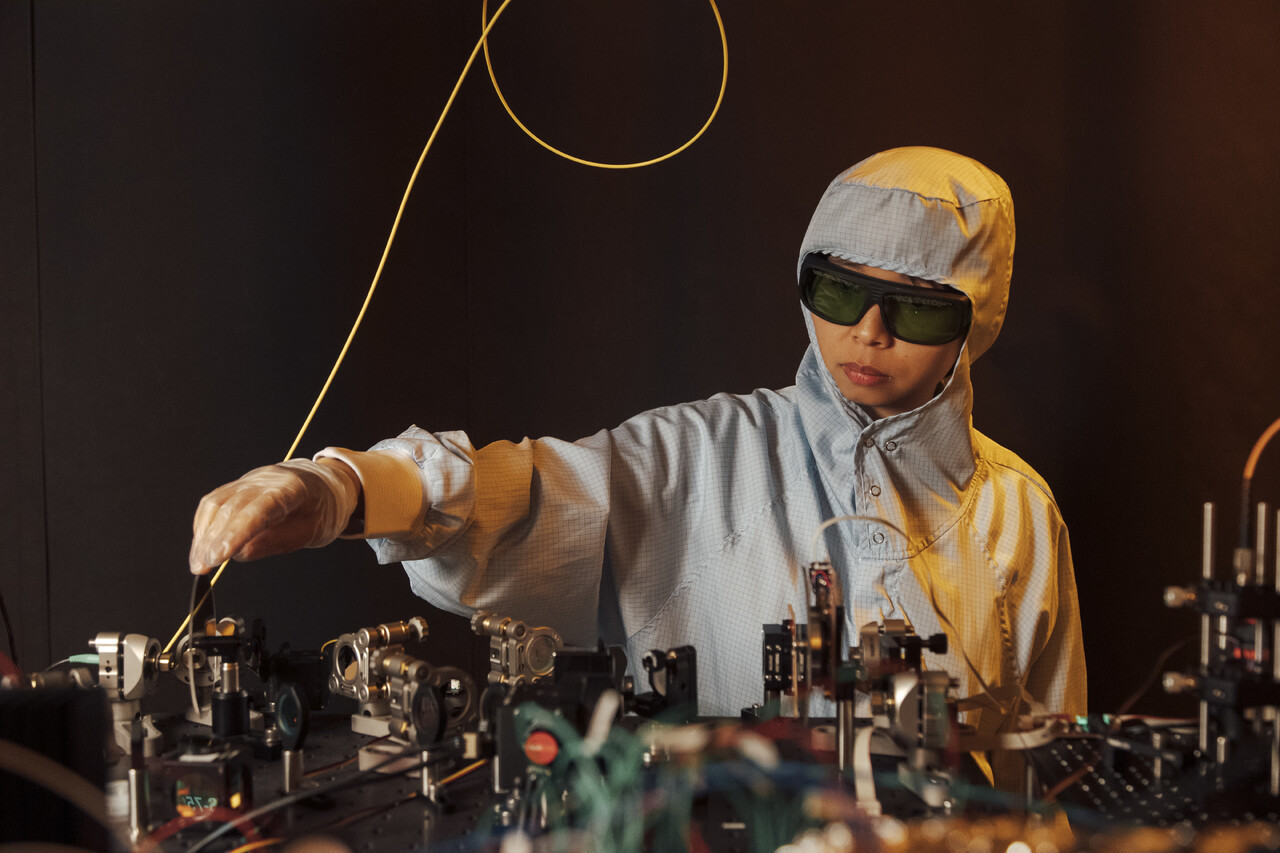
Dr. Au Thi Huong, a Vietnamese scientist based in France, leads semiconductor source production at Quandela, where she oversees the development and manufacturing of semiconductor-based single-photon sources, a fundamental technology behind photonic quantum computers.
Her journey began at Vietnam's National Center for Technological Progress (NACENTECH), before she moved to France to pursue doctoral research and eventually transitioned from academic science to industrial production.
Speaking with VietNamNet, Huong reflected on the challenges of turning laboratory breakthroughs into reliable commercial products, leading an international engineering team and connecting Vietnam's scientific talent with global high-tech industries.
From a Hanoi physics student to France's quantum technology industry
For Huong, the first major turning point in her career was not a scientific discovery but the decision to apply for a scholarship to study abroad.
She saw it as an opportunity to explore a new world, challenge familiar ways of thinking and discover how far she could go.
Physics had never seemed abstract or disconnected from everyday life to her. She was fascinated by how its principles governed the natural world.
Yet enjoying physics as a student and becoming a researcher were entirely different experiences.
It was only after entering a laboratory, conducting experiments, investigating unexplained phenomena and seeing her name appear on an international scientific publication for the first time that her understanding of scientific research fundamentally changed.
She realized that scientists were not simply extraordinary figures in textbooks. Ordinary people, driven by curiosity and equipped with rigorous research methods, could also contribute new knowledge to humanity.
After completing her doctorate at ENS Paris-Saclay, Huong moved from academic research into an industrial leadership role at Quandela.
That transition required a major shift in how she approached scientific success.
Turning laboratory breakthroughs into industrial products
According to Huong, the biggest difference between academic research and industrial production lies in the importance of consistency.
In a research laboratory, producing a single device with outstanding experimental results can be an exciting achievement.
In industry, however, the critical question is whether that performance can be reproduced reliably across hundreds or even millions of devices under real operating conditions.
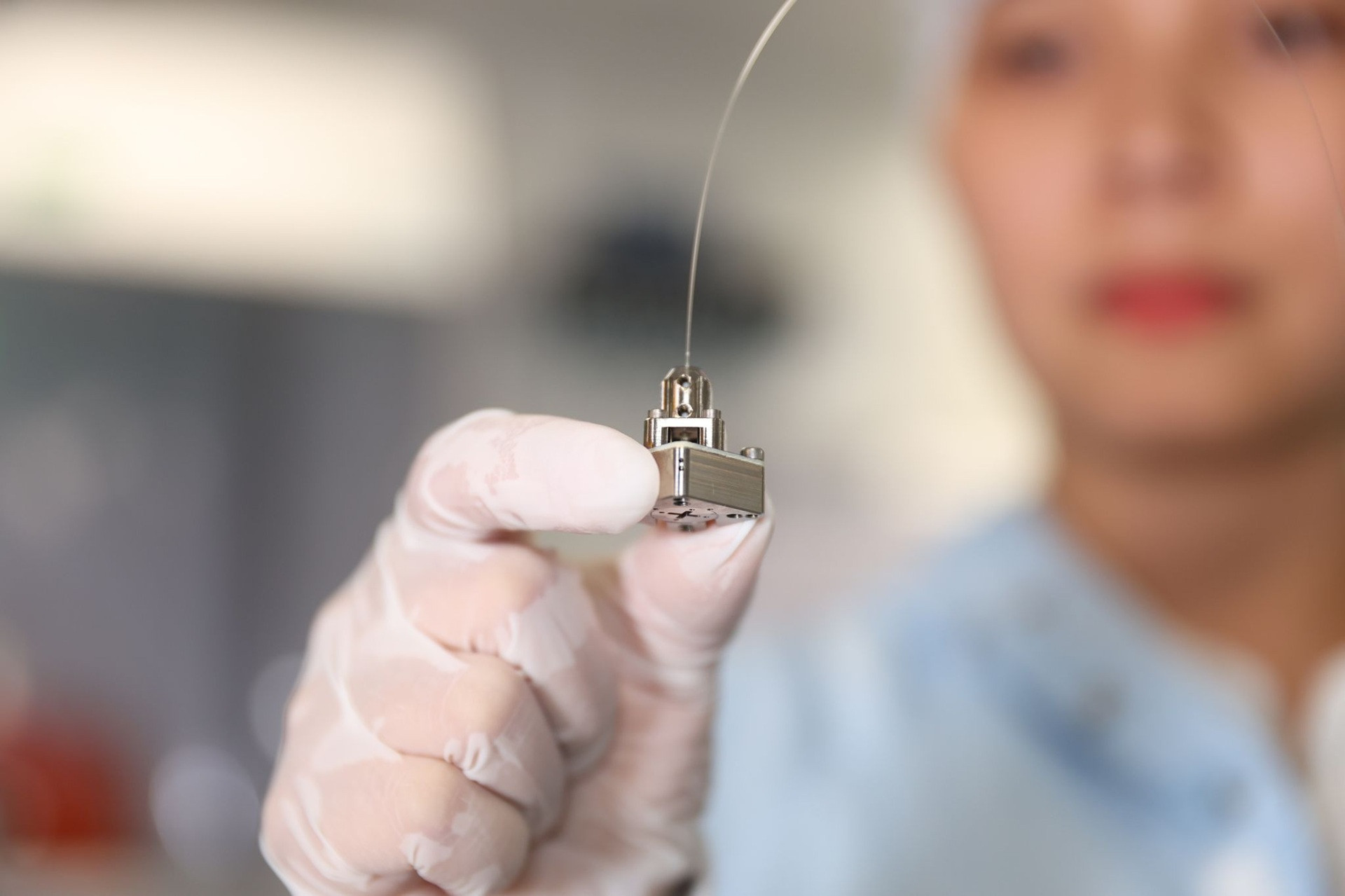
The components developed by her team measure only a few micrometers, far smaller than the diameter of a human hair.
Inside these tiny devices are semiconductor structures designed and fabricated with nanometer-scale precision.
Quantum technologies are particularly sensitive to small environmental changes, making stability and reliability essential.
For Huong and her colleagues, achieving peak performance is only part of the challenge. They must also understand and control the factors that influence how consistently a device performs over time.
One of the team's most significant achievements came between 2022 and 2025, when the photon collection efficiency of its devices increased from 25% to 80%.
Over the same period, photon output brightness at the optical fiber improved from 5% to 61%.
These advances were not the result of a single breakthrough.
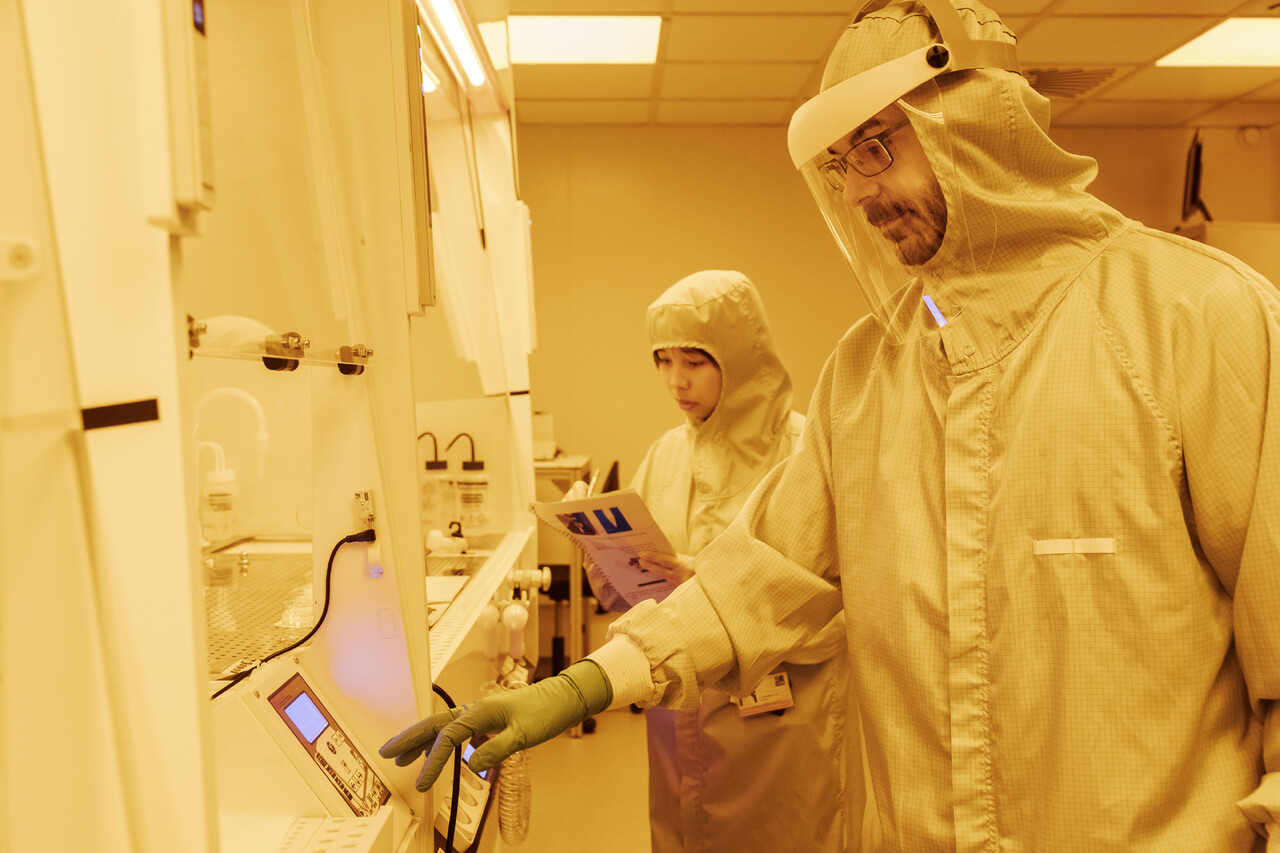
They came from years of systematically improving materials, redesigning optical structures, introducing new techniques, refining cleanroom manufacturing processes and analyzing hundreds of experiments that initially failed to meet expectations.
For Huong, the most rewarding aspect was not simply achieving impressive technical figures.
It was seeing her team understand the physical mechanisms behind the improvements, reproduce the results consistently in production and apply those lessons to the next generation of devices.
That, she believes, is what makes applied science so compelling.
A research finding can do more than deepen humanity's understanding of nature. It can become the foundation for a new technology, a breakthrough product and opportunities that were difficult to imagine at the outset.
Building credibility in a male-dominated industry
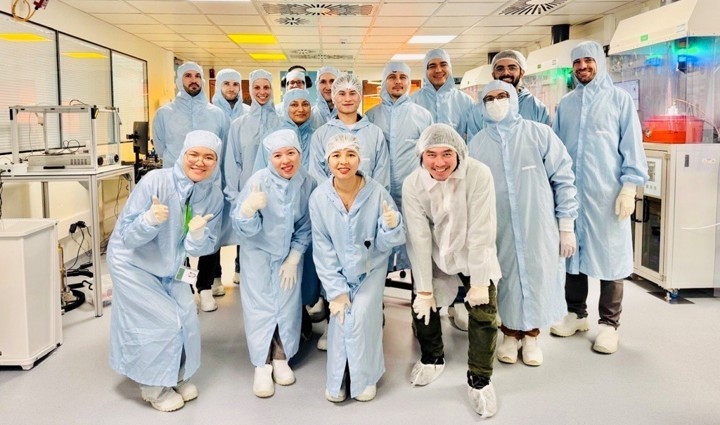
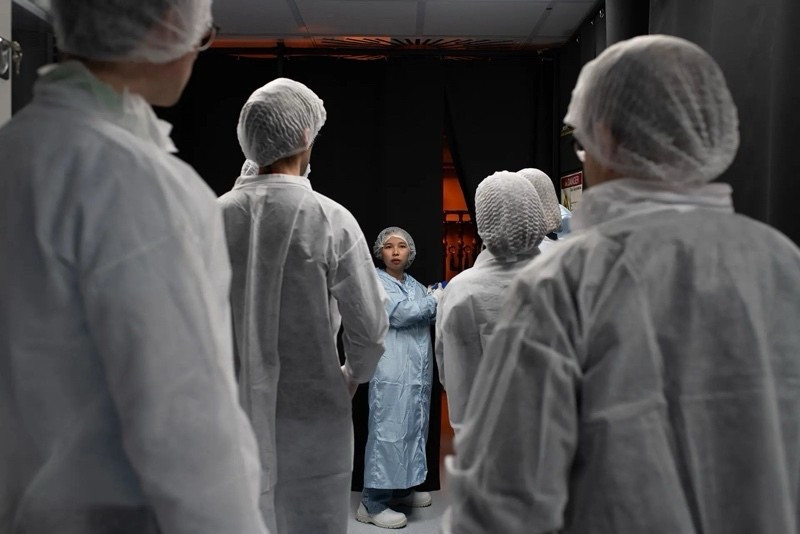
As a Vietnamese woman leading an international engineering team made up predominantly of men, Huong has developed a leadership philosophy grounded in technical competence, objectivity and openness.
She believes professional credibility in science and technology comes not from job titles or persuasive words, but from the ability to solve real problems.
A key principle in her work is clearly distinguishing established facts from hypotheses and identifying what still requires verification.
She also sees acknowledging mistakes as an essential part of scientific leadership.
Being willing to admit that a conclusion was incorrect does not diminish a leader's credibility, she said. Instead, it creates the trust needed for effective long-term collaboration.
For women pursuing careers in science and technology, Huong considers confidence rooted in genuine competence particularly important.
That confidence does not mean constantly trying to prove oneself better than others.
Rather, it means understanding one's strengths, defending ideas through evidence and sound reasoning, and remaining open to better approaches.
She rejects the notion that women must reshape their personalities to fit a particular leadership model.
Different individuals bring different strengths and working styles to a team.
What matters, she believes, is continuing to develop professional capabilities, taking responsibility and refusing to impose unnecessary limits on career opportunities.
From individual achievements to collective capability
Moving from hands-on research to production management has also changed Huong's definition of success.
A promising technology cannot develop sustainably if it depends entirely on a handful of exceptional individuals.
Industrial success requires an integrated ecosystem of equipment, manufacturing processes, quality control, skilled personnel, management systems and a clear roadmap for technological mastery.
Earlier in her career, Huong found satisfaction in personally solving difficult technical problems.
Today, she considers it more meaningful to help build a team capable of independently addressing complex challenges, including problems outside her own areas of expertise.
For her, the transition represents a shift from individual expertise to collective capability.
The goal is no longer simply to achieve personal scientific success, but to create a system in which people can continue learning, solving problems and advancing together.
Connecting Vietnamese talent with global high-tech industries
Huong's commitment to scientific development extends beyond her work at Quandela.
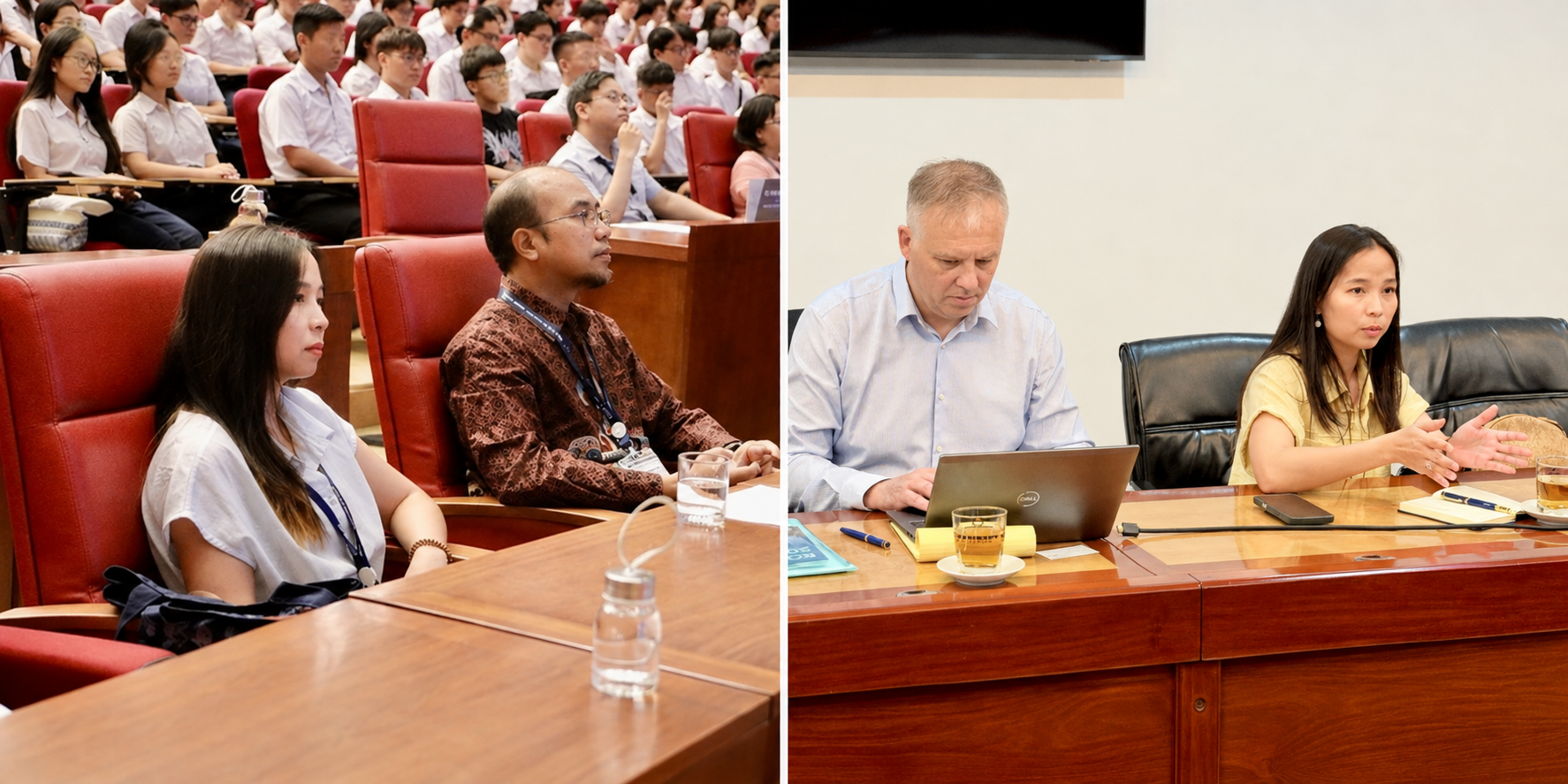
She also founded the Vietnamese High-Tech Youths in Europe network, an initiative designed to connect Vietnamese professionals working in advanced technology fields across the continent.
According to Huong, Europe is home to many highly capable Vietnamese specialists in semiconductors, artificial intelligence and quantum technologies.
However, their expertise and resources remain scattered.
At the same time, many Vietnamese professionals overseas lack detailed knowledge of Vietnam's domestic technological needs and emerging opportunities.
The network aims to bridge that gap and turn professional connections into concrete collaborative projects.
Huong believes contributing to Vietnam's development should not be measured solely by whether overseas Vietnamese professionals return to live permanently in the country.
Knowledge transfer, workforce training and connections to international supply chains can also make meaningful contributions.
For emerging industries such as quantum computing and semiconductors, she sees several practical starting points for Vietnam.
These include developing structured training programs, giving students access to advanced computational tools and establishing specialized experimental research groups.
Rather than attempting to master every aspect of complex technologies immediately, Vietnam could progressively develop expertise in individual components of core technologies.
Huong considers this a sustainable route toward deeper participation in global high-tech value chains.
Encouraging young Vietnamese women to pursue science
Drawing on her own experience, Huong encourages young Vietnamese women interested in science and engineering not to narrow their career choices prematurely.
She emphasizes that scientific careers are not reserved exclusively for those who excel at mathematics, physics or any particular academic subject.
Science and technology encompass a broad range of disciplines and require diverse abilities, including analytical thinking, creativity, perseverance, communication and organizational skills.
No one begins a career with all the necessary experience, she noted.
Young people should give themselves opportunities to explore unfamiliar fields before deciding that a particular path is too difficult or unsuitable for them.
Looking back on her own journey from Hanoi to France's quantum technology industry, Huong believes some of life's most meaningful turning points emerge only when people are willing to venture beyond what they already know.
Du Lam

