 Vietnamnet.vn

 Podcast



AI home appliances more accessible
Electronics manufacturers are rolling out more AI-integrated appliances to attract customers with enhanced features and greater convenience.
Several electronics retailers and supermarkets in Ho Chi Minh City confirmed to Nguoi Lao Dong that AI-powered products are showing solid sales growth. While conventional electronics see a 10–15% annual decline, AI-integrated products have recorded sales growth of around 30%.
Prices of modern, AI-enabled appliances are decreasing steadily, now only 10–30% more expensive than comparable traditional models. This makes them increasingly accessible to average consumers.
According to a representative from Aqua, a leading electronics brand, almost every manufacturer now offers AI-powered lines, resulting in more competitive pricing across the board.
iPhone 14 Plus sees sharp price drop
The iPhone 14 Plus, Apple’s first Plus variant officially sold in Vietnam, is currently the most affordable model of its kind on the market.
As reported by Gia Dinh & Xa Hoi, although the iPhone 14 Plus lacks the slim design or smart AI capabilities of the iPhone Air, it boasts a premium dual-camera system and a larger battery, making it attractive to users.
Even more appealing is the current pricing: the 128GB version is now available for just VND 17,390,000 (approximately USD 692), making it over USD 400 cheaper than the iPhone Air - an offer that is captivating many Vietnamese consumers.
Pork prices surge at markets as live hog prices near record
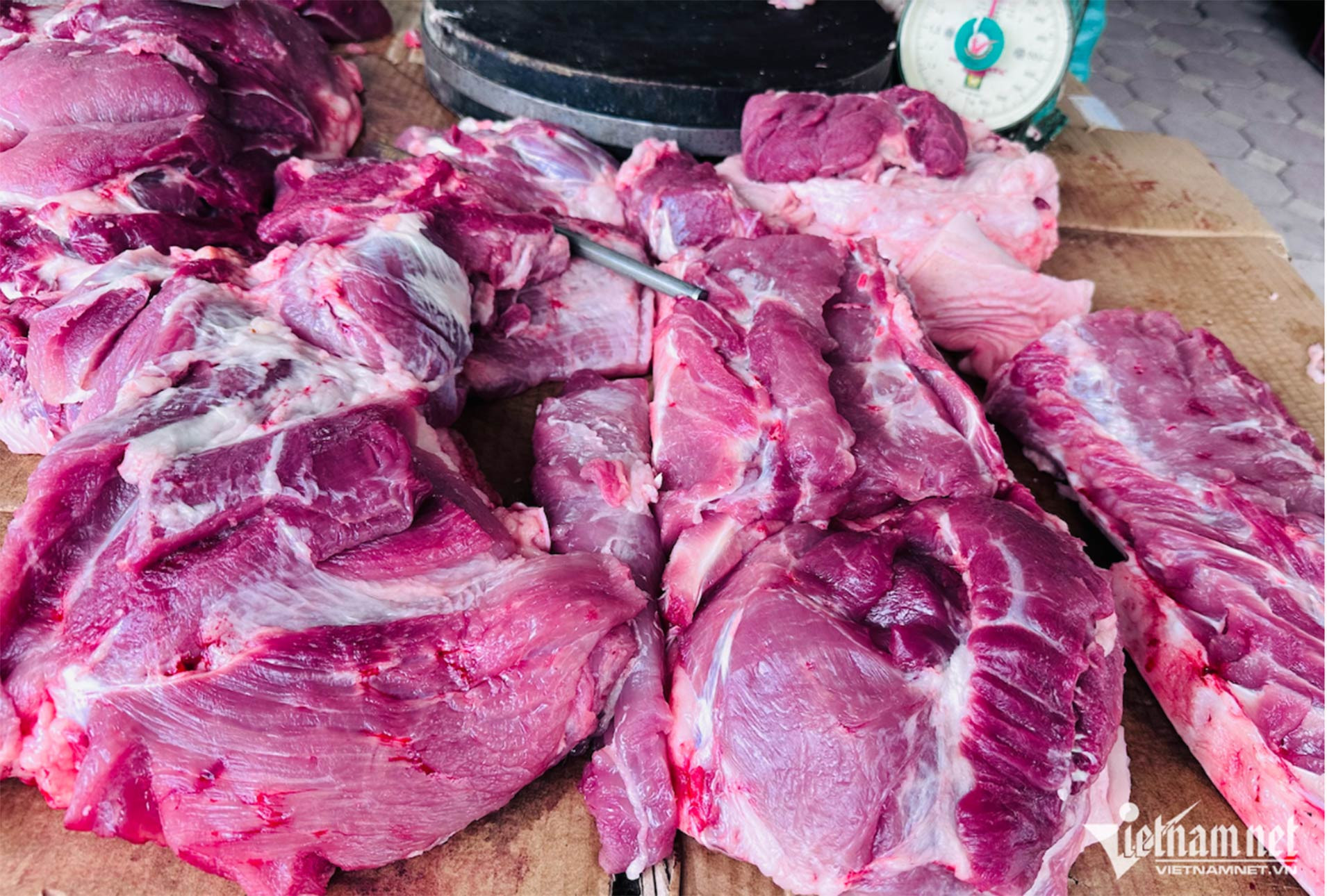
Live hog prices are climbing sharply, with traders scrambling to buy pigs despite farmers' reluctance to repopulate their herds due to African swine fever and rising input costs. The resulting supply shortage is driving up prices.
Currently, live hogs are being sold at around VND 68,000–70,000/kg (USD 2.70–2.78) in northern provinces. In central regions, prices range from VND 63,000–69,000/kg (USD 2.50–2.74), and in the south, they hold steady at VND 60,000–63,000/kg (USD 2.38–2.50).
At Hanoi’s traditional markets, vendors admit that pork demand remains weak, but prices have still increased by VND 5,000–15,000/kg (USD 0.20–0.60), depending on the cut.
At Dai Tu Market in Dinh Cong (Hanoi), vendor Xuan quoted prices as follows: pork shoulder, front leg, and boneless pork hock now cost VND 140,000–150,000/kg (USD 5.57–5.96), up by VND 10,000/kg since mid-November.
Similarly, pork belly and tenderloin have reached VND 160,000/kg (USD 6.36), and pork ribs now sell for VND 180,000/kg (USD 7.15).
Vietnam’s pepper exports to the U.S. hit premium prices
Data from the International Trade Center (ITC) shows that in the first nine months of 2025, the U.S. imported 64,260 tons of pepper, worth USD 488.6 million. While the volume fell 12.1% year-on-year, the value surged by 29.8%.
Vietnam emerged as the largest supplier, accounting for 69.3% of U.S. pepper imports.
Notably, Vietnam’s export price to the U.S. was the highest among the top five sources - Vietnam, Indonesia, Brazil, China, and Zimbabwe. Vietnamese pepper averaged USD 7,752/ton, up 52.1% year-on-year and exceeding the U.S. import market average of USD 7,603/ton.
New Year travel demand pushes airfares up
Vietnam’s 2026 New Year holiday unexpectedly stretches to four days, boosting demand in the aviation and tourism sectors. Many travelers have rushed to book flights for family visits or leisure trips, driving prices up by 20–50% compared to normal days.
According to Tri Thuc - Znews, during January 1–4, 2026, round-trip tickets between Ho Chi Minh City and Hanoi range from VND 2.4–3.4 million (USD 96–136) across all airlines. As a major domestic route served by six carriers, this line still offers multiple flight options at relatively modest price hikes.
In contrast, flights from Ho Chi Minh City to Da Nang have seen a steeper increase of 30–50%, now priced at VND 3.3–3.7 million (USD 132–148) with Vietnam Airlines, Vietjet, and Vietravel Airlines. Notably, fare differences of VND 200,000–500,000 (USD 8–20) among airlines depend largely on departure times.
Fresh areca nut prices plummet
As the harvest season ends, falling demand from Chinese buyers is driving fresh areca nut prices down sharply in Dak Lak Province.
According to Tien Phong newspaper, early in the season, areca nuts fetched VND 40,000–50,000/kg (USD 1.59–1.99), but prices have now dropped to just VND 10,000–12,000/kg (USD 0.40–0.48).
Traders have become increasingly selective, purchasing only long, uniform nuts that meet strict standards. Small, round varieties are now widely rejected, even at lower prices.
Areca nuts are primarily exported to China for candy production. However, reduced demand from Chinese partners has led to inventory build-ups in Vietnam, forcing collection centers to tighten quality requirements.
Hanh Nguyen
.svg)
