 Vietnamnet.vn

 Podcast


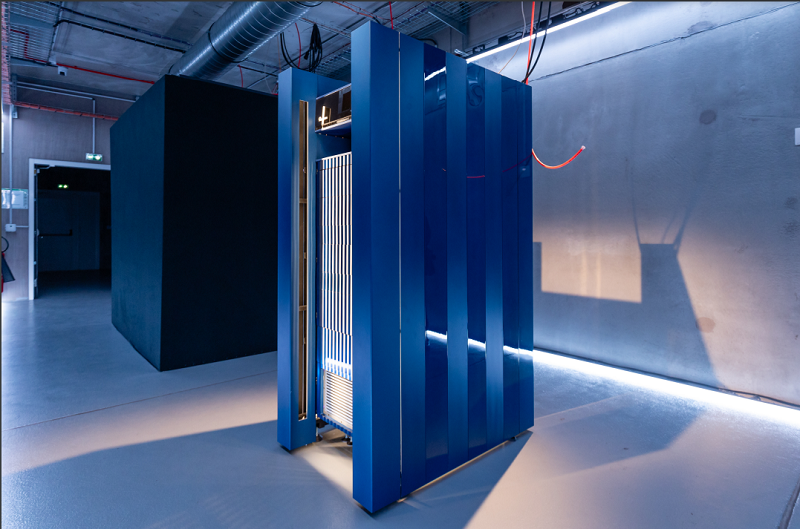
Quang Trung University in Quy Nhon, Gia Lai Province, is expected to become the first higher education institution in Vietnam to deploy a quantum computer, following a strategic partnership between Vietnamese technology company Quanova and French quantum computing firm Quandela.
The initiative was announced in Ho Chi Minh City on October 21 as part of efforts to strengthen cooperation between France and Vietnam in advanced technologies.
The system selected for deployment is MosaiQ, a photonic quantum computer developed by Quandela that uses particles of light, known as photons, to process quantum information.
Commenting on the project, Étienne Ranaivoson, Consul General of France in Ho Chi Minh City, emphasized its significance for bilateral technological cooperation.
"Quandela's commitment to bringing a quantum computer to Vietnam symbolizes the trust between our two countries in developing the technologies of the future," he said.
Photonic quantum computer designed for conventional data centers
Unlike quantum computing systems that rely on technologies requiring extremely low operating temperatures, Quandela's MosaiQ platform is based on photonics.
The system uses photons to encode and process quantum information, offering advantages in connectivity, scalability and cooling requirements.
According to the project announcement, this approach reduces the need for energy-intensive cryogenic cooling infrastructure.
MosaiQ is designed with a standardized physical footprint, allowing it to be integrated into the server-room infrastructure of conventional data centers rather than requiring highly specialized laboratory facilities.
This characteristic could make the technology more accessible to universities and research institutions seeking to develop practical expertise in quantum computing.
The planned installation at Quang Trung University represents a step toward introducing advanced quantum hardware into Vietnam's higher education and research environment.
Partnership includes training, software and a quantum experience center
The initiative extends beyond the installation of a quantum computer.
Under the cooperation program, Quanova and Quandela plan to support the development of a broader quantum technology ecosystem through education, research and practical activities.
The program includes faculty training and the development of specialized curricula to help university lecturers and students acquire quantum computing knowledge.
Participants will also receive software toolkits designed to support experimentation and application development.
Another component involves assistance in establishing a Quantum Experience Center, which is expected to provide opportunities for hands-on learning and technology demonstrations.
The partners also plan to launch a residency program for quantum innovators, creating an environment for researchers and developers to explore potential applications.
Technology events and hackathons will be organized to encourage experimentation, knowledge exchange and the development of practical solutions.
Together, these activities aim to build local expertise and prepare students, educators and technology professionals to work with emerging quantum computing systems.
Quandela urges Vietnam to begin learning quantum technology early
The announcement follows discussions about quantum technology during a semiconductor training course held at the University of Science and Technology of Hanoi (USTH) on October 19.
At the event, Marine Xech-Gaspa, Quandela's Director of Institutional Relations and Public Policy, stressed the urgency of gaining early experience with quantum computing.
She noted that many countries have already launched large-scale programs to develop expertise and establish technological capabilities in the field.
"Many countries have launched large-scale programs to master this technology. The reason is simple: we need to identify useful real-world problems early, because no one can wait until a perfectly developed quantum computer appears before taking action," she said.
"If you wait, you will miss the opportunities, because learning how to use the technology and generate real value from it takes time."
Her remarks highlighted the importance of building skills and identifying potential applications before quantum computers reach more advanced levels of performance.
For universities, early access to quantum hardware could help students and researchers become familiar with programming methods, experimental workflows and the practical limitations of current systems.
European companies explore quantum applications in cybersecurity and finance
Quandela has already worked with European telecommunications, financial and cloud computing companies to explore the integration of quantum processing capabilities into existing technology systems.
Its partners include Orange, Crédit Agricole and OVHcloud.
According to the company, these collaborations have examined applications such as malware detection, payment fraud prevention and random number generation for cloud server security.
These are among the early areas being explored for quantum technologies.
However, the potential applications of more advanced quantum computers extend well beyond cybersecurity and financial services.
Xech-Gaspa said future generations of quantum computing systems could eventually address substantially more complex scientific and industrial problems.
"In the future, as the computing capabilities of successive generations of quantum computers improve, we will be able to tackle much more complex problems, such as discovering and developing new drugs, researching advanced materials and designing next-generation batteries," she said.
Such applications remain longer-term ambitions as quantum computing hardware and software continue to develop.
For Vietnam, the planned MosaiQ deployment is intended to provide an early foundation for quantum education, research and experimentation.
By combining access to physical hardware with training and application development, the partnership seeks to help Vietnamese researchers and technology professionals prepare for future advances in quantum computing.
Du Lam

