 Vietnamnet.vn

 Podcast



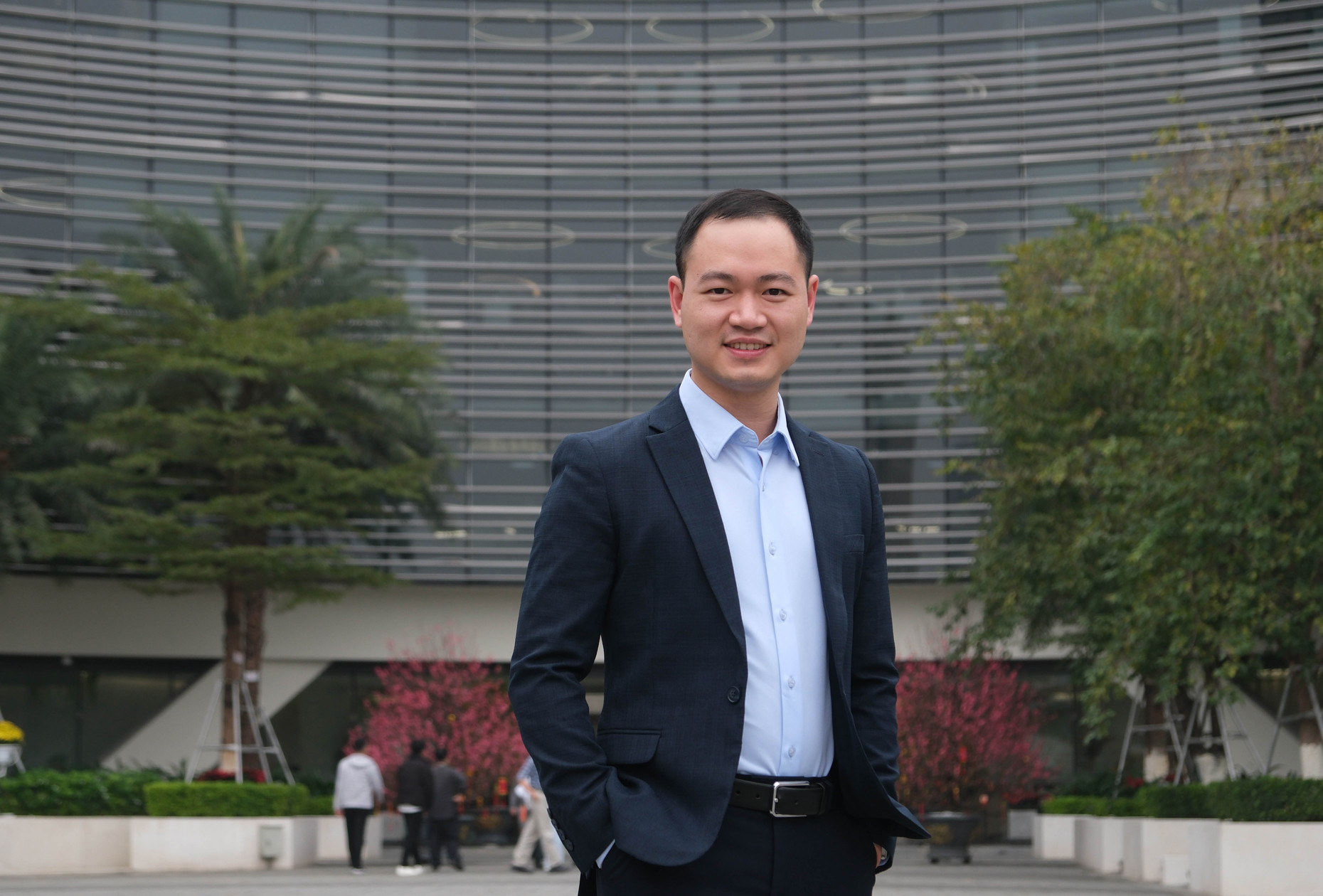
Before having the big data platform, data synthesis at Viettel relied entirely on manual processes. Each district had its own reporting staff and each province compiled data separately. This multi-layered system caused fragmentation, slow updates, and inevitable inaccuracies.
“To get an overall picture, we had to go through many intermediate steps. Decision-making was neither fast nor accurate,” said Dong, Deputy Head of Data Governance Solutions at Viettel’s IT Center, recalled.
That problem became the starting point for a project lasting nearly four years: building the Viettel Data Platform (VDP).
Not merely a storage system, VDP was designed as a data “backbone,” where all sources of information from different systems are collected, processed, and standardized in real time.
Since the system went into operation, a fundamental change took place: data is no longer an “end-of-day report,” but a continuous flow serving management.
When data becomes the “raw material”
The story of Nguyen Chi Dong is not just about technology. It touches upon a more core issue: management culture.
According to Dung, data only has value when it is “activated.” If it remains scattered in software, on paper, or in the memory of individuals, then no matter how much there is, it is meaningless.
“To make decisions based on data, there must be data at first. But more importantly, there must be a system to turn that data into usable information,” he said.
With a multi-industry, multi-national corporation like Viettel, the volume of data is enormous. But that very dispersion was the biggest barrier.
VDP was born to solve this problem: consolidating data, standardizing it, and creating real-time analysis capabilities.
Thanks to this, leaders can grasp daily revenue, the effectiveness of each service package, or abnormal happenings in operations- information that previously took many days, or even weeks, to synthesize.
In this regard, data is no longer a supporting tool but has become the “raw material” of management power.
“Popularizing AI” to break technology monopolies
If data is the foundation, then Artificial Intelligence (AI) is the tool to exploit that foundation. But this is a field traditionally seen as a “playground for experts.”
Dong did not accept this. He and his co-workers developed the Viettel Machine Learning Platform (vMLP) with a clear goal: to automate the entire AI process, from data processing to model deployment.
As a result, the development time for AI problems was shortened by up to 75 percent, helping many units apply AI without needing an excessively large team of experts.
“We want AI to no longer be the privilege of a small group, but to become a common tool for everyone,” he shared.
The philosophy of “popularizing AI” continued to be demonstrated in the GenBI system, where users can query data using natural language instead of depending on technical reports.
This is an important shift: from “reading reports” to “asking data.”
“Make in Vietnam” question
The platforms developed by Dong and his team went beyond mere ideas. VDP has now been deployed across the entire corporation and in 10/10 foreign markets, while also serving many large customers such as the Central Office of the Party, the Ministry of Natural Resources and Environment, Vietnam Oil and Gas Group, Vietnam Airlines and Northern Electricity Corporation.
The product has brought in revenue of more than VND260 billion and helped Viettel save $9.2 million in costs for purchasing foreign solutions.
Meanwhile, vMLP brings a benefit value of about VND12 billion per year, and the GenBI system helps save an additional tens of billions of VND by replacing equivalent solutions from abroad.
But the figures are not the most noteworthy thing. What is more important is the fact that a team of Vietnamese engineers can build core technology platforms, a field previously dominated by international corporations.
“We don't just make it to use; we make it to prove that Vietnamese people can master technology,” Dong said.
Thai Khang
.svg)
