 Vietnamnet.vn

 Podcast



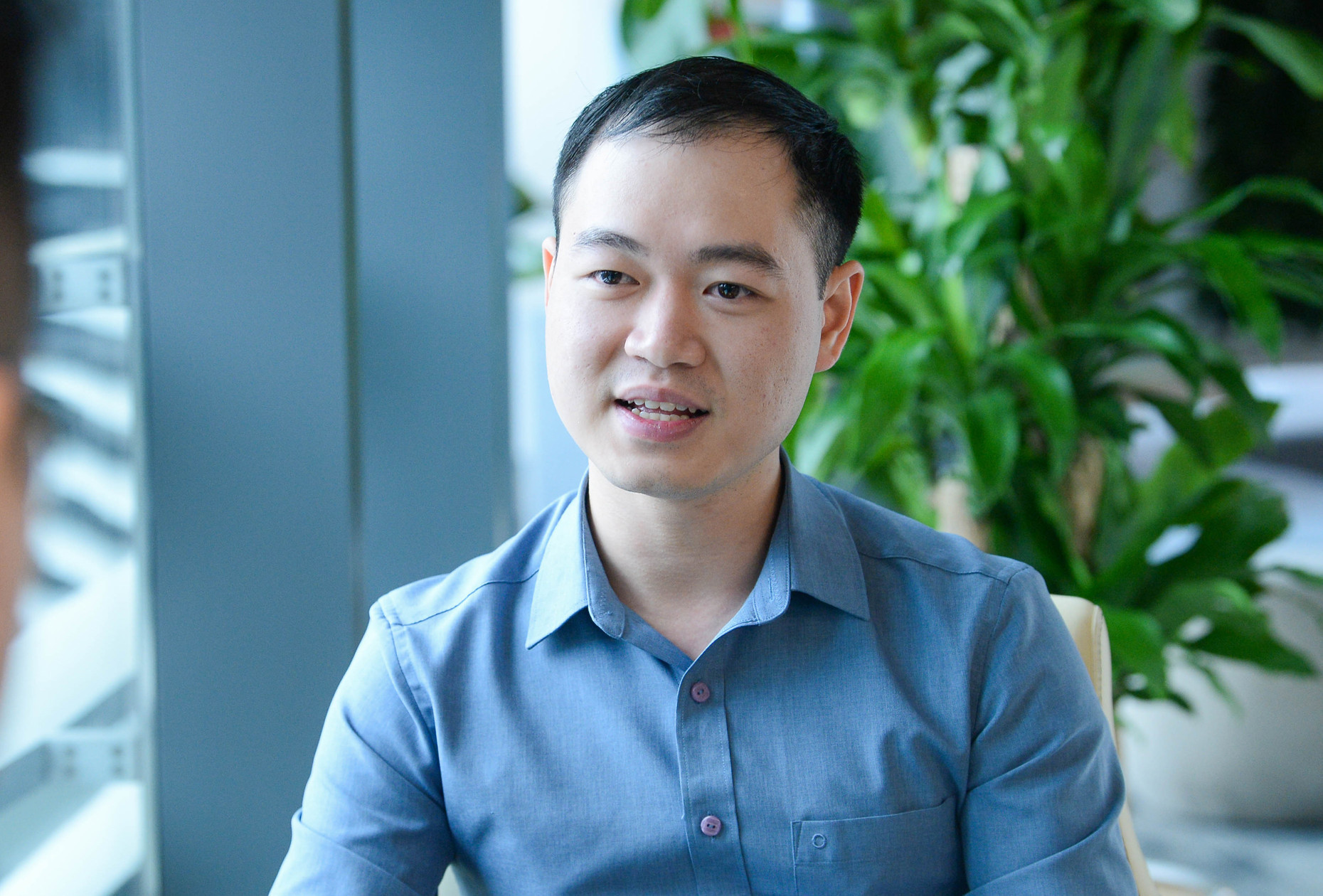
The challenge lay not only in technology but in connecting different components into a stable system that can operate every day.
“The hardest part was not a specific technology, but how to make everything operate synchronously and stably, and withstand real-world pressure,” Dong said.
With no “ready-made formula,” the team had to work, learn, and optimize simultaneously. From researching international technologies to testing in real environments, everything had to be built from scratch.
The development philosophy was also very “Viettel”: make the first version, put it into use, and then continuously improve it.
Ambition to bring data platform to global market
After being verified in the internal environment and successfully deployed at many large domestic agencies and enterprises, the data and AI platforms developed by Nguyen Chi Dong and his team are entering a new phase: conquering the international market.
According to Dong, right from the design stage, the system was not intended to serve Viettel Group alone but was oriented toward an open architecture that could be customized for many different types of businesses and organizations.
“We determined from the start: if we only solve internal problems, the product will be very difficult to develop long-term. The system was designed to be 'packaged' and deployed for many different customers, industries, and countries,” Dong said.
The advantage of “Make in Vietnam” platforms lies not only in competitive costs but also in flexible customization capabilities and, especially, the data security factor, an issue increasingly valued by nations.
In a context where many businesses and governments are wary of depending on foreign technology platforms, the solutions developed by Viettel have the opportunity to wedge themselves into markets seeking alternatives.
The international market is where they compete directly with global technology “giants”, the units that have decades of experience, complete ecosystems, and very high standards.
To join this game, the product needs to be good at the “usable” level but must also reach international standards in performance, stability, security, and scalability.
“We had to go through very strict evaluation processes, comparing directly with the world's leading platforms. The pressure is enormous, but is also an opportunity to affirm our capacity,” Dong said.
A noteworthy point is the “go with the ecosystem” strategy. Instead of approaching individual markets, Viettel's data and AI platforms can go along with telecommunications, e-government, or digital transformation projects that the group is implementing in many countries.
This approach helps shorten market entry time while taking advantage of local understanding and existing relationships.
In a broader sense, the fact that a core technology product developed by Vietnamese engineers can compete in the international market does not only have economic significance.
It is also an important test for the ambition to build a Vietnamese technology industry with export capacity, where “Make in Vietnam” is not just a domestic slogan but becomes a brand in the global market.
But the question remains: are Vietnamese enterprises persistent enough to pursue this long-term game? Because, as those involved admit, building a product is difficult, but bringing that product to the world and standing firm is a much harsher journey.
Being named one of the Outstanding Young Vietnamese Faces 2025 is a recognition for Nguyen Chi Dong. But his story does not stop with one individual.
It poses a larger question: when data and AI are becoming the foundation of every industry, are Vietnamese enterprises truly ready to switch to a “data-driven decision” model? As Nguyen Chi Dong himself affirmed, technology is not the biggest barrier. The biggest barrier lies in the way of thinking.
“When each organization truly considers data as the foundation, when every decision is based on figures, only then does digital transformation truly begin,” he said.
And perhaps, that is the “big problem” that engineers like him are pursuing, not just building systems, but contributing to changing the way an entire economy operates.
Thai Khang
.svg)
