 Vietnamnet.vn

 Podcast



Vietnam’s Ministry of Construction has issued a comprehensive statement identifying key causes behind the surge in real estate prices - particularly for residential housing and land - and proposed several measures to help curb price escalation and improve public access to housing.
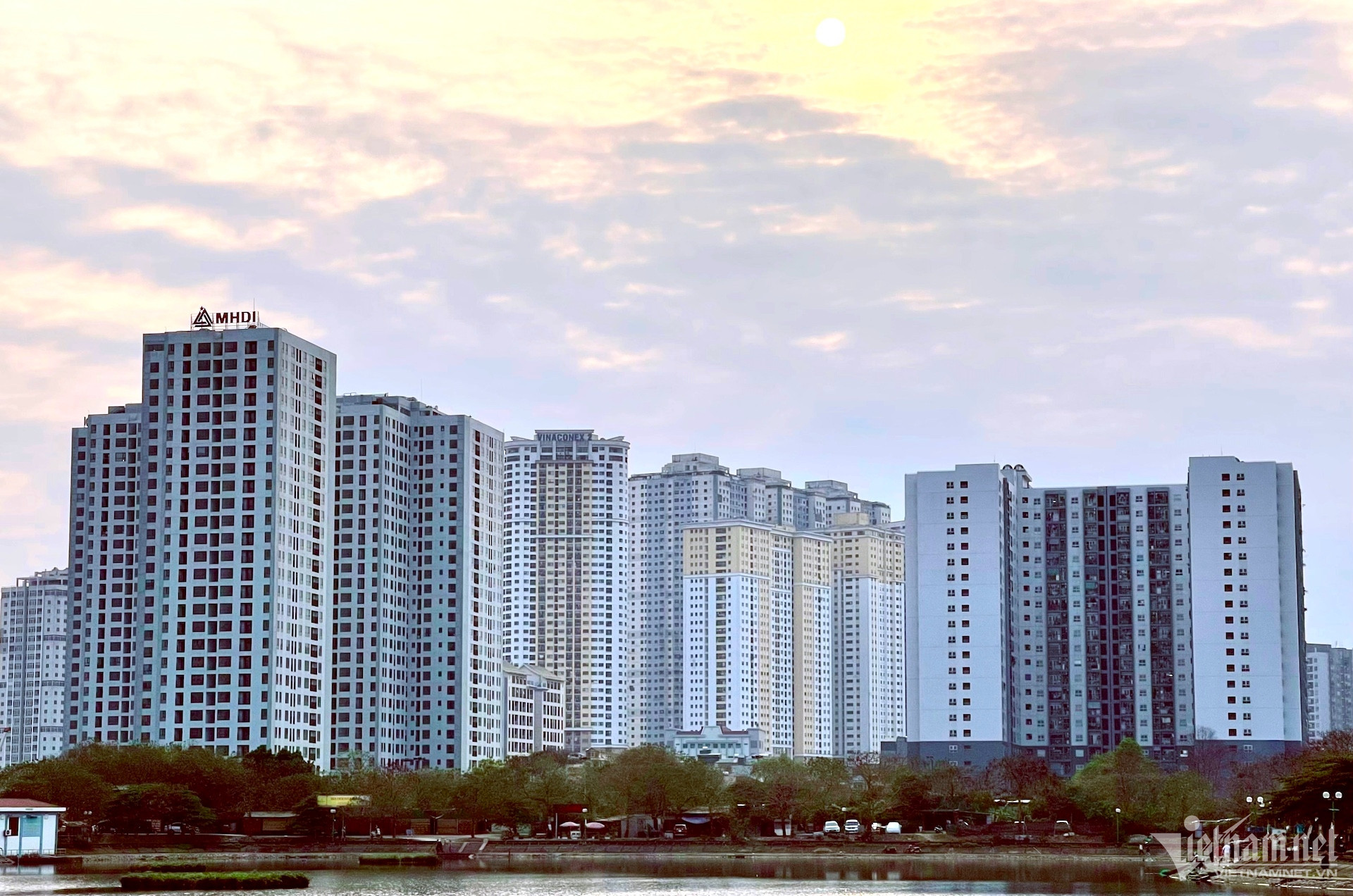
The Ministry’s comments were in response to a petition from constituents of Hanoi, submitted to the National Assembly ahead of its 10th session. Voters had requested clarity on the causes of rising prices for gold and real estate, and called for concrete policies to prevent excessive increases and restore price equilibrium.
According to the Ministry, housing prices have consistently risen beyond the financial reach of most citizens in recent years.
This spike is attributed to several factors. Chief among them are rising project development costs, especially land-use fees; limited housing supply; and an imbalanced product structure that fails to align with real-world demand - most notably the chronic shortage of affordable and social housing for low-income groups.
While Vietnam’s legal framework on land, housing, investment, and bidding has undergone updates, the Ministry notes that bottlenecks remain. Administrative procedures are still considered overly complex in several stages, and inconsistent interpretations of laws between agencies have delayed housing and real estate projects.
Furthermore, execution of laws on planning, land management, housing, land-use auctions, and project bidding in many localities has not met practical requirements. Approval processes, compensation, site clearance, and land valuation remain slow, prolonging project timelines and raising development costs.
The Ministry also points out that many housing projects face unresolved legal hurdles, stalling construction despite significant capital investment. This stagnation wastes land, ties up capital, and pushes up final sale prices.
Another structural issue is the market’s product segmentation. The majority of developments focus on mid- to high-end housing, while affordable options - especially for urban low-income earners - are extremely limited.
Additionally, some real estate developers, investors, and brokers engage in speculative practices, hoarding inventory, inflating prices, and spreading misleading information that distorts the market.
Government's action plan to address the crisis
To address these issues and make housing more accessible - particularly social housing - the Ministry has submitted a set of proposals to the Prime Minister.
Among them is a pilot initiative to establish State-managed Real Estate and Land Use Rights Trading Centers, for which the Ministry is preparing a proposal to submit to the National Assembly.
The Ministry is also pushing for rapid implementation of a new decree on the National Housing Fund and a government resolution on breakthrough strategies for social housing development.
A new policy framework focused on affordable housing is being studied and will be proposed as part of amendments to the Housing Law in 2026.
Meanwhile, the State Bank of Vietnam is reviewing credit regulations for the real estate sector to ensure lending policies are aligned with market conditions. The Ministry of Finance is tasked with assessing tax and financial policies related to real estate to match current economic circumstances.
Relevant ministries and agencies have been directed to continue reforming laws on land, investment, construction, and urban-rural planning, with the goal of removing legal obstacles, simplifying administrative procedures, and easing real estate prices.
Prices soar to gold-standard levels
In Q3 2025, prices in major cities such as Hanoi and Ho Chi Minh City remained high. Newly launched residential projects averaged 78 million VND/sqm (approx. 3,200 USD), with over 30% of new inventory priced above 100 million VND/sqm (approx. 4,100 USD).
In Hanoi alone, primary market apartment prices surged to an average of 95 million VND/sqm (approx. 3,900 USD), with more than 43% of new offerings exceeding 120 million VND/sqm (approx. 4,900 USD).
In contrast, a small number of social housing projects remain at more accessible price points. One such development is set to open at 18.4 million VND/sqm (approx. 755 USD), meaning apartments would start around 920 million VND (approx. 37,800 USD) - a rare exception in a landscape dominated by luxury developments.
Hong Khanh
.svg)
