 Vietnamnet.vn

 Podcast



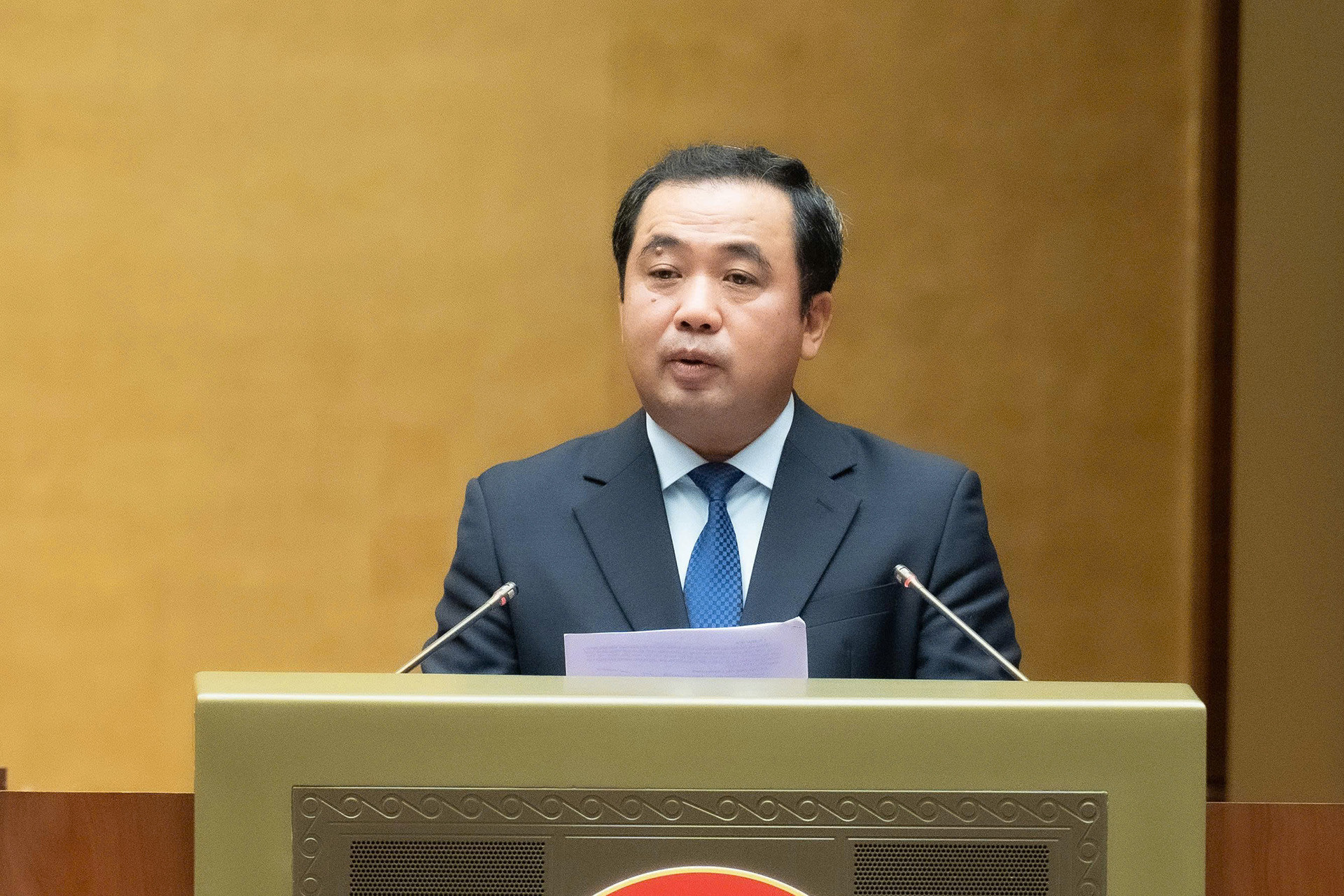
Minister of Agriculture and Environment Tran Duc Thang on December 3 presented a report on the investment policy for three national target programs: new rural development, sustainable poverty reduction, and socio-economic development in ethnic minority and mountainous areas in 2026–2035.
The Minister said the program will be implemented over 10 years (2026–2035), divided into two phases: phase 1 from 2026–2030 and phase 2 from 2031–2035.
In phase 1, the total resources mobilized are expected to be at least VND1.23 quadrillion. Initially, the central budget will directly allocate around VND100 trillion (including VND70 trillion for investment and development, and VND30 trillion in recurrent expenditure), accounting for 8 percent of total mobilized resources for the program.
During implementation, the Government will continue to balance the central budget to prioritize additional support based on actual conditions and needs to ensure sufficient resources to fulfill the assigned goals and tasks.
Local budgets at all levels (province and commune) will contribute VND400 trillion, accounting for 33 percent. Integrated capital from other national target programs, schemes, and projects will amount to around VND360 trillion, or 29 percent.
Policy credit capital (state budget) will exceed VND22.6 trillion, accounting for 2 percent. Contributions from enterprises as well as community and citizen mobilization are expected to reach around VND348 trillion, or 28 percent.
For phase 2, Thang said based on the results of phase 1, the Government will submit to the National Assembly for a decision on resource allocation.
By 2030, the Government aims to increase rural residents’ average income by 2.5–3 times compared to 2020. Average income among ethnic minorities is targeted to reach two-thirds of the national average.
The multidimensional poverty rate is expected to decrease by 1–1.5 percent annually nationwide, while the poverty rate among ethnic minority and mountainous areas is targeted to fall below 10 percent, with poor communes reducing multidimensional poverty by at least 3 percent annually.
The program aims for 100 percent of poor communes nationwide to escape poverty; and for ethnic minority and mountainous areas to no longer have communes and villages in very difficult conditions.
By 2030, the program targets about 65 percent of communes meeting new rural standards; and 10 percent achieving modern new rural standards as recognized under the pilot framework of the central Government and specific criteria issued by provincial authorities.
It also aims for more than 85 percent of communes and villages in ethnic minority and mountainous areas to have adequate essential infrastructure that meets socio-economic development and living standards.
National sustainable development goals for 2030 are expected to be basically completed, including planning, relocation and stabilization of populations where necessary; ensuring essential infrastructure, especially for ethnic affairs agencies and educational facilities that meet teaching and learning requirements; and guaranteeing that 100 percent of ethnic minorities and poor households have health insurance and access to basic free healthcare services.
Goals for 2035
By 2035, the program aims for rural per capita income to increase at least 1.6 times compared to 2030; average income of ethnic minorities to reach two-thirds of the national average; and for the multidimensional poverty rate to continue decreasing by 1–1.5 percent per year under the 2031–2035 poverty standards.
At least 50 percent of disadvantaged communes and villages in ethnic minority and mountainous areas are expected to be lifted out of hardship; 4–5 provinces and cities in these regions will no longer have difficult communes or villages; and 10–12 provinces and cities nationwide will be recognized as having completed new rural development tasks, with 4–5 achieving modern new rural standards.
The Government is requesting that the National Assembly allow the extension of implementation and disbursement of funds for the 2025 national target programs (including funds carried over from previous years) until December 31, 2026.
Provincial-level People’s Committees will be authorized to adjust public investment plans for component projects that no longer have target beneficiaries or expenditure tasks, reallocating capital to other projects or tasks within the national target program extended to 2026.
Lam Van Man, Chair of the Ethnic Council, said the Council has agreed on the necessity of merging the three national target programs.
The merger will help reduce overlap in policies, beneficiaries, and geographical areas; address shortcomings in the implementation of the three programs during 2021–2025; improve investment efficiency; and better concentrate resources for the most disadvantaged regions and ethnic minority and mountainous areas.
Tran Thuong
.svg)
