 Vietnamnet.vn

 Podcast



Vietnam's industrial parks need to transition from traditional infrastructure management to data-driven operations powered by digital technologies and smart energy systems if they are to attract high-quality foreign direct investment (FDI), experts said at a forum on July 10.
Speaking during a panel discussion on next-generation industrial parks, policymakers and business leaders shared their views on how Vietnam's industrial park model must evolve to remain competitive in a rapidly changing global environment.
High-quality FDI demands new industrial park standards
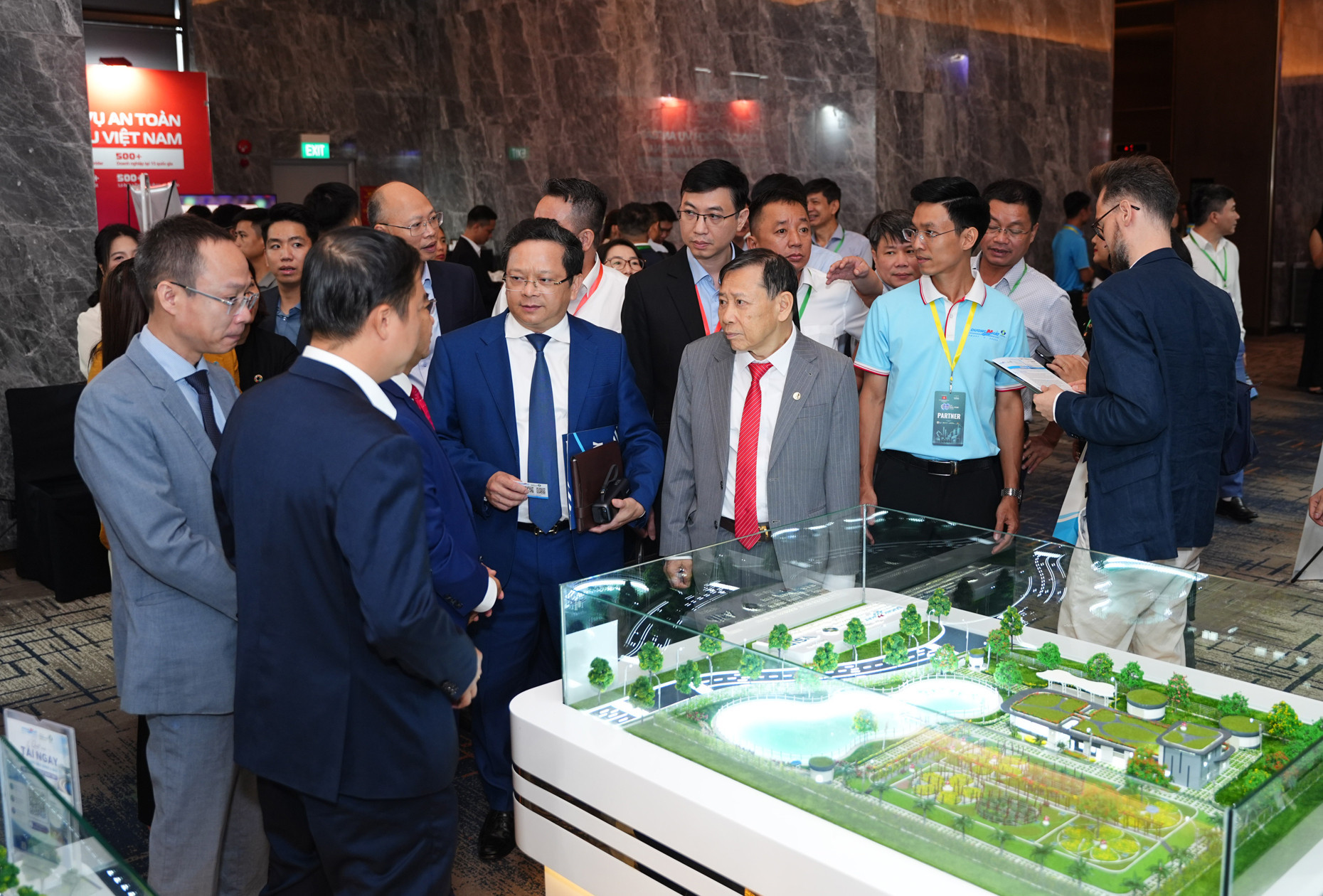
Dang Duc Anh, acting director of the Institute for Policy and Strategy Studies, said the global economy is facing increasingly complex challenges, including climate change, net-zero commitments, supply chain disruptions driven by geopolitical tensions and the rapid development of artificial intelligence (AI).
According to Anh, these trends are fundamentally reshaping industrial parks around the world.
Green industrialization and carbon reduction across supply chains have become central pillars of modern industrial policy, while environmental and circular economy standards are no longer optional but essential for industrial restructuring.
At the same time, digital technologies, AI and data analytics are accelerating the adoption of smart manufacturing and real-time data-driven management.
These technologies are also improving supply chain forecasting, risk management, design automation and quality control.
Anh noted that multinational corporations continue to channel investment toward economies offering political stability, strong supplier networks, advanced manufacturing capabilities, smart energy systems and deep integration into global value chains.
Southeast Asia, and Vietnam in particular, remains an attractive destination for international investment.
According to the Statistics Office under the Ministry of Finance, Vietnam attracted more than US$34.65 billion in registered FDI during the first six months of 2026, up 61% year-on-year, with investment concentrated in high technology, electronics and manufacturing.
The new wave of FDI is no longer focused solely on major cities such as Hanoi, Hai Phong and Ho Chi Minh City. It is increasingly expanding into provinces with strong industrial park development potential, including Phu Tho, Thai Nguyen and Lao Cai.
As of December 2025, Vietnam had nearly 480 industrial parks, including 324 operational parks. However, most continue to operate under traditional management models.
Anh said industrial parks seeking to attract high-quality investment must evolve into ecosystems that are safe, transparent, technologically ready and cost-efficient.
Solutions such as Intelligent Operations Centers (IOC), ICT infrastructure, AI applications and cybersecurity systems protecting critical infrastructure are becoming essential benchmarks for meeting international standards.
A "passport" for quality investment
Nguyen Thy Dung, vice chairwoman of the Vietnam Industrial Real Estate Association, asked a key question during the discussion: "Where does Vietnam stand on the global map of next-generation industrial parks?"
She said internationally recognized standards for next-generation industrial parks have become a "passport" for attracting high-quality FDI.
Although Vietnam currently has 475 industrial parks, only a small number meet the criteria for next-generation industrial parks.
"At present, only about 1% to 2% of Vietnam's industrial parks are undergoing ecological transformation," Dung said.
She identified five major forces driving industrial park transformation.
Among them are the European Union's Carbon Border Adjustment Mechanism (CBAM), which took effect on January 1, 2026, growing demand for renewable energy and increasingly stringent environmental, social and governance (ESG) requirements.
Compared with international benchmarks, Vietnam's industrial parks currently satisfy only 5% to 25% of the required criteria, depending on the category being assessed.
Dung said Vietnam now stands at a critical turning point, with next-generation industrial parks becoming essential to securing high-quality foreign investment.
Digital management becomes essential
From a local government perspective, Tran Van Thanh, chief digital transformation officer at VNPT Hai Phong, said the city attracted more than US$3 billion in FDI during the first half of 2026, of which US$2.85 billion flowed into industrial parks and economic zones.
Thanh said industrial park and economic zone management authorities now function much like "mini governments."
Continuing to rely on paper documents, phone calls and email for administration would create mounting pressure and make real-time decision-making impossible.
Industrial parks have participated in every stage of the digital transformation process, from identifying operational challenges and designing solutions to implementing new management systems.
On September 13, 2021, Hai Phong officially launched its digital management and operations platform for industrial parks and economic zones.
VNPT has proposed an integrated digital management system combining AI, digital mapping and data connectivity to support smart industrial park management.
Cybersecurity emerges as a critical safeguard
Alongside digital transformation, cybersecurity has become an increasingly urgent priority for industrial parks and manufacturing facilities.
Bui Trung Thanh, a representative of Viettel Cyber Security, said modern manufacturing depends not only on machinery but also on connected systems and data.
"As a result, cybersecurity deserves special attention," he said.
He warned that industrial enterprises and industrial parks are increasingly becoming targets of cyberattacks.
"Conflicts today are no longer confined to the battlefield. They also take place in cyberspace," he said.
Thanh cited the ransomware group LockBit, which reportedly generates around US$500 million in annual revenue, comparable to a major corporation.
He also noted that Jaguar suffered cyberattack-related losses estimated at US$2.5 billion in August 2025.
In Vietnam, he said, hackers have targeted manufacturing facilities to steal data, threatening to disrupt production.
According to Thanh, cybersecurity risks arise from multiple sources, including internet-facing systems, supply chain partners, inadequate employee awareness, shortages of cybersecurity specialists and incomplete protection strategies.
"There are no borders or time limits in cyberspace. Hackers have substantial resources, advanced technology and the ability to launch attacks across national boundaries," he said.
He recommended that businesses address this imbalance by outsourcing cybersecurity services to specialized providers.
Other speakers also presented technology solutions to support smart industrial park operations.
Nguyen Hoang Minh, CEO of IoTeamVN, introduced an energy management system designed to optimize electricity consumption, while Han Anh Vu, chief technology officer of VietnamIZ, shared a data-driven smart governance model.
The session concluded with broad agreement among participants that intelligent operations and smart management will be key to helping Vietnam's industrial parks transition toward sustainable development and strengthen their competitiveness in attracting international investment.
Thai Khang
.svg)
