 Vietnamnet.vn

 Podcast



Dr. Tran Thi Thuy, Director of Management for the Elderly Healthcare Project jointly run by the Vietnam Association of Traditional Medicine and the Vietnam Association of the Elderly, said that developing medicinal resources is a strategic task.
The Politburo’s Resolution 72-NQ/TW on breakthrough solutions to strengthen the protection, care and improvement of public health clearly states the need for mechanisms to unlock the potential of medicinal resources, accelerate planning, and develop standardized medicinal herb cultivation areas.
Thuy said traditional medicine holds many valuable remedies, and Vietnam is proud of its long-standing traditional medical heritage. Through state policies, efforts will focus on advancing traditional medicine in the new context, especially creating and preserving high-quality and rare medicinal resources.
Nguyen Thi Anh Nguyet, inventor and General Director of DDA Vietnam Investment JSC, said Vietnam’s herbal resources are extremely valuable medicinal materials, already recognized in pharmacopeias and medical reference books.
Their uniqueness comes from soil conditions and natural environments across regions. Each area has distinctive medicinal plants with properties that, in many cases, surpass those found in other countries. However, these advantages have not been exploited in an optimal and comprehensive way.
In particular, extraction and utilization linked with modern science and technology remain limited, falling short of the sector’s inherent value and advantages.
Driven by a passion and aspiration to elevate the value of Vietnamese medicinal herbs, over the past 12 years, Nguyet and her colleagues, who are deeply committed to Vietnam’s herbal resources, have persistently pursued research, continuously developing and refining multiple product lines.
New technology
Nguyet and her team have pioneered the application of science and technology to optimize the medicinal properties of Vietnamese herbs.
To date, from their herbal research process, the team has obtained one invention patent granted by the Intellectual Property Office (Ministry of Science and Technology) titled “A process for producing an organic alkaline solution that reduces unpleasant odors and color through a simple process suitable for industrial application.”
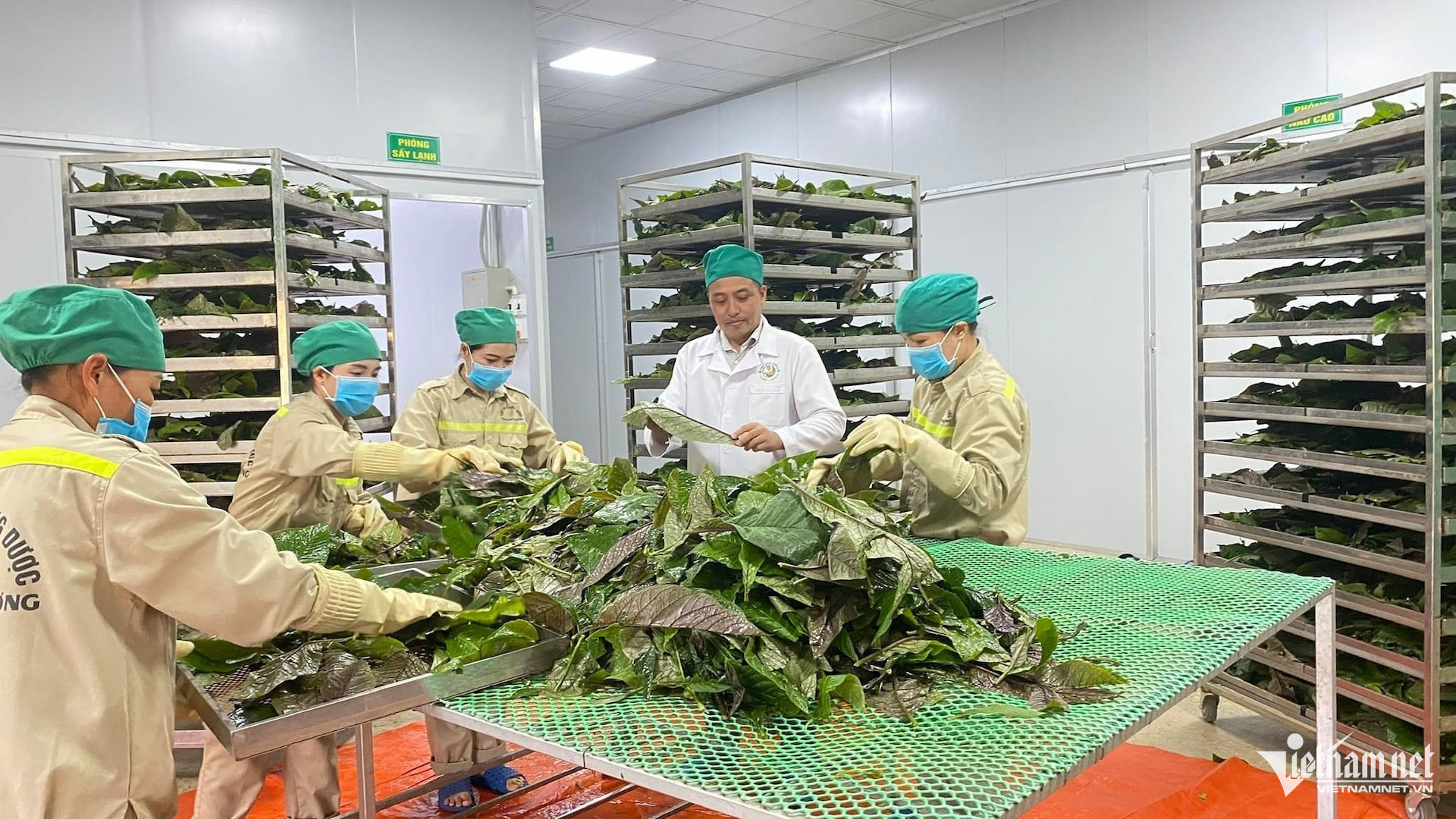
At the same time, they have applied selective extraction technology to isolate alkaline components and beneficial medicinal compounds from valuable Vietnamese herbs such as da cam (Hedyotis capitellata), ban chi lien (Scutellaria barbata D. Don), xa den (Celastrus hindsii Benth), hoan ngoc (Pseuderanthemum palatiferum (Nees) Radlk) and bo cong anh (Lactuca indica L.), creating the herbal alkaline product Sflora.
This technology enables the extraction and activation of molecules from herbs to produce a solution with a high alkaline pH level (13–14) entirely derived from medicinal plants, while preserving their natural medicinal properties.
The work is regarded as one of the notable efforts to enhance the value of traditional Vietnamese medicinal plants and affirm Vietnamese intellectual capacity in science and technology applied to medicinal herbs.
Dr. Le Quang Minh, former Head of the Advisory Department of the Health Bureau (Ministry of Public Security), said that it is time for those working in traditional medicine, especially traditional pharmacy, to address the use of science and technology in research and production.
It is also necessary to promote the use of domestic raw materials to be able to control the supply, reduce dependence on imported materials, and enhance the industry's autonomy.
Minh also praised the research on organic alkali derived from herbs as a major step forward in using the country's rich medicinal resources to provide products that are close to consumers.
Supportive policies for businesses
Nguyet said with difficulties in capital, infrastructure, and access to land, science and technology enterprises greatly need support such as land rent reductions or corporate income tax exemptions/reductions. This will help boost research activities and scale up the industrial production of medicinal products in the coming time.
To exploit the potential of the medicinal herb industry, Minh said that qualified research teams with clear research orientations are needed, as well as technology that produces good products.
The State needs to create favorable conditions and have good mechanisms so that businesses and scientists dare to invest and conduct research on the production of medicinal products.
Thanh Hai
.svg)
