 Vietnamnet.vn

 Podcast



The world is entering a phase of profound transformation. The old order is gradually changing, global supply chains are being restructured, and competition among nations relies more heavily on real capabilities rather than sheer size or power.
The most critical question for Vietnam is not how fast it is moving, but what foundation it stands upon to go the distance.
History always opens doors for nations that clearly understand who they are, what they possess, and how to choose a path tailored to their unique advantages. Today, Vietnam stands at just such a crossroads.
We are not the wealthiest nation, we do not possess the most advanced technology, nor do we have the deepest financial resources. Yet Vietnam holds an invaluable asset: we have preserved the essential foundations of a nation capable of achieving sustainable development.
We have "not lost our roots" because we still have land to cultivate, water to sustain life, seas to develop, and communities that remain closely connected to nature and productive labor.
This does not mean turning away from modernity or abandoning the aspiration to build a knowledge-based economy. On the contrary, these very foundations provide Vietnam with a unique advantage as it enters a new era, one that few countries still possess.
In the 21st century, when climate change, food security, energy security and sustainable development become strategic priorities, land, water and people are no longer merely natural resources. They have become sources of national competitiveness.
Vietnam's greatest assets do not lie solely in technology projects or billions of dollars in investment.
Our greatest assets are our land and water, what history, geography and generations of our ancestors have preserved and passed on to us.
Vietnam possesses rare natural conditions that enable it to ensure its own food security while contributing to global food supplies. Despite limitations in science and technology, production scale and market organization, Vietnamese agriculture remains among the world's leading producers of rice, coffee, pepper, cashew nuts and seafood.
These achievements are not only the result of today's efforts but also gifts from nature. Our responsibility is to apply knowledge, science and technology to make those gifts more valuable and more sustainable.
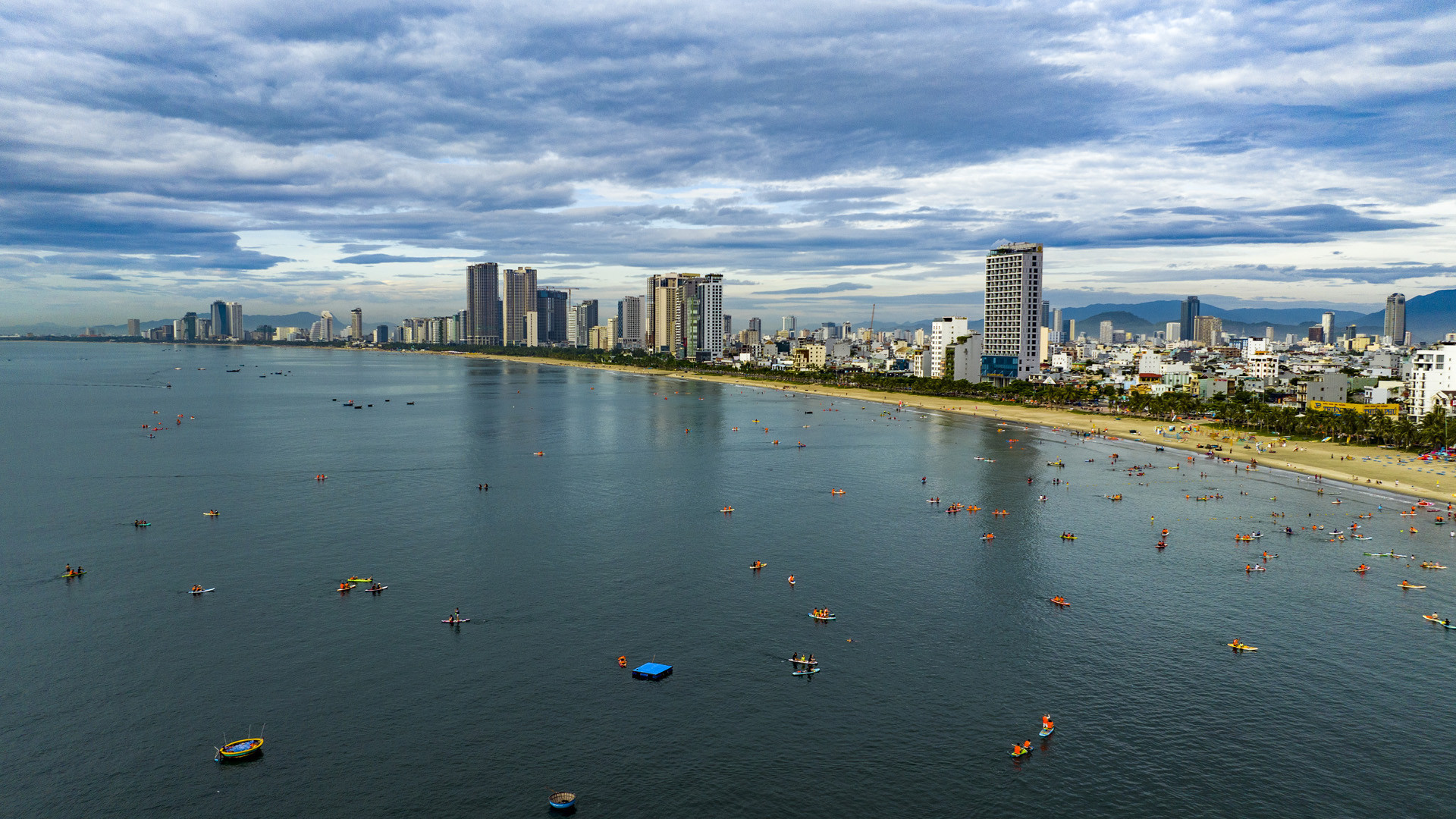
Vietnam's more than 3,200 km of coastline is not merely an advantage for tourism or resource extraction. It is also a strategic space for the marine economy, logistics, renewable energy, aquaculture, ecological conservation and the protection of national sovereignty. The key is not simply to talk about the sea's potential, but to create value from it through knowledge and technology.
It is no coincidence that our ancestors described the homeland with the words "land and water."
This is not merely poetic language but a philosophy of development. Land and water are the foundations of life, livelihoods and sovereignty. Preserving and enhancing the value of our land and water is therefore not only an environmental responsibility but also a national development strategy.
In today's global competition, Vietnam can hardly win by racing in capital scale, technology, or hard power against economies many times its size.
A more viable path is to unleash our soft power based on our hardest foundation: land, water, and people, elevated by knowledge, science, technology, and innovation.
This is also the true essence of a knowledge-based economy.
A knowledge-based economy does not mean replacing agriculture with technology or replacing humans with AI. A knowledge economy means using knowledge to make every square meter of land more valuable, every drop of water more efficiently utilized, every citizen more productive, and every Vietnamese product higher in value-added.
In other words, technology does not replace the foundation; while technology multiplies the value of the foundation.
A national strategy should not be viewed as a checklist of mega-projects, but first and foremost as a clear order of priorities.
We must correctly identify our starting point, define our long-term goals, and persistently invest in the foundations that generate enduring strength. Every policy, every resource, and every innovation must align toward a single goal: making the land richer, the water cleaner, the people more capable, and society more prosperous.
Vietnam does not lack potential. What matters most is recognizing our core advantages and possessing the resolve to persistently build the future upon that very foundation.
Tran Sy Chuong, Economist
.svg)
