 Vietnamnet.vn

 Podcast



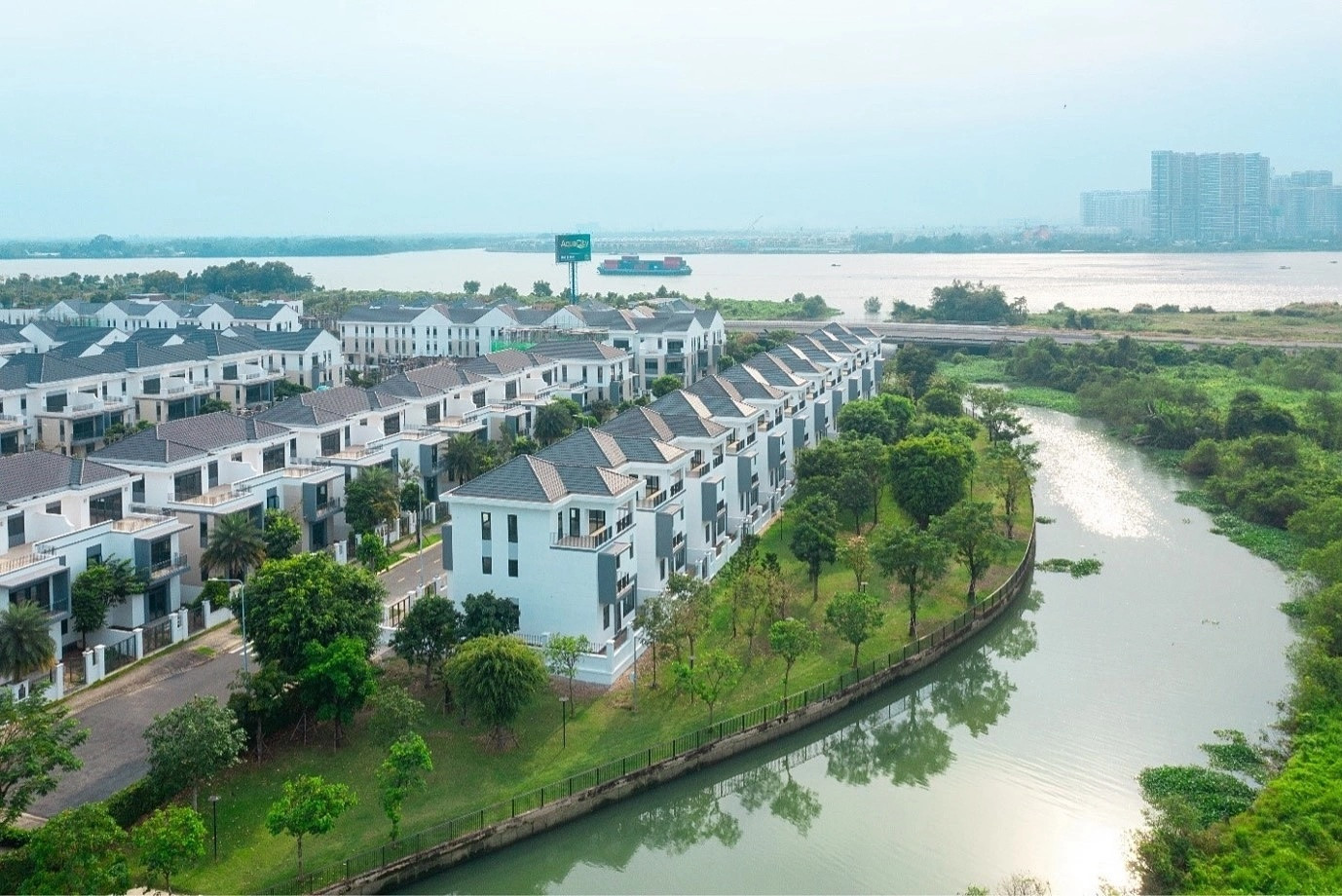
To move faster, the first thing is to awaken the resources lying dormant within the economy.
Minister of Finance Ngo Van Tuan noted that about 200,000 hectares of land along with unfinished investment projects with a total value of VND3.3 quadrillion are currently backlogged. This figure is three times the total public investment capital expected to be disbursed in 2026.
More importantly, as he noted, this is both a bottleneck and a potential source of growth if unlocked.
Reviving a single project does not just bring a business back to life, but also generates jobs, boosts fiscal revenue, restores credit flows, and rebuilds investor confidence. In other words, this is about the economy’s capacity to mobilize national resources.
The case of the Aqua City project in Dong Nai, which resumed after being restarted, is a clear example. It shows that institutions are not abstract concepts; they are reflected in the speed of decisions, the ability to unlock resources, and the accountability of leadership.
Under the development orientation for 2026–2030, Vietnam will need about VND38–38.5 quadrillion in total investment of the society over the next five years, equivalent to around 40 percent of GDP. Of this, more than 80 percent must come from outside the state budget, including private enterprises, social capital, FDI, and other market resources.
This means the state alone cannot create growth. Double-digit growth can only be achieved when the private sector is willing to invest more, for longer, and with greater confidence.
From this perspective, the VND3.3 quadrillion currently stuck is equivalent to nearly one-tenth of the total investment demand for the next five years. If this resource is unlocked, it would not merely resolve a few stalled projects but open up a vast new space for economic growth.
This highlights the importance of institutional reform. There is no need for another massive stimulus package or additional borrowing; what is needed is to remove the bottlenecks that are holding resources back.
When property rights are secured, the rules are clear, and policy decisions are predictable, businesses will be more willing to invest, expand production, and keep capital within the economy.
An investor will only commit for the long term when they trust that today’s efforts will not be undermined by unexpected changes tomorrow.
Trust in institutions
The recent directions from Prime Minister Le Minh Hung carry great significance. Requiring ministries and sectors to prioritize resources for building and perfecting institutions, while simultaneously submitting draft decrees and guiding circulars alongside draft laws, shows the Government is looking directly at the root of the issue.
Laws cannot continue to exist in a state of "having a frame but no road to walk on."
For businesses, institutional delay is not an abstract concept. It is the cost of capital increasing every day, market opportunities disappearing every month, and investment plans being suspended. Conversely, a clear and rapidly enforced legal system will become a national competitive advantage.
Conclusion 18-KL/TW of the Politburo has clearly defined the path: urgently and fundamentally remove institutional barriers and bottlenecks; strongly shift the state management method from pre-inspection to post-inspection; and minimize the time and compliance costs for citizens and businesses.
This is not just administrative reform. This is the foundation of growth.
Along with that, Resolution 68 identifies the private economic sector as one of the most important drivers of the economy and sets a goal to have 2 million active enterprises by 2030. That goal will be much more feasible when the investment environment is stable enough for businesses to confidently build long-term plans and focus on growth instead of preventing policy risks.
This requires a new perspective: if the private sector is identified as the most important growth driver, then institutions must also shift strongly toward being more favorable for investment, innovation, and production expansion.
At this stage, the role of local governments and leaders becomes particularly important, as this is where the speed of transforming policies into actual results is decided. When a provincial chairman dares to clear a backlogged project, when a department dares to choose the right solution instead of the safest one for themselves, it is not just processing an administrative file, but releasing resources for the entire economy.
Tu Giang - Lan Anh
.svg)
