 Vietnamnet.vn

 Podcast



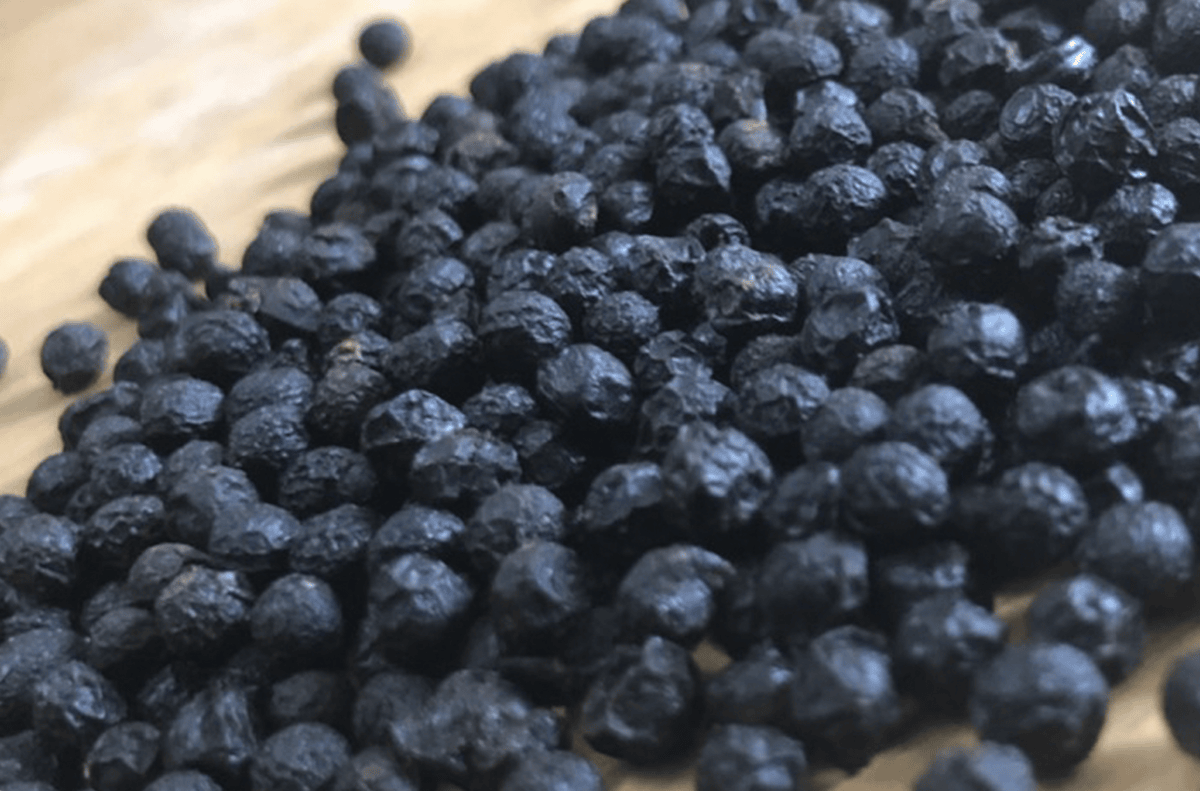
The Vietnam Pepper and Spice Association (VPSA) has sent a document to the Government Office, National Assembly Office, and relevant ministries, proposing a review of the VAT for the pepper and spice industry.
According to VPSA, Vietnam’s pepper industry produces about 200,000 tons annually, with 190,000 tons (95 percent) exported and only 10,000 tons (5 percent) consumed domestically.
However, only about 5,000 tons of the total output are deeply processed and consumed domestically. Thus, the state can collect VAT only from these 5,000 tons. The remainder of the output is exported tax-free, allowing exporters to claim VAT refunds.
Calculations show that the pepper industry’s export turnover reached $1.3 billion in 2024, with a 5 percent VAT for the entire industry amounting to $65 million.
Notably, only about $1.63 million (equivalent to VND42 billion) is collected from domestically consumed products. The remaining $63.375 million is refunded to exporting businesses.
Similarly, the export output of other spices is around 200,000 tons, but only about 5,000 tons are processed for domestic consumption.
For the entire Vietnamese spice industry, with total exports exceeding 400,000 tons (2024), only 10,000 tons of pepper and spices are consumed domestically, generating the VAT revenue of about VND55 billion for the state, while businesses are expected to receive refunds of up to VND2,135 billion.
VPSA pointed that while VAT on the 10,000 tons consumed domestically is fully collected, the VND2,135 billion worth of tax from 390,000 tons, will be refunded by the state.
“The refund mechanism has revealed loopholes, facilitating fraud in tax refunds, affecting legitimate exporting businesses,” VPSA emphasized, noting that these problems have caused losses for businesses and reduced transparency in tax collection.
The exporting business community expressed concerns that this risk could recur under the tax refund mechanism as stipulated in the new VAT Law.
0% VAT for export materials
In such conditions, VPSA proposes applying a 0 percent VAT rate for input materials used for exports.
The association has also recommended abolishing the export tax refund for pepper and spices, as it is disproportionate to social resources and significantly impacts businesses’ working capital.
Instead, it would be better to consider applying a 0.5 percent flat export tax. This solution allows the state to collect tax directly on export transactions, supporting budget revenue collection, while enabling businesses to have capital, faster capital turnover, and avoid delays in refund processing.
Additionally, it has proposed maintaining the 5 percent VAT rate for input materials used in production and processing for domestic consumption.
VPSA believes that the current VAT mechanism for the pepper and spice industry creates significant financial difficulties for businesses, especially amid fluctuating agricultural product prices and intense competition from countries like Indonesia, India, and Brazil.
The reason is that Vietnamese businesses mainly export semi-processed products with low profit margins (1-3 percent), so the 5 percent VAT refund becomes a factor hindering the industry’s sustainable development.
These tax proposals by VPSA aim to create a transparent and favorable tax environment, enabling businesses to fulfill tax obligations to the state and fostering the development of the pepper and spice industry.
While reviewing the association’s proposals, VPSA requests the Ministry of Finance to consider and report to higher authorities, allowing a delay in implementing the VAT Law beyond July 1, 2025.
This year, Vietnam’s ‘black gold’ output is estimated to reach over 274,000 tons. Many countries are aggressively purchasing at high prices, with the US being the largest buyer.
According to the Ministry of Agriculture and Environment, by the end of June, pepper harvesting was complete. The estimated total pepper area this year is about 110,600 hectares, with output reaching 274,100 tons. Compared to 2024, the pepper area increased by 1,000 hectares, and output rose by 11,800 tons.
Notably, in recent trading sessions, the price of this grain, dubbed Vietnam’s “black gold,” fluctuated strongly with an upward trend. On the morning of July 3, pepper prices ranged from VND140,000-147,000/kg.
Vietnam’s black pepper export prices ranged from $6,240-6,370/ton, while white pepper was priced at $8,950/ton.
In the first six months of this year, Vietnam exported 124,900 tons of pepper, earning $859.6 million. Although export volume decreased by 12.4 percent, value surged by 35.7 percent compared to the same period in 2024.
Tam An
.svg)
