 Vietnamnet.vn

 Podcast



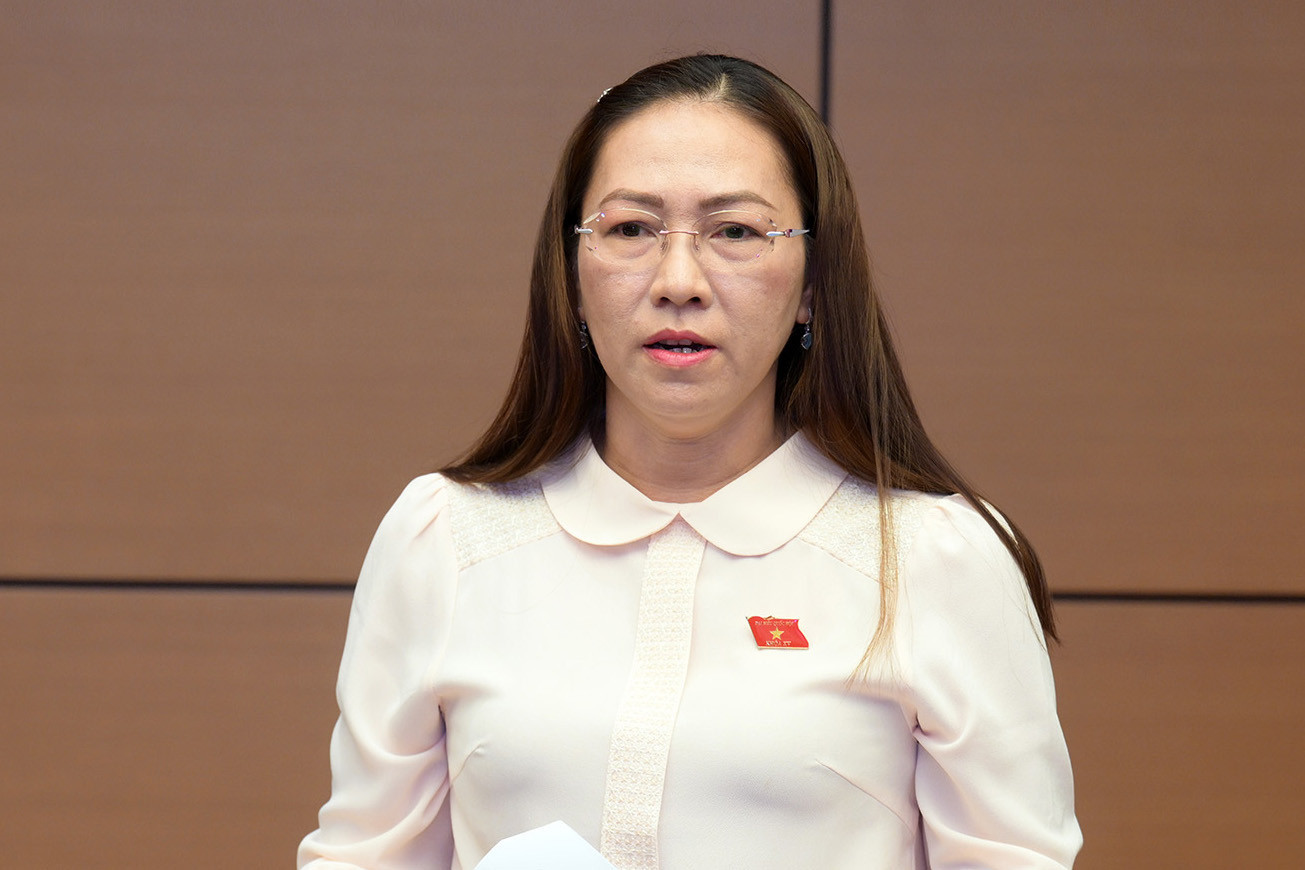
The NA on October 21 held group discussions on work reports for the 2021–2026 term by the President, the Government, the draft report for the 15th NA, and reports by the Standing Committee, the Ethnic Council, parliamentary committees, and the State Audit Office.
Deputy Nguyen Thi Yen Nhi from Vinh Long mentioned the need for essential infrastructure investment in localities following the recent apparatus restructuring. The merging of 2-3 localities has created greater demands for infrastructure.
She cited the merger of Ben Tre, Tra Vinh, and Vinh Long, noting that travel to the new administrative centers poses difficulties not only for officials but also for citizens and businesses seeking public services.
Many civil servants now have to take on new roles, especially at the commune level. In addition to their individual effort and commitment, the deputy emphasized the need for centralized training and guidance from the national level down to the communes, helping local staff understand regulations and confidently perform their duties.
After the restructuring, a large number of officials enjoyed early retirement or resignation policies with superior benefits. Meanwhile, remaining officials face heavier workloads.
Thus, Nhi proposed the Government soon submit to the NA a roadmap for salary policy reform for post-restructuring officials.
“Before the NA session, many officials urged early salary reform to match their efforts and retain them in the system,” Nhi said, proposing the Government consider salary reform in early 2026.
To Thi Bich Chau (HCMC) said reports need to include the evaluation of the tireless, wholehearted efforts made by officials, and that the evaluation must recognize the day-and-night efforts of the entire political system.
After admitting two provinces, HCMC has become the most populous locality in the country.
Party Chief To Lam directed HCMC toward a new stature as a “Southeast Asian international megacity.”
According to Chau, the infrastructure investment in the city is unworthy. She cited flooding as a consequence of inadequate investment in infrastructure. She proposed worthy investment for HCMC to match its political tasks in the 2025-2030 term.
Deputy Ha Phuoc Thang, also from HCMC, proposed that the 16th NA term increase full-time delegates for the Ethnic Council, committees, and especially provincial delegations, particularly large ones like HCMC’s.
Thang said the HCMC delegation has nearly 50 delegates but only three are full-time, causing difficulties in managing activities, gathering opinions, surveying, and supervising.
He proposed that there should be at least 40 percent full-time delegates, prioritizing large delegations to strengthen supervision, law-making, surveys, and local development contributions.
HCMC is now Vietnam’s largest comprehensive economic center, classified as a special urban area. In the latest three years (2023-2025), the area maintained impressive average economic growth of 7.0-7.5 percent per year and contributed about 27 percent of national budget revenue.
HCMC now has over 15 million people, officially becoming Southeast Asia’s largest megacity. Population and natural area growth to about 6,773 square kilometers creates enormous pressure on infrastructure, housing, and essential public services.
HCMC has successfully restructured and streamlined apparatus after merger. Specifically, the number of specialized agencies under the City People’s Committee has reduced from 43 to 15 (down 65.11 percent), while the number of departments under agencies reduced 43.6 percent. However, the streamlining accompanies sudden workload and administrative procedure surges in key fields.
Notably, administrative procedures in industry and trade increased 48 percent (142 procedures); construction and planning up 20.2 percent; and natural resources, environment, land up 17.4 percent. These figures show pressure on officials.
Facing this, HCMC People’s Committee has submitted to the Ministry of Home Affairs a proposal for 174,196 staff positions for 2026-2031. This total staffing is for the entire government block, including administrative agencies and public service units.
As of July 31, the city had been allocated 18,574 civil servant positions and 132,403 workers (public employees paid from the state budget), totaling 150,977 personnel for both blocks (excluding some contract quotas). Proposing 174,196 for the new period affirms the urgent need for additional resources to meet megacity management demands.
Regarding management mechanisms, the city proposes that the central government develop a flexible staffing allocation based on an “open quota.” This must rely on practical task evaluation and account for three key quantitative and qualitative factors: actual population size, actual workload, and capacity requirements for implementing specific policies.
Tran Thuong
.svg)
