 Vietnamnet.vn

 Podcast



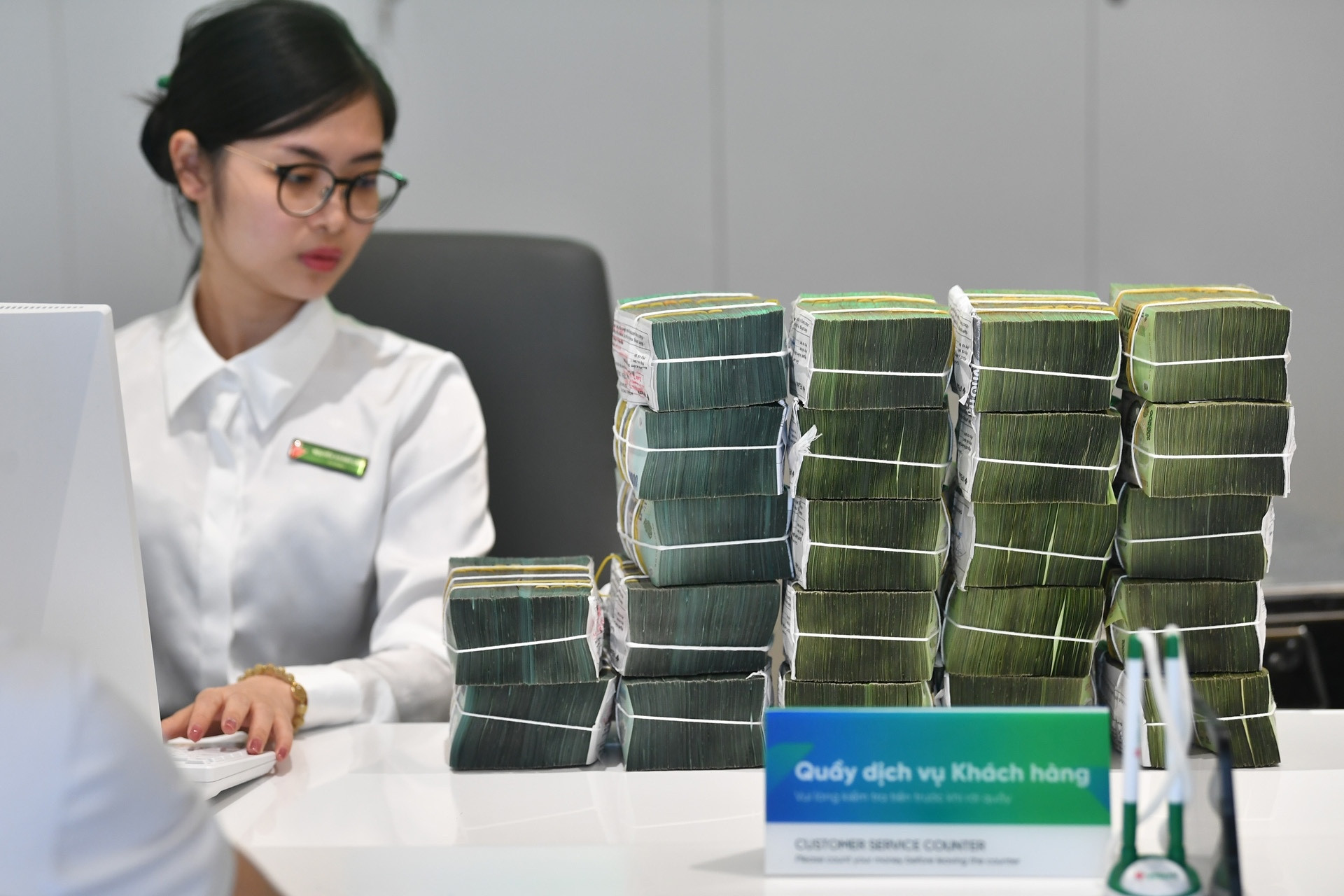
Nguyen Thu Huong, 55, owns net assets of over VND30 billion and wishes to quit work for a year to recover her health. Huong said that during the market's active phase, she felt confident as real estate values rose rapidly. Each time a broker said that local prices had increased by several hundred million VND, she became more convinced that her investment decision was correct.
The total value of paper assets increasing each quarter gave Huong the feeling that she was very close to financial freedom.
However, when she reviewed her balance sheet and actual cash flow, the picture looked different. Despite owning substantial assets, her available cash would only be enough to cover expenses for a few months without income from work. Most of her wealth is tied up in land plots that do not generate cash flow and are difficult to sell quickly in a sluggish market.
Another issue is that the family's living expenses increased along with their wealth. As assets appreciated, her family also upgraded their living standards: a larger house, a better car, and children attending international schools. This significantly increases annual fixed spending, unintentionally raising the threshold for financial freedom.
Nguyen Anh Dung, a financial advisor, stated that financial freedom is not measured by the absolute total value of assets, but by the ability to generate sustainable cash flow and control long-term risks.
On paper, the figure of VND30 billion is enough to make many think that Huong has reached a state of financial leisure. However, after reviewing the asset structure, the advisor had to recommend that quitting work was not yet feasible.
More than 90 percent of her assets lie in real estate, mainly perennial crop land and resort land purchased at the market peak of 2021–2022. This kind of assets may offer strong appreciation during favorable cycles, but it generates almost no stable cash flow.
When employment income is cut off, income from real estate covers only about 20 percent of monthly living expenses. Meanwhile, bank loans taken out for investment purposes still require substantial regular repayments. On paper, total assets exceed VND30 billion; in reality, cash flow is insufficient to sustain daily life without continued employment.
The problem may become clearer when the real estate market enters a quiet period. Low-liquidity assets are even harder to sell. If an investor wants to sell real estate quickly to recover cash, they must accept significant losses; if they continue to hold the asset, cash flow pressure persists.
According to Dung, the mistake does not lie in investing in speculative land. In favorable cycles, this type of asset can bring high appreciation. Risk only appears when the proportion of high-risk and low-liquidity assets accounts for the majority of the investment portfolio.
He said that if VND30 billion were reasonably allocated into assets capable of generating cash flow, such as rental real estate, properties with real housing demand, or a financial investment portfolio with stable returns, the situation could have been different. A balance between growth and cash flow is the foundation of financial freedom.
From a financial planning perspective, many experts use the safe withdrawal rate rule of 4 percent per year to estimate asset needs. If a family's living expenses are around VND1 billion per year, the investment portfolio needs to generate at least VND1 billion in passive income, equivalent to an asset scale of about VND25 billion in cash-flow-generating forms. However, the prerequisite is that the asset must have liquidity and proper risk allocation.
In addition, inflation is a factor that cannot be ignored. With an average inflation rate of 3-4 percent per year, the real value of cash flow will gradually decrease if not invested effectively. This means that a retirement plan needs to account for preserving purchasing power over many years, rather than just looking at the current asset figure.
Another factor often underestimated is market cycle risk. If a plan to quit work is built on asset values at the market peak, investors may fall into a passive position when the market adjusts.
Having VND30 billion may be a dream milestone. But if the asset structure does not generate stable cash flow, that figure is still just wealth on paper, not yet true freedom.
Tuan Nguyen
.svg)
