 Vietnamnet.vn

 Podcast



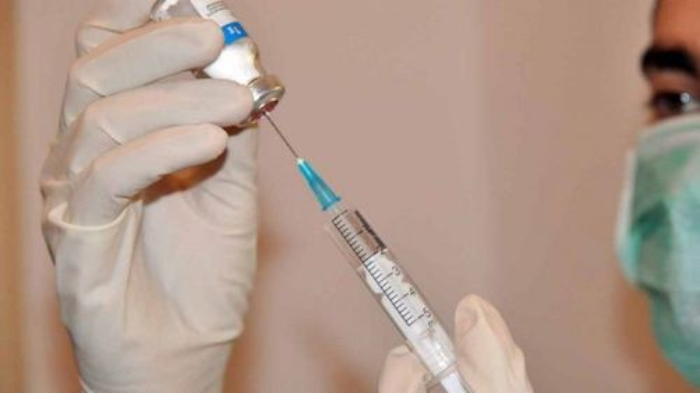
Additionally, the treatment cost can reach up to VND1.4 billion within just the first three months.
In recent days, information regarding an injection drug that can help certain cancer patients respond exceptionally well to treatment has attracted massive public attention.
Trials of the injection drug Amivantamab across 11 countries yielded results of successfully wiping out metastatic tumors, saving the lives of dozens of patients who were once deemed "incurable."
The research results were presented on May 31 in Chicago, within the framework of the annual meeting of the American Society of Clinical Oncology (ASCO), the world's largest oncology conference. Accordingly, doctors administered Amivantamab injections to 102 head and neck cancer patients. Forty three individuals recorded tumors shrinking or disappearing.
Specifically, the drug cleared away all cancer cells in 15 cases and significantly downsized tumors in 28 people. This patient group achieved a median overall survival time of 12.5 months from the date they began taking the drug. This is an incredibly meaningful figure because they carried a very poor prognosis and had previously failed both chemotherapy and immunotherapy, according to the Guardian.
Dr Trinh The Cuong, MA, from the Department of Chemotherapy under E Hospital (Hanoi), said the drug Amivantamab is a bispecific antibody that targets two signaling pathways, EGFR and MET. This is a targeted therapy drug, not a dietary supplement or a medication that can be utilized for all types of cancer.
In Vietnam, this drug has been granted a marketing authorization registration number since 2025 in the form of a 350 mg/7 ml intravenous infusion vial. In non-small cell lung cancer, the drug is only indicated for certain patient groups with specific EGFR mutations within concrete treatment contexts.
The public attention stems from the phase 1b/2 OrigAMI-4 study evaluating the efficacy of subcutaneous Amivantamab injection on patients with recurrent or metastatic, HPV-unrelated squamous cell head and neck cancer, after they had failed chemotherapy and immunotherapy.
This is a group of patients with a very challenging treatment prognosis. Among the 102 patients participating in the study:
The objective response rate reached approximately 47 percent.
4 patients achieved a complete response (around 4 percent).
44 patients achieved a partial response (around 43 percent).
39 patients maintained stable disease.
The study results showed that approximately 79 percent of the patients had their tumors shrink post-treatment. After about 6–7 weeks of taking the drug, half of the patients had already begun recording a response to the treatment. Among those who responded, this efficacy was maintained for at least around 7.2 months. The disease control duration before signs of progression re-emerged reached approximately 6.8 months.
According to Cuong, this is a very positive signal for the group of patients who have already undergone multiple prior treatment methods. However, a response on imaging scans does not equate to being completely cured of the disease.
"In late-stage cancer, what matters is not just whether the tumor shrinks or not, but also the disease control duration, survival time, quality of life, and the ability to tolerate side effects," Cuong emphasized.
Therefore, the research results should be viewed as an encouraging step forward rather than a solution to cure cancer.
Treatment cost
Cuong noted that the OrigAMI-4 study was only conducted on patients with recurrent or metastatic, HPV-unrelated squamous cell head and neck cancer. Therefore, it is impossible to generalize these results to other cancer types such as lung, liver, stomach, breast, or colorectal cancer.
"Not every cancer patient is suitable for Amivantamab, and the utilization of the drug needs to be based on pathological characteristics, disease stage, as well as the indications of a specialist doctor," Cuong stated.
It is estimated that for a patient weighing around 60kg, if converted according to the declared price of the drug form currently circulating in Vietnam (approximately VND34.5 million/vial of 350mg), the total medication cost within the first three months of treatment could reach up to VND1.4 billion.
This figure does not yet include the costs of testing, monitoring, hospitalization, managing side effects, and other arising expenses.
Amivantamab is a remarkable achievement in oncology medicine that brings additional hope to patients.
Phuong Thuy
.svg)
