 Vietnamnet.vn

 Podcast



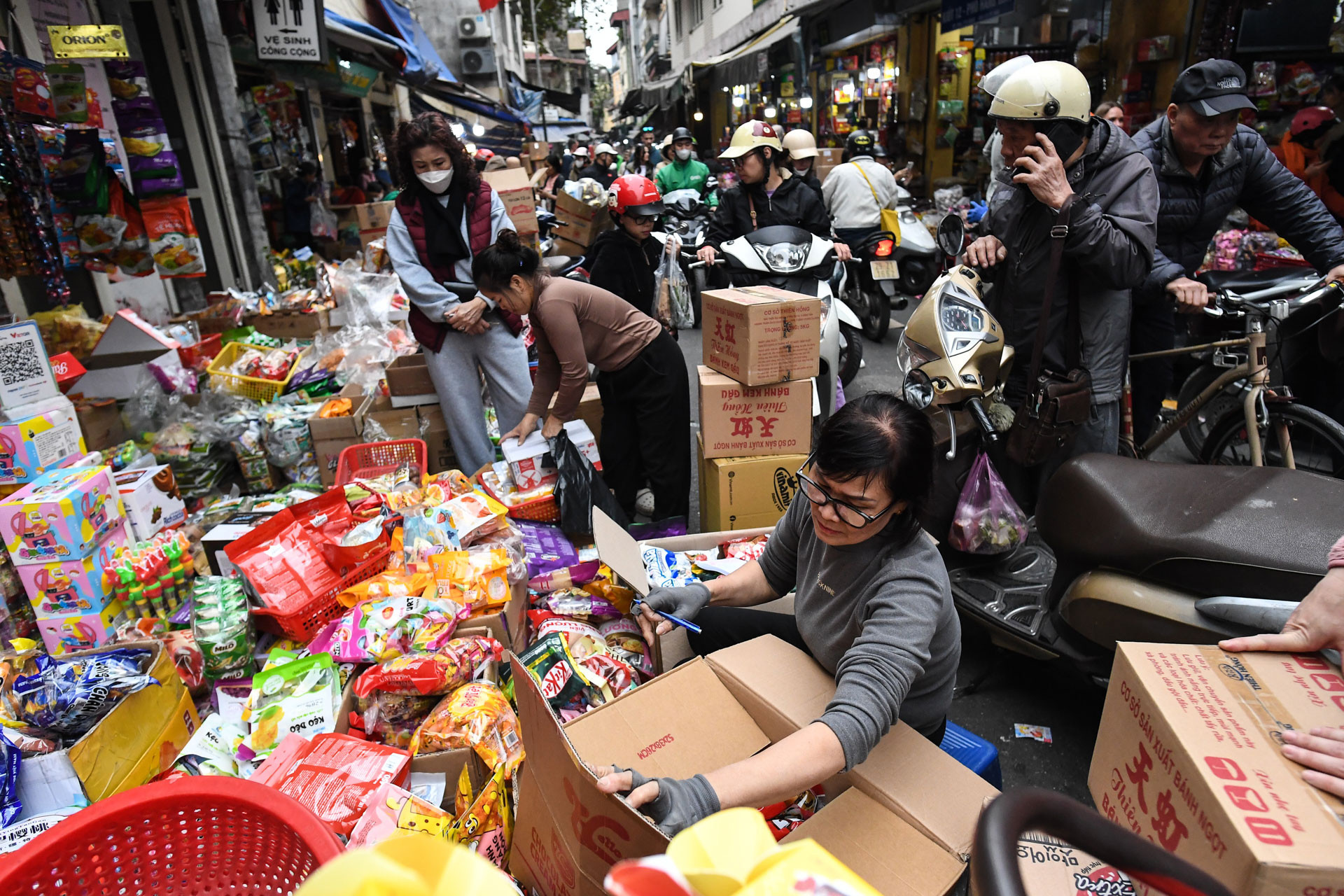
Currently, the VND500 million annual revenue threshold is used to classify businesses and trigger full declaration requirements. The issue is whether this is fair, since revenue is merely cash flow, not the actual income retained by the business.
Under the Personal Income Tax Law (PIT), after deductions, an individual earning about VND15.5 million per month, roughly VND186 million per year, is subject to PIT.
A household business would be taxed when its income (profit after costs) reaches roughly VND15–17 million per month, or VND180–200 million per year.
Assuming a 10 percent profit margin, a business would need annual revenue of around VND1.8–2 billion to reach that level. Lower-margin sectors would require higher revenue, and vice versa.
According to Dr. Le Duy Binh, the household business sector has about 8 million workers across 5.2 million households, averaging just 1.5 workers per household.
As such, business households should be treated as business individuals because, in the majority of cases, each business household has only one owner.
If they are business individuals, their taxes should be somewhat similar to PIT.
This means that with a revenue threshold above VND500 million per year, a significant portion of business households do not have an income higher than the personal income tax threshold, but are still placed into a higher management mechanism and tax obligation simply because they exceed a technical revenue threshold.
When the measuring stick is skewed, the resulting costs are almost inevitable.
At the business household level, common compliance costs of VND40–90 million per household per year, in many cases, account for a large part of the income, even approaching or exceeding VND186 million per year, the threshold where one begins to pay personal income tax.
On the system side, to operate this mechanism, for every VND10 collected, VND2 to VND6 may have to be spent on processing and operational costs.
When the expenses of both sides become costly, the issue is no longer about individual stages but the entire design.
In such a structure, compliance is no longer a safe choice. Doing things right does not guarantee being right because even with full declaration, the results may still fail to reflect actual income.
Therefore, the question is no longer where to tighten further, but whether it is necessary to redesign from scratch.
A more reasonable direction could be returning to the basic principle of the tax system: taxing based on income.
For business households, this could be implemented through a simplified income tax mechanism, as is common practice in countries worldwide, where tax obligations are determined by reasonable estimates instead of requiring detailed declaration of every transaction.
Along with that, the revenue threshold needs to be adjusted in a direction that reflects income-generating capacity instead of applying a rigid level for the entire sector.
If the VND186 million per year income level itself is taken as a milestone, a more reasonable approach could be imagined: Revenue from VND1-3 billion per year applies a simplified income tax mechanism; only larger groups require full declaration; and the group below VND1 billion per year does not apply simplified income tax.
Instead of spreading resources thinly, the system could focus on larger, higher-risk groups, where each unit of administrative cost yields meaningful returns.
In this context, the proposal by National Assembly deputy Nguyen Van Than to apply a simpler tax mechanism for businesses with revenue between VND500 million and VND5 billion is not merely technical, it also points toward a broader policy redesign.
The issue is not how much tax to collect, but how to collect it without making compliance and administration more burdensome than the revenue itself.
Ultimately, the focus should not be on the businesses alone.
Household businesses account for around 30 percent of GDP and provide jobs for 8 million workers. At times, they act as a buffer absorbing economic shocks. This reflects a distinctly Vietnamese economic structure, where much activity still operates through small, flexible, and less formal models since before the Doi Moi (renovation) era.
Tu Giang - Lan Anh
.svg)
