 Vietnamnet.vn

 Podcast


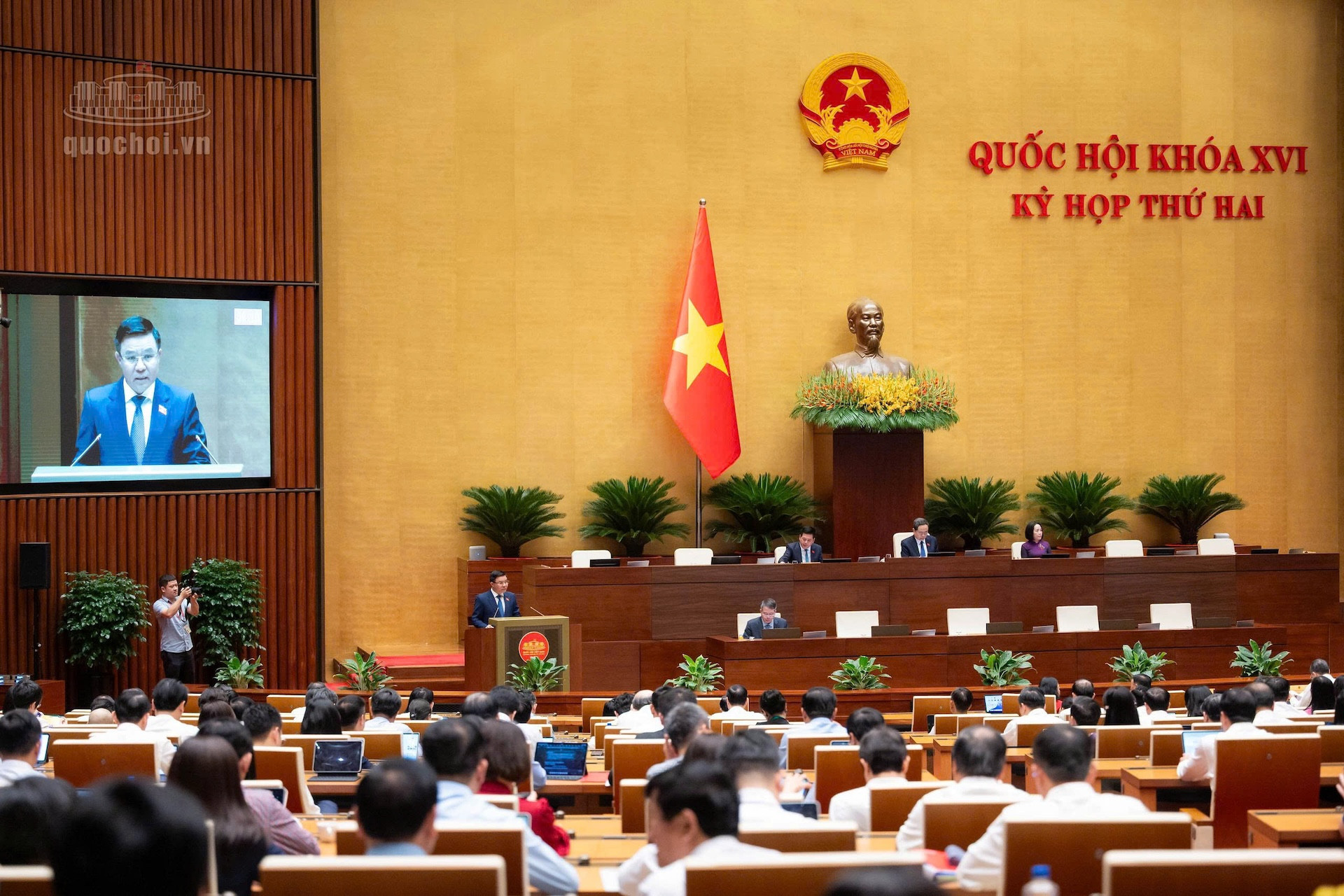
“Eligible businesses that present the voucher will be entitled to a cost reduction,” the Minister of Finance stated when explaining new points in the draft Law on Small and Medium Enterprise Development.
Vouchers are support certificates for small and medium-sized enterprises to reduce certain costs when utilizing services, featuring a clearly specified validity period and non-transferability.
The approach outlined in this proposal is noteworthy: shifting from “the State supporting with what it has” to “supporting what businesses need.” Instead of being provided a predetermined service, businesses can use vouchers for services that suit their specific needs.
National Assembly Delegate Le Thanh Hoan from Thanh Hoa sai: “Would vouchers be generally issued as negotiable instruments, or would they be issued separately to individual businesses in the form of written requests?”
This question needs to be answered for the policy to work, because demand for vouchers is real from both the government and market.
On the government side, the Da Nang Department of Tourism issued more than 30,000 discount vouchers to stimulate demand during the 2025 tourism season.
The draft Law on Cultural Industries also proposes introducing a “national cultural card” to encourage spending on certain cultural industry products and services.
The Singaporean and Japanese governments issue the SingapoRediscovers and Go To Travel voucher programs, respectively, to stimulate demand for domestic tourism industry.
In the market, meanwhile, vouchers have become widely used, with specialized businesses distributing them and connecting three parties: buyers, brands and voucher users.
This service also needs to be clarified in the current revision of the Commercial Law.
Vietnam's voucher market is currently estimated at $2.2-2.7 billion, equivalent to 0.79-0.95 percent of total retail sales of goods and consumer services. Some businesses have been providing promotional voucher distribution services through e-commerce platforms and have developed ecosystems encompassing thousands of brands and tens of thousands of acceptance outlets nationwide.
What needs clarification is how these recognized operations will continue to be managed so that businesses that have invested in systems know how to operate and comply with the law.
When commenting on the draft law amending several provisions of the Commercial Law, the National Assembly Standing Committee noted that “vouchers for goods and services bear the economic characteristics of instruments for stimulating consumer demand, helping direct and increase purchasing power toward specific product categories and contributing to the effective digitalization of trade promotion.”
In its explanatory report to the National Assembly Standing Committee on September 18, 2026, the government continued to classify voucher distribution as a form of commercial intermediation under Clause 11, Article 3 and Chapter V of the 2005 Commercial Law. Merchants receive payments, provide vouchers to customers, settle payments with suppliers and earn fees under contractual arrangements.
This explanation clarifies the relationship between distributors and suppliers. However, the role of distributors in attracting customers, building networks and driving sales still needs to be examined.
The 2005 Commercial Law introduced the terms “vouchers for goods and services” in Clause 4, Article 92 and Article 97, but only as a form of promotion in which vouchers are offered alongside the sale of goods or provision of services.
NA deputy Nguyen Hai Long from Da Nang, said: “After more than 20 years, business practices have changed considerably. Companies and banks, among others, buy vouchers from distributors to give to customers, reward employees and show appreciation to partners. A single voucher can be used at multiple outlets operated by different merchants, allowing recipients to choose the goods and services they need.”
Decree 239/2026/ND-CP allows vouchers to be used to purchase goods and services from other merchants and organizations, while requiring issuers to comply with anti-money laundering laws.
He added: “This decree still only regulates vouchers issued alongside goods and services as part of promotional activities. There are also no specific regulations governing the use of vouchers as prizes in chance-based promotional programs, leaving businesses facing difficulties with registration, reporting and handling the value of prizes that go unclaimed.”
The American Chamber of Commerce in Vietnam recommends adding the distribution of vouchers for goods and services to the revised Commercial Law and recognizing it as an activity within the scope of trade promotion.
The Finance Minister's statement said: "When eligible businesses present vouchers, they will receive cost reductions.”
For vouchers to deliver on that promise, the policy must establish clear operating rules. The same clarity is needed for businesses and consumers in the commercial voucher market.
Tu Giang

