 Vietnamnet.vn

 Podcast


Businesses lead just 12.5% of national research projects
On October 23, the Ministry of Science and Technology, in coordination with the Government Office, organized a national conference to strengthen cooperation between research institutes, universities and businesses in scientific research and technological development.
The conference was chaired by Deputy Prime Minister Ho Quoc Dung, while Minister of Science and Technology Vu Hai Quan co-chaired the discussion and question-and-answer session.
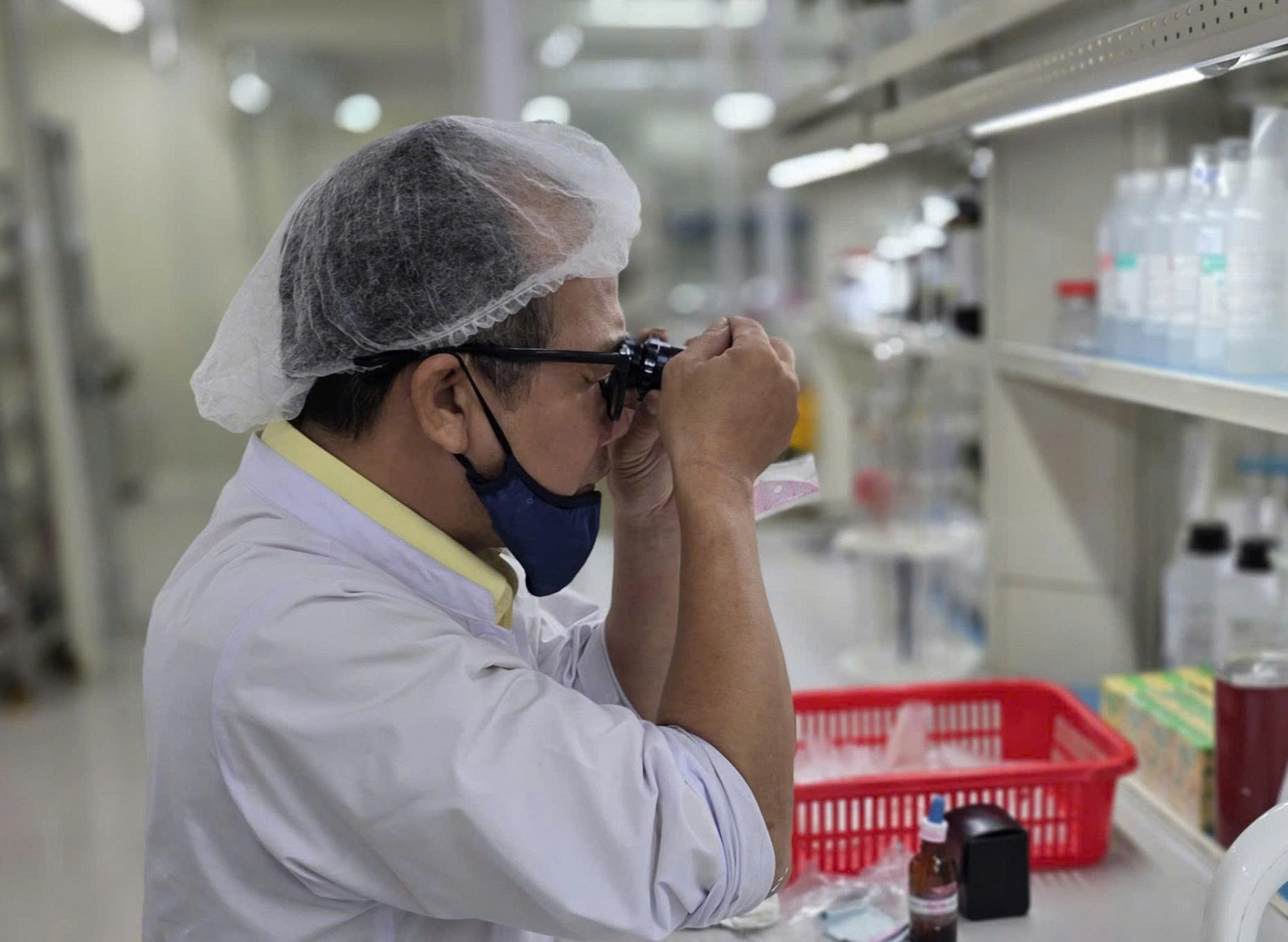
Under Resolution 57, Vietnam is revising its science, technology and innovation policies to give research organizations greater autonomy, establish risk-sharing mechanisms and encourage businesses to invest in research.
The Law on Science, Technology and Innovation and its implementing regulations provide a framework for organizing research projects around specific objectives, measurable outcomes and practical applications.
For technology development projects, regulations require a party to commit to adopting, applying or commercializing the results, or participating in their implementation.
Mechanisms governing ownership and exploitation rights over publicly funded research results are also being revised, giving organizations greater flexibility in choosing commercialization methods and sharing benefits.
Businesses can use their science and technology development funds to commission research, hire specialists, acquire technologies and collaborate with universities and research institutes.
However, a substantial gap remains between policy objectives and actual implementation.
Between 2021 and 2025, businesses led just 181 of the 1,451 national-level science and technology projects reviewed, equivalent to 12.5%.
Funding allocated to these business-led projects accounted for 25.7% of the total budget for the projects surveyed.
According to the World Intellectual Property Organization's Global Innovation Index (GII) 2026, Vietnam ranked 24th for university-industry research and development collaboration, compared with Singapore's eighth position.
In 2024, 34.6% of Vietnamese enterprises reported innovation activities, but only 6.7% of small businesses had dedicated research and development departments.
Among 991 enterprises certified as science and technology businesses, just 27 were established from research results generated by universities or research institutes, representing approximately 2.7%.
Technology market faces a major supply-demand mismatch
One of the most significant obstacles is the disconnect between technologies being offered for sale and the actual needs of businesses.
As of August 22, 2026, the technology exchanges covered by official reporting listed approximately 62,548 technologies for sale but recorded only 750 expressions of buying interest.
That translates into roughly 83 technologies offered for every buying request.
Between January and August 2026, these exchanges recorded 72 successful transactions with a combined value of VND11.233 billion.
However, the figures cover only the exchanges included in the reporting system and do not represent Vietnam's entire technology market.
Vietnamese businesses also face limitations in their capacity to invest in research.
According to GII 2026 data, business-sector research and development expenditure in Vietnam was equivalent to 0.3% of GDP.
This was considerably lower than Singapore's 1.3%, China's 2.1% and South Korea's 4.2%.
Researchers employed by businesses accounted for 27.5% of Vietnam's total research workforce, highlighting the need to strengthen research capabilities and technological expertise within the production and business sectors.
According to the Ministry of Science and Technology, the challenges extend beyond insufficient funding to the way cooperation is organized.
Businesses often become involved too late in the research process, meaning product specifications, production costs and integration requirements are not agreed upon from the outset.
Many research results also lack operational performance data, technical standards, certification and the additional funding needed to develop commercially viable products.
Research organizations and businesses encounter difficulties in valuing technologies, determining exploitation rights, distributing benefits and assigning responsibilities during testing.
New products frequently struggle to secure their first customers, while the effectiveness of research projects is not consistently monitored after their formal completion and acceptance.
Six groups of solutions proposed for implementation from late 2026
Practical examples show that collaboration between research institutes, universities and businesses can deliver measurable results when partners participate from the beginning and maintain cooperation until technologies are put into use.
In 2026, Viettel and the University of Engineering and Technology under Vietnam National University, Hanoi, completed the handover and application of results from three projects.
These included the CoDev programming assistant, the TelcoLLM telecommunications language model and an AI Platform.
In the paper industry, the Research Institute of Pulp and Paper Industry worked with Song Duong Paper Company to reduce electricity consumption by 10.8% and increase paper machine operating speed by 5.09%.
The National Research Institute of Mechanical Engineering, in collaboration with universities and businesses, developed domestic capabilities to design and manufacture seven auxiliary equipment systems for coal-fired power generation units with capacities of up to approximately 600MW.
These systems have been deployed at the Song Hau 1, Thai Binh 1 and Nghi Son 2 power plants.
In agriculture, the Mekong Delta Rice Research Institute transferred the OM 18 and OM 9577 rice varieties to Loc Troi Group.
Under the agreement, the institute receives VND200 for every kilogram of seed sold, linking the research organization's financial benefits directly to commercial sales.
Drawing on these examples and the challenges identified, the Ministry of Science and Technology has outlined six priority groups of solutions.
These cover measuring collaboration outcomes through 10 indicators based on existing data; co-financing research according to capital actually contributed by businesses; linking funding allocations for universities and research institutes to collaboration and technology transfer results; strengthening businesses' capacity to adopt technologies; creating initial markets for new products; and enhancing the role of intermediary organizations while clarifying autonomy in research and technology transfer.
The ministry has proposed that the Government direct relevant ministries, local authorities and other stakeholders to begin implementing these measures in the fourth quarter of 2026.
Under the proposal, the Ministry of Science and Technology would address implementation obstacles, introduce performance indicators and support product development and certification.
The Ministry of Education and Training would develop mechanisms allowing university lecturers to participate in spin-off enterprises and promote postgraduate training programs commissioned by businesses.
The Ministry of Finance would provide guidance on commissioning and public procurement of new science and technology products, as well as sharing relevant data.
Ministries, sectors and local authorities would be asked to identify priority technological challenges, pilot commissioned research and co-financing arrangements, and complete regulations governing technology exploitation, valuation, capital contributions and transfer mechanisms.
State-owned corporations and major enterprises are expected to take a more proactive role in commissioning research, testing new technologies and becoming the first customers for innovative products.
The broader objective is to move away from cooperation limited to individual research projects toward continuous partnerships covering the entire innovation process.
Under this approach, businesses would identify market needs and participate in investment, universities and research institutes would develop technological solutions, and the State would establish enabling conditions and share risks in accordance with regulations.
The proposed model aims to narrow the gap between research and commercial demand while improving the effectiveness of Vietnam's investment in science and technology.
Thai Khang

