 Vietnamnet.vn

 Podcast



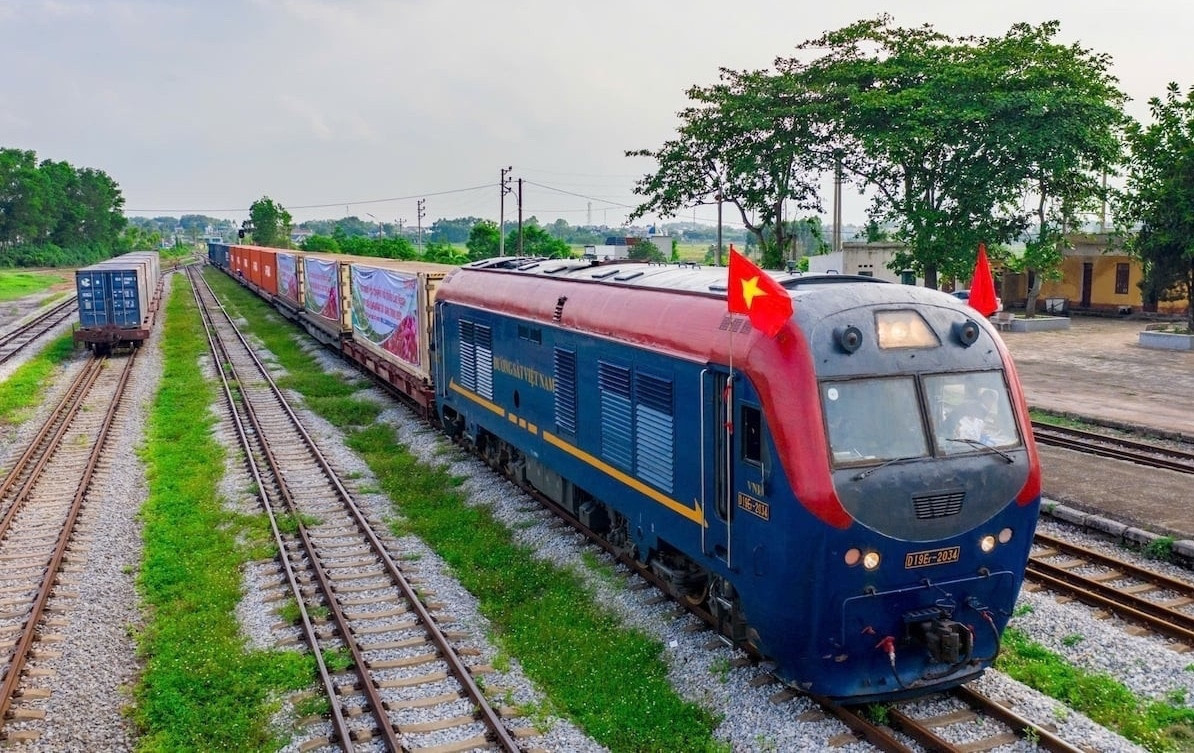
The estimated investment for the Lao Cai–Hanoi–Hai Phong railway project has been revised by more than VND86 trillion to VND289.339 trillion, of which nearly VND23 trillion will be used to build a double-track railway from the outset on the Hanoi–Hai Phong section.
Why has the project's total investment increased?
The revised total investment is estimated at VND289.339 trillion, an increase of VND86.108 trillion. Most of the additional funding will be used for essential components to improve the project's overall efficiency.
Land clearance, compensation, resettlement and support costs have risen by more than VND34.8 trillion, mainly due to the addition of the Yen Vien–Gia Lam section and Gia Lam Station, updated 2026 compensation rates, and land recovery costs for material extraction sites and waste disposal areas.
Nearly VND 23 trillion has been added to build a double-track line from the start across the entire Hanoi - Hai Phong section, rather than building a single-track line and upgrading it later.
Over VND8.1 trillion is earmarked for the Yen Vien - Gia Lam section and connecting branches with the existing rail network. The remaining amount of over VND20.2 trillion relates to technical adjustments, bridges, tunnels, power systems, locomotives, rolling stock, price escalation, and exchange rate fluctuations.
What are the benefits of building a double-track railway from the outset instead of adopting a phased approach?
According to forecasts, if only a single-track line is built, the railway will reach full capacity by 2045 and will need upgrading to double track from around 2041. Preparations for that upgrade would therefore have to begin in 2038–2039.
Constructing a double-track railway from the beginning will increase transport capacity, raise operating speeds from about 95 km/h to 120 km/h, shorten travel time by around 14 minutes and generate estimated economic benefits of VND50 billion per year.
The approach will also reduce land requirements by about 115 hectares, save VND4.8 trillion in land clearance costs and avoid an additional VND12.587 trillion in technical upgrade expenses that would otherwise be required later.
Why has the project added the 8.4-km Yen Vien–Gia Lam section?
Under the revised railway master plan, Gia Lam Station has been designated as the northern passenger hub, while Yen Vien Station will serve technical and operational functions.
As a result, the project has added an 8.4-km section between Yen Vien and Gia Lam, along with connecting branches linking it to the existing railway network. The new section will improve connections between the national railway, central Hanoi, the Gia Lam–Hai Phong railway and Metro Lines 1, 4 and 12.
The section also creates favorable conditions to develop the Gia Lam Station area under the Transit-Oriented Development (TOD) model. According to calculations, the new line reduces travel time to the passenger station by about eight minutes, yielding an estimated economic benefit of VND 10.5 billion annually.
What is the current progress of the project?
The railway has been divided into nine sub-projects to meet the construction schedule.
Sub-project 1 received approval for its feasibility study and the first construction package broke ground on December 19, 2025. Technical designs for the remaining packages are being finalized before contractor selection.
Sub-project 2 is currently being submitted to the National Assembly for approval of revised investment policy during August, while its feasibility study is expected to be completed and submitted for approval in September, alongside preparations for contractor selection.
Regarding land clearance, part of the required land has already been handed over for the launch of Sub-project 1. For Sub-project 2, 57 of the planned 113 resettlement areas have already begun construction. Documentation defining the land clearance boundaries for stable sections of the route has also been completed and transferred to local authorities for implementation.
The key milestones remain unchanged: project approval in 2026, completion of land clearance in 2027 and commencement of full-line operations by 2030.
The government plans to cover the shortfall using unallocated funds from the medium-term public investment plan and other lawful funding sources.
The remaining VND64.75 trillion is expected to be allocated during the 2031–2035 period. Resolution 187 also allows the project to mobilize government bonds, ODA, concessional loans and other lawful funding sources to ensure it stays on schedule.
Vu Diep
.svg)
