 Vietnamnet.vn

 Podcast



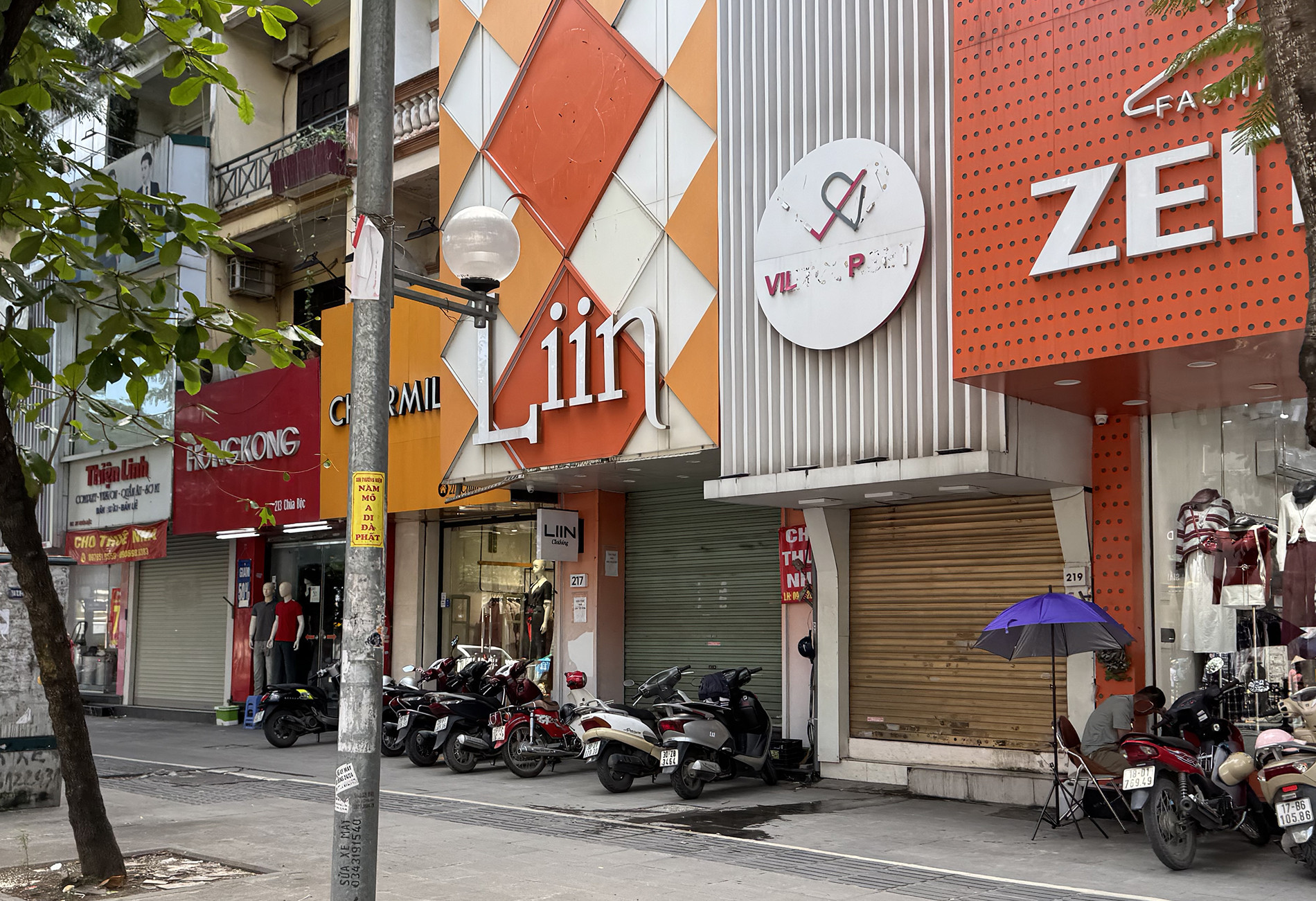
Hanoi-based womenswear brand Chi Chi Chanh Chanh recently announced that it will close in August. Founded in 2021, the brand focused on women’s fashion designs and catered to a distinct customer segment.
According to its founder, running the business was not always smooth. The brand once had to remake an entire batch of products after realizing that the quality did not meet expectations. Some designs sold out quickly but could not be reproduced because of limited fabric supplies.
After around five years in business, the fashion retailer has decided to cease operations amid increasingly challenging market conditions.
Vietnam’s fashion market has recently seen a succession of brands, once familiar to consumers for their distinctive styles, bid farewell. In late February 2026, womenswear brand MaryJane announced that it would cease trading after more than 10 years in business. Its four stores in Hanoi subsequently closed one after another in March.
Another brand, Her25, also announced the end of its 12-year journey. Before closing, Her25 had already scaled back its retail network and was no longer expanding as it had in previous years.
Similarly, L.II.N Clothing, a womenswear brand with more than 1.4 million followers on social media, announced its permanent closure after more than a decade in business. Its founder said the business model was no longer suited to current market conditions and would struggle to create long-term value if it continued operating on an unsustainable footing.
Earlier, fashion brand Lep ceased operations after eight years in business. Casta closed its network of 22 stores after 13 years in the market. Danghaiyen, established in 2014, began closing its stores in mid-2025. Lam Khue, a Hanoi brand specializing in handcrafted dresses and ao dai, Vietnam’s traditional long dress, also ended operations after eight years.
The contraction has also reached the menswear segment. In March 2026, H2T announced the closure of its store on Nguyen Trai Street. Menswear chain Adam Store also ceased operations at its Thanh Nien Street outlet.
Without differentiation, survival is difficult
A survey of the market shows that smaller fashion brands are finding it increasingly difficult to carve out a place for themselves as competition intensifies on multiple fronts, from management and operations to brand building and customer acquisition.
Rent, staffing, marketing and the cost of selling through online platforms are putting additional pressure on profit margins. Competitive pressure is also increasing as international fashion brands continue to expand their presence in Vietnam.
Speaking to VietNamNet, fashion expert Vu Viet Ha said the market is becoming increasingly polarized. New fashion stores continue to open, but attracting customers is no longer as easy as it once was. Many smaller shops offer similar products while shouldering high rental and operating costs, making it difficult for small brands to maintain stable earnings.
According to Ha, consumers now have far more choices, particularly through online sales channels. When products are similar, shoppers tend to buy online because prices are more competitive and purchasing is more convenient. Since the beginning of the year, however, online fashion sellers have also faced pressure from tax compliance requirements. Consumer confidence has meanwhile been affected by cases in which products received do not match their advertising.
Ha said fashion purchasing patterns have also changed significantly. Consumers are increasingly tightening their spending and becoming more selective. Mass-market products with little innovation in design, materials or colors are finding it increasingly difficult to compete.
Meanwhile, brands offering diverse designs, frequently refreshing their products and maintaining appropriate price points can still retain their appeal.
According to the expert, as consumers tighten their spending, design and quality are becoming decisive factors in a brand’s ability to survive. Businesses that are slow to innovate, charge prices that do not match the customer experience and fail to differentiate themselves can easily become trapped in a cycle of declining demand, high inventories and mounting operating costs.
Duy Anh
.svg)
