 Vietnamnet.vn

 Podcast



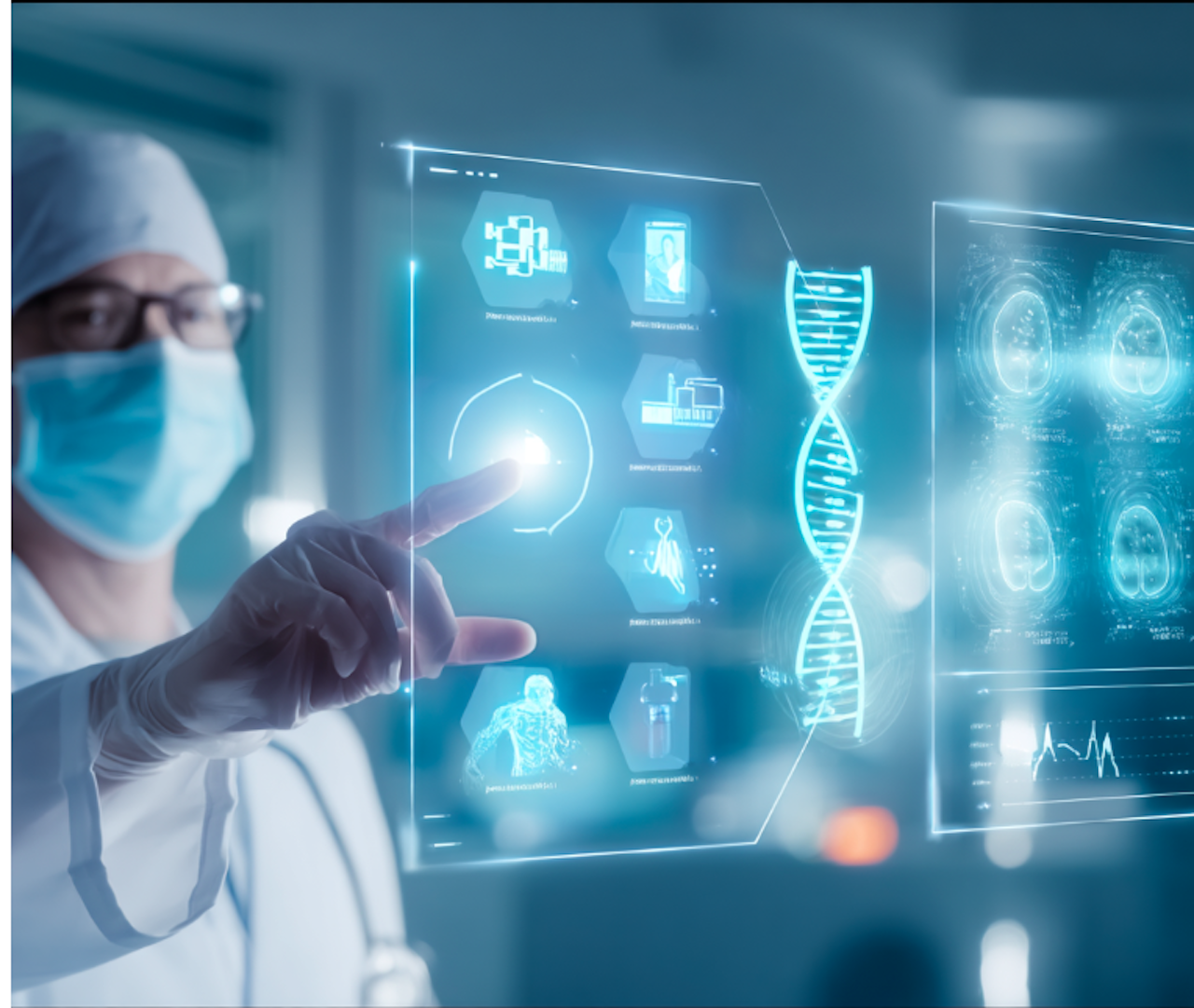
The 4th Industrial Revolution, with AI at its core, is profoundly transforming many fields, including healthcare. Given the rapid development of technologies supporting diagnosis and treatment, many people may ask: Can AI replace or even take away the jobs of doctors in the future?
Son, Deputy Head and Director of the International Center for Advanced Research on Applied Artificial Intelligence, an arm of the Information Technology Institute (Vietnam National University, Hanoi), affirmed that AI is and will play a very important role in medicine, but it cannot replace doctors.
Reality shows that AI has proven its value in supporting medical examination and treatment consultation. During the COVID-19 pandemic, the Ministry of Health announced many AI applications for screening through chest X-rays. The National Lung Hospital has applied AI in tuberculosis screening, helping shorten time and expand deployment capabilities to grassroots levels.
Meanwhile, the 108 Military Central Hospital has implemented an AI system that converts speech to text with 85 percent accuracy, helping doctors save time on note-taking and focus more on examination and treatment.
At the national exhibition on the occasion of the 80th anniversary of the National Day in August 2025, Bach Mai Hospital introduced the AI software supporting lung cancer diagnosis, capable of simultaneously analyzing three types of medical images: chest CT, bronchoscopy, and histopathology. This is the first time in Vietnam that a synchronous AI system has been applied across all three lung cancer diagnosis fields, opening great prospects for early disease detection and treatment.
The software acts as an "intelligent assistant" for doctors:
On chest CT images: It automatically detects abnormal nodules and points out suspected cancer areas, helping doctors navigate quickly and accurately.
On bronchoscopy images: It identifies lesions in difficult-to-observe positions and suggests optimal biopsy locations.
On histopathology images: It classifies cancer cells with high accuracy, supporting the identification of lung cancer types.
The software not only shortens diagnosis time but also improves the ability to detect microscopic lesions, reducing pressure on doctors, especially at lower-level medical facilities. This is a breakthrough step, contributing to standardizing diagnostic procedures and improving cancer treatment quality nationwide.
"AI brings many benefits to the healthcare sector, especially improving workflows and increasing efficiency. Thanks to automated diagnostic support, doctors can reduce information processing time, thereby prioritizing urgent or rare cases. Additionally, AI contributes to reducing administrative burdens, standardizing reports, and limiting avoidable errors, which is very important in the context of a medical system under great pressure and uneven resource distribution between localities," Son noted.
Doctors can’t be replaced
However, Son emphasized that AI can only support processing certain tasks, while it cannot take over the role, function, and responsibility of a doctor. A doctor's job is not just diagnosis but also involves interpretation, legal responsibility, and treatment consultation for patients.
Even the most advanced AI systems today only provide predictions about the disease state and treatment options based on past data. Meanwhile, many effective therapies do not lie with the majority or in statistical models but are based on the doctor's understanding and feeling for each specific patient.
"AI can ‘read’ the disease, but only doctors understand the patient," Son emphasized. A good doctor looks not only at test results (hard data) but also observes the patient's facial expression, and psychological reactions (soft data) that are very difficult for AI to fully grasp.
Another important factor preventing AI from replacing doctors is the legal and ethical issues. Currently, there is no legal framework recognizing AI as a legal entity capable of signing medical records or bearing legal responsibility. In medical professional councils in Vietnam, AI is only considered a form of “advanced paraclinical test,” and its results must be cross-checked and signed off by doctors.
In addition, emotional intelligence (EQ) and empathy are core values of the medical profession. A terminal-stage cancer patient needs companionship, comfort, and humane decisions rather than cold predictive numbers from machines. AI cannot “hold a patient’s hand” or share the pain of their family.
Therefore, according to Son, AI is a tool to help doctors work better, not to replace doctors.
Son also warned against the trend of people using multi-purpose chatbots such as ChatGPT to support medical examination and treatment. This can create risks: chatbots are designed for information retrieval and synthesis, not to replace doctors in making conclusions. In some cases, chatbots may distort information, provide incorrect conclusions, or overlook important factors and regional differences, posing risks to patients.
Vo Thu
.svg)
