 Vietnamnet.vn

 Podcast



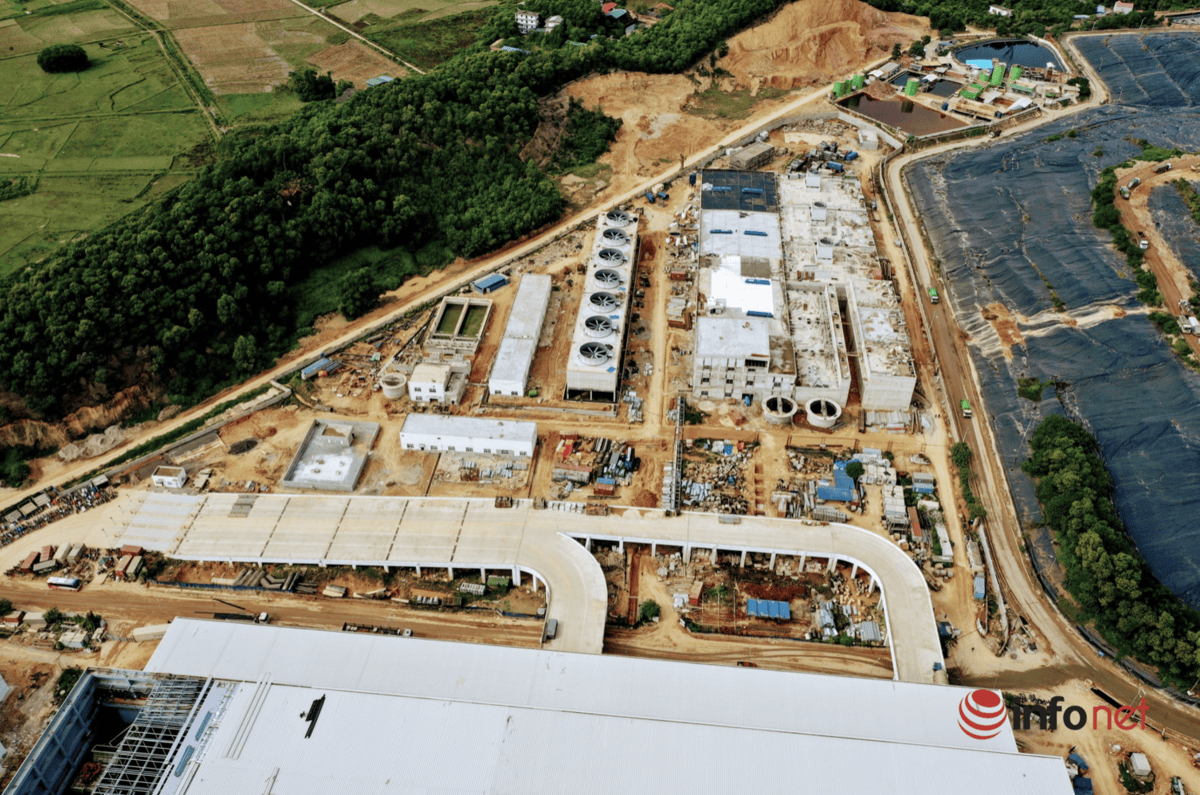
The proposed reduction has prompted businesses to call for a review of the underlying assumptions to ensure the tariff framework accurately reflects actual costs.
Why apply coal-power standards to WTE? One of the parameters used to calculate the proposed tariff is the net heat rate.
According to calculations submitted by EVN and currently under review by the Electricity and Renewable Energy Authority, the net heat rate is set at 2,602.8 kcal/kWh, corresponding to a power generation efficiency of around 33 percent. This is close to the efficiency of coal-fired power plants.
Nguyen Manh Cuong, Director of the Northern Branch of Power Engineering Consulting JSC 4, noted that WTE has technical specifics that drive up investment and operational costs. While its technology is as complex as a coal-fired power plant, its input fuel - municipal waste - contains many corrosive elements that cause rapid equipment degradation and high operation and maintenance (O&M) costs.
In addition, waste composition fluctuates by season, time, and daily living habits. This causes unsteady incineration processes, directly impacting the generation efficiency of turbine units.
Furthermore, WTE plants must allocate substantial resources toward environmental treatment, such as wastewater and exhaust gas processing—costs that coal-fired power plants do not bear to the same degree.
Given these technical specifics, Cuong argued that applying a net heat rate of 2,602.8 kcal/kWh, corresponding to an efficiency of around 33 percent, is quite high.
"Coal power benefits from stable input fuel, allowing new coal-fired plants to achieve efficiencies above 40 percent, while some older coal units operate around 26 percent. For WTE, design efficiency historically ranges between only 20-26 percent. Therefore, a 33 percent mark is quite high," he analyzed.
In a petition sent to the Ministry of Industry and Trade (MOIT), one enterprise stated that domestic solid waste in Vietnam typically has high moisture content, low calorific value, and inconsistent composition that varies by region and season, directly affecting heat recovery and power generation capacity.
According to design records and operational data from several projects, the actual generation efficiency of WTE plants typically ranges between 20 and 24 percent. Correspondingly, the actual net heat rate falls between 3,583 and 4,302 kcal/kWh, significantly higher than the 2,602.8 kcal/kWh currently applied.
Investment rate: actual cost fluctuations unaccounted for
The draft currently uses a capital expenditure benchmark of VND120.164 million/kW, calculated from project data formulated roughly two years ago. According to enterprises, this figure fails to reflect present-day investment cost levels.
Data from several ongoing projects shows that actual capital expenditure has increased by approximately 15 percent. Accordingly, enterprises propose updating the reference level to around VND135–140 million/kW, or using data from the most recently audited, quoted, and implemented projects.
Cost increases stem from multiple factors: a sharp rise in construction and installation labor costs; material and equipment prices heavily impacted by geopolitical conflicts and supply chain disruptions; and elevated global benchmarks for energy, transport, insurance, and logistics.
The impact on WTE is particularly pronounced as many core technology components, spare parts, and specialized materials must be imported, alongside increasingly stringent technological and environmental requirements.
The draft currently uses a fixed O&M rate of 2.1 percent. Meanwhile, WTE facilities operate with inconsistent fuel sources characterized by high moisture and heavy impurities, subjecting equipment to significant corrosion and wear.
Regarding O&M costs, Cuong noted that while the 2.1 percent rate was adjusted upward, it remains significantly lower than reality. Waste contains heavily corrosive components that shorten a WTE plant's lifespan to around 20 years. A shorter lifespan necessitates higher O&M expenses.
Similarly, determining investment rate requires consultation with market technology suppliers, operational WTE plants, and projects currently under construction.
The reports from enterprises submitted to MOIT showed that the actual O&M costs range between 4 and 7.5 percent, or 2-3 times higher than the figure shown in the draft.
Investors want FIT
The majority of WTE enterprises petitioned MOIT to maintain the Feed-in Tariff (FIT) mechanism to ensure policy stability and reinforce investor and credit institution confidence in projects requiring large capital investments and long payback periods.
Cuong said that most projects currently under development require roughly 15 years to recover capital, while the lifespan of a waste-to-energy plant is only about 20 years. If payback periods extend further, financial feasibility will decline significantly.
"When WTE becomes less attractive, investors may shift to other energy types. At that point, mobilizing capital for waste-to-energy projects will become even more difficult," he said.
Tam An
.svg)
