 Vietnamnet.vn

 Podcast



This morning (November 25), the HEF 2025 Autumn Economic Forum officially opened at ThiSky Hall in Ho Chi Minh City with the dialogue titled “Intelligent Generation NOW – The Intelligent Generation of Today.” The session brought together senior leaders from the central government and HCMC, international organizations, technology enterprises, and hundreds of young Vietnamese.
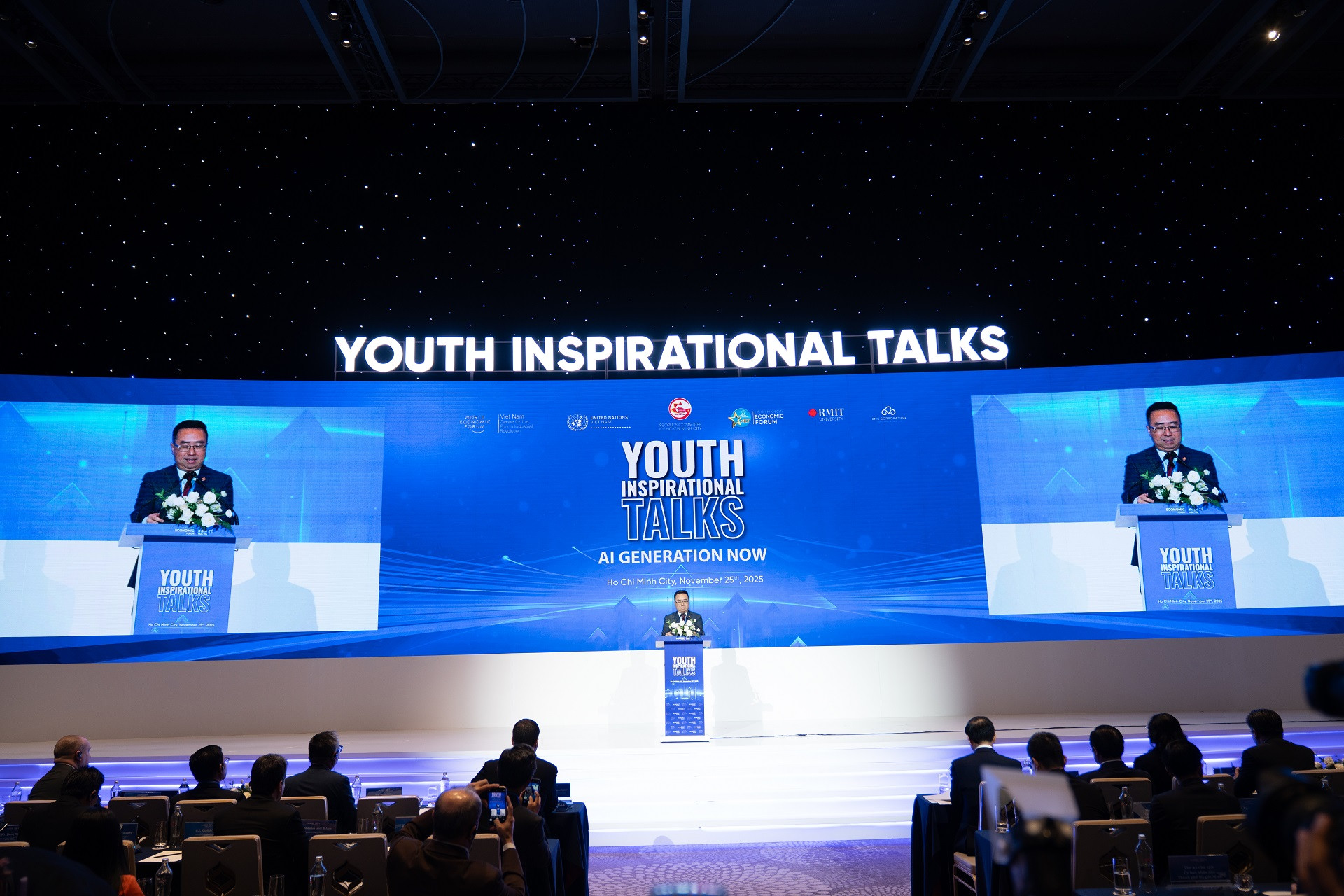
In his opening remarks, Chairman of the HCM City People’s Committee Nguyen Van Duoc emphasized that this year’s HEF is dedicated to inspiring the young generation and clarifying their role in the dual transformation: digital and green transition toward sustainable development. The city expects that the insights of youth, experts, and businesses will contribute to shaping forward-looking policies on digital human resources - particularly in artificial intelligence (AI).
Youth voices meet global platforms: From WEF and UNESCO to young innovators
Stephan Mergenthaler, Managing Director of the World Economic Forum (WEF), highlighted how AI, the green economy, and deep tech are reshaping decision-making across governments and corporations. He urged young Vietnamese to rise above being mere “technology users” and instead become creators of future-shaping innovations and policy.
Moderated by Jonathan Wallace Baker, Head of Office and UNESCO Representative to Vietnam, the youth exchange featured startup founders, activists, students, and young scientists. Their stories - ranging from AI in education to health and environmental tech - reflected both the ambition and the pressure facing this generation to continually adapt and upskill.
Representing the Vietnamese Government, Deputy Prime Minister Bui Thanh Son affirmed that youth are central to Vietnam’s strategy for building a digital and knowledge-based economy. Participation in global frameworks like WEF, UNESCO, and the UN, he said, allows Vietnamese youth to “grow together with the world” rather than fall behind.
CMC’s CTO outlines four national AI initiatives for talent development
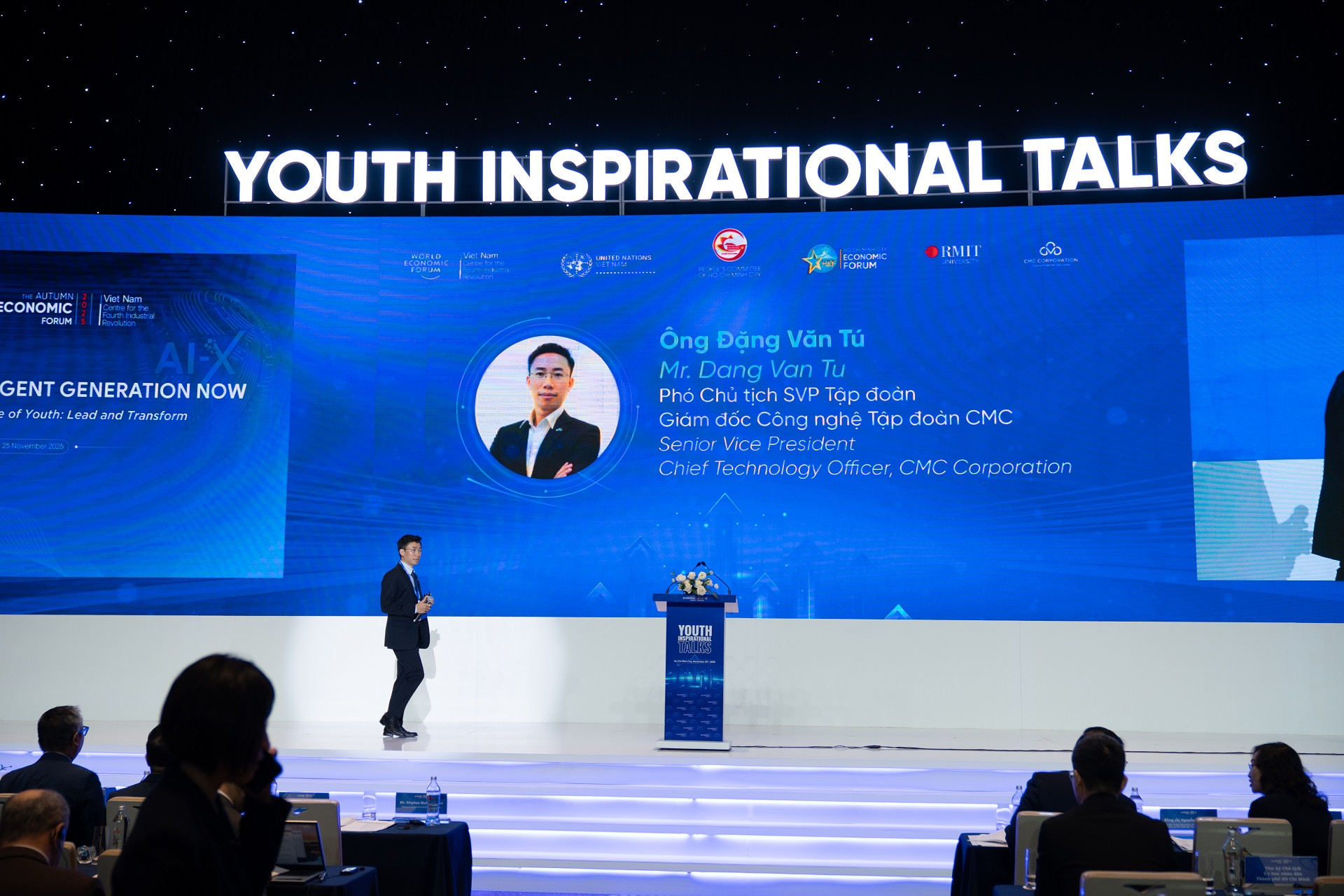
In a keynote on “AI for Everyone and the Role of Young People in Leading the Transformation,” Dang Van Tu, Senior Vice President and Chief Technology Officer of CMC Technology Group, spoke of the “unprecedented opportunity” facing young Vietnamese in AI - but also pointed out persistent gaps in skills and infrastructure.
From a tech enterprise’s perspective, he proposed four key initiatives to expand Vietnam’s AI talent pool:
First, build a National AI Skills Competency Framework, clearly defining required competencies for students, engineers, civil servants, and experts at each level. Such a standard would allow universities, training centers, and businesses to design aligned, scalable training programs nationwide.
Second, innovate university–enterprise cooperation through “co-teaching” models. Universities provide foundational knowledge, while companies offer real-world data, infrastructure, and career pathways. CMC is piloting this with its own university, aiming for national replication.
Third, invest in open AI infrastructure. AI skills cannot develop without access to GPUs, datasets, and open platforms for experimentation. Mr. Tu cited platforms like CMC’s C-OpenAI and AI-X strategy as examples of providing AI-as-a-Service to millions - especially students, startups, and SMEs.
Fourth, expand global AI training and research partnerships. Vietnam must collaborate with leading global tech companies and labs to train engineers in large language models (LLMs), AI safety, and governance. “We can’t speak of digital or AI sovereignty,” he said, “without having Vietnamese teams capable of mastering both the systems and the rules of the game.”
“These four pillars,” he concluded, “aren’t just about creating more engineers - they’re about developing a generation that can design and lead AI systems for the entire region.”
Vietnam must move beyond being an ‘AI user’
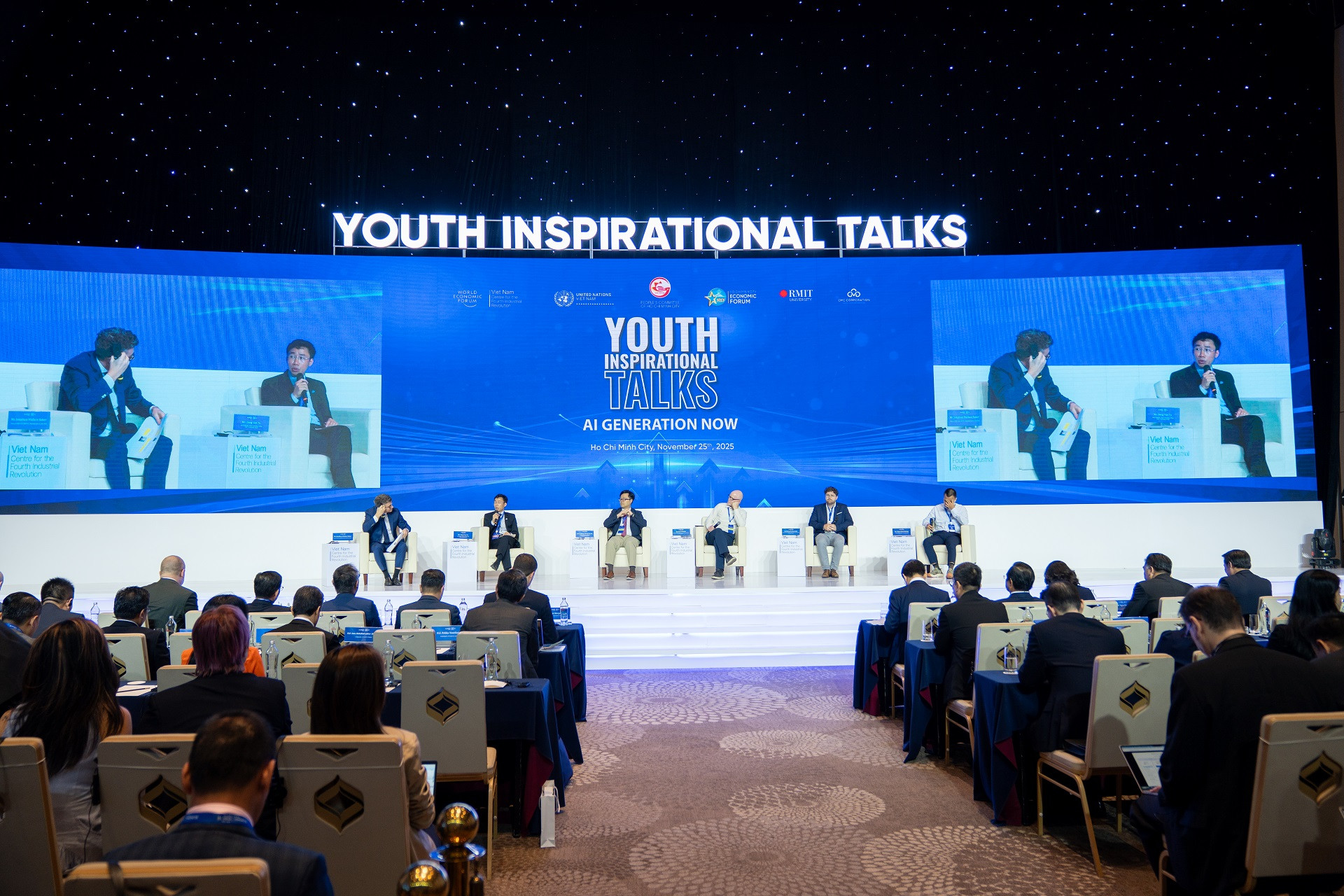
At the panel discussion “Policies for Developing Talent in the Digital Era,” Mr. Tu joined representatives from UNESCO, global universities, and Vietnamese businesses to address how to cultivate a high-quality digital workforce.
Mr. Tu emphasized that Vietnam should proactively align with global frameworks such as the Global Digital Compact and UNESCO’s AI Ethics Recommendation, citing three reasons:
First, to build international trust. Aligning with standards on transparency, inclusiveness, and safety signals that Vietnam develops AI responsibly.
Second, to enable cross-border cooperation. Shared frameworks make it easier for Vietnam’s digital platforms, services, and data governance to integrate with ASEAN, Europe, and beyond - opening the door for AI service exports.
Third, to define Vietnam’s strategic identity. Rather than being seen solely as a technology market, Vietnam can position itself as a contributor - building AI models tailored to its needs and those of other emerging economies.
Mr. Tu also shared that CMC’s AI-X strategy is built with an “ethical-by-design” approach - embedding ethics from the earliest stages of product design. This includes data protection, governance, and safe deployment of LLMs across public services and enterprises. The goal, he stressed, is for AI to be not just a tool for engineers but a safe, inclusive utility for all Vietnamese citizens and organizations.
As the panel concluded, the message of “AI Generation NOW – Acting from Today” was reiterated. With the right policies, open infrastructure, and partnerships from pioneers like CMC, Vietnam’s youth can not only keep up with the global digital revolution - they can write the rules of the game for the AI era.
PV
.svg)
