 Vietnamnet.vn

 Podcast



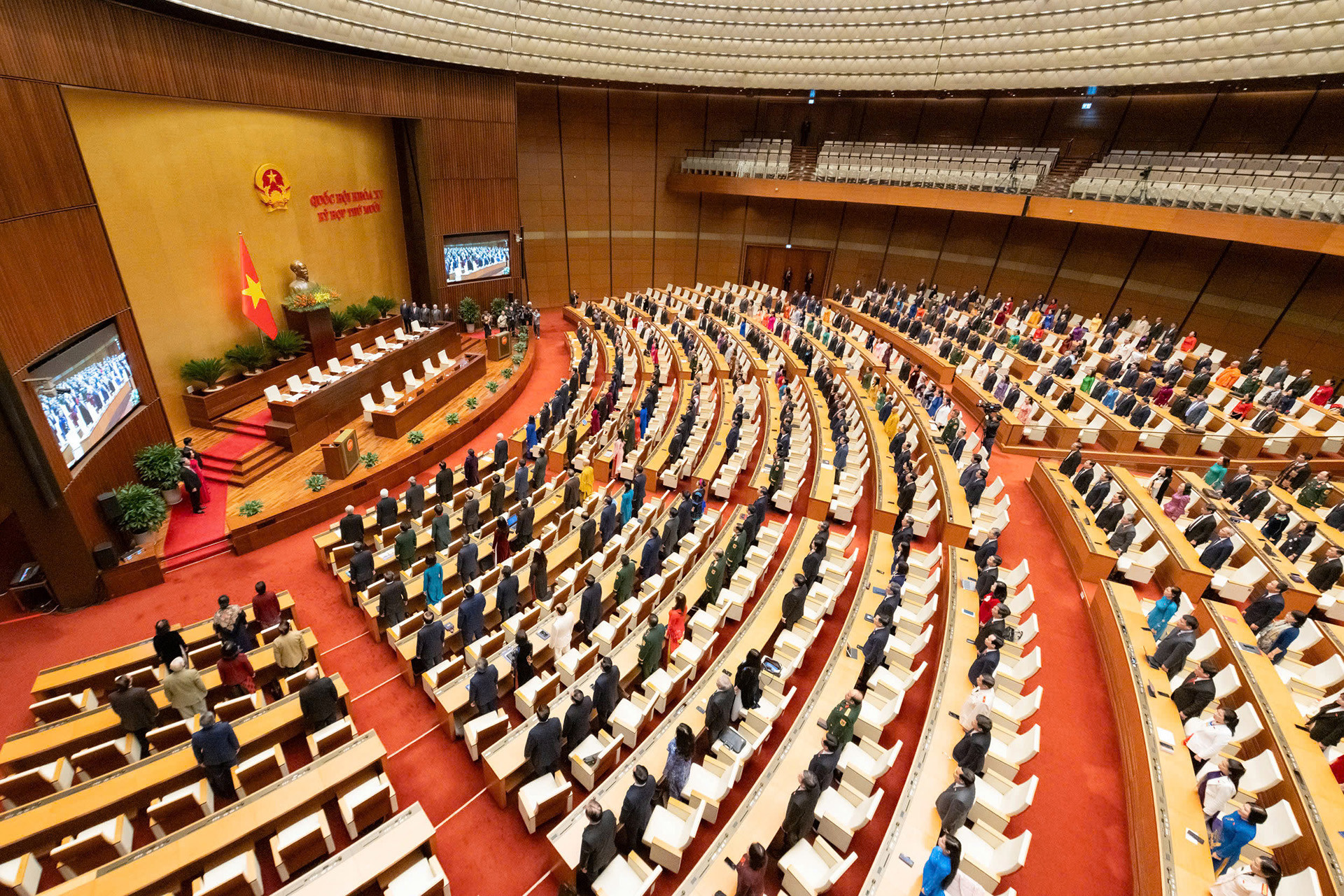
The Central Committee of the Vietnam Fatherland Front has released a report on the outcome of the second consultative conference for the election of deputies to the 16th National Assembly and People’s Councils at all levels for the 2026–2031 term.
At the conclusion of the second consultative conference, the total number of individuals placed on the preliminary list nationwide, at both central and local levels, reached 1,041.
This includes 217 nominees from central agencies and 824 from localities.
The figure represents an average ratio of 2.08 candidates per seat to be filled, meeting the surplus requirement stipulated in the Law on Election of Deputies to the National Assembly and People’s Councils, while ensuring the prescribed structure and composition.
Among the candidates, 471 are women, accounting for 45.24 percent.
There are 228 candidates under the age of 40, making up 21.90 percent.
Ethnic minority candidates number 229, equivalent to 21.99 percent.
A total of 95 candidates are non-Party members, accounting for 9.12 percent.
Meanwhile, 145 candidates are incumbents seeking re-election from the 15th National Assembly, representing 29 percent.
In terms of institutional affiliation, nominees include 10 from Party agencies, accounting for 4.60 percent.
Two candidates are from the Office of the President, equivalent to 0.92 percent.
From agencies of the National Assembly, including full-time deputies at the central level, there are 145 nominees, making up 66.82 percent.
The Government and its affiliated bodies account for 15 nominees, or 6.91 percent.
The Ministry of National Defense, including the Minister, ministry-level agencies, military regions and service branches, has 14 nominees, equivalent to 6.45 percent.
The Ministry of Public Security, including the Minister, has three nominees, accounting for 1.38 percent.
The Supreme People’s Court has one nominee, or 0.46 percent.
The Supreme People’s Procuracy has one nominee, equivalent to 0.46 percent.
The State Audit Office of Vietnam has one nominee, or 0.46 percent.
The Vietnam Fatherland Front and its member organizations account for 25 nominees, representing 11.52 percent.
Of the 217 candidates introduced at the central level, 138 are seeking re-election.
Among them, 28 hold undergraduate degrees, while 189 have postgraduate qualifications.
Regarding the 824 candidates introduced by localities, 420 are women.
Provinces and centrally governed cities with a high proportion of female candidates include Thai Nguyen, Phu Tho, Da Nang, Bac Ninh, Cao Bang, Hai Phong, Quang Ngai, and Thanh Hoa.
Among local nominees, 90 are non-Party members.
There are 227 candidates under the age of 40, and 23 self-nominated candidates.
A total of 381 candidates hold undergraduate degrees, 488 have postgraduate qualifications, and 21 have educational levels below university.
5,078 candidates for provincial-level People’s Councils
Under the law, 2,555 deputies are to be elected to provincial-level People’s Councils.
According to the report, following the second consultative conference, the total number of candidates for provincial-level People’s Councils stands at 5,078.
This represents a decrease of 34 candidates compared to projections made at the first consultative conference, with an average ratio of 1.98 candidates per seat.
The total number of deputies to be elected to commune-level People’s Councils nationwide is 75,878.
Based on preliminary reports from 31 out of 34 provinces and centrally governed cities, the number of candidates for commune-level People’s Councils after the second consultative conference is 136,279.
This corresponds to an average ratio of 1.79 candidates per seat.
The Vietnam Fatherland Front assessed that the second consultative conference for the election of deputies to the 16th National Assembly at both central and local levels, as well as for People’s Councils for the 2026–2031 term, was conducted democratically, in accordance with the law and within the prescribed timeframe.
The process demonstrated a high level of consensus in discussions, selection, and agreement on the preliminary list of candidates for the National Assembly and People’s Councils.
Although the timeline was tight, the allocation and guidance provided to agencies, organizations, and units in introducing candidates were largely carried out on schedule and in line with electoral guidelines.
Agencies, organizations, and units implemented the required procedures for nominating candidates to the National Assembly and People’s Councils at all levels in accordance with the allocated structure, composition, and number.
The process of collecting comments and votes of confidence from voters at candidates’ workplaces was conducted seriously and in compliance with regulations.
The preparation of the preliminary list of candidates for the National Assembly and People’s Councils generally ensured compliance with requirements on structure, including representation of women, young candidates, ethnic minorities, and non-Party members.
Timely adjustments were made where necessary to suit the specific conditions of each locality and unit.
Overall, the nomination process secured the necessary surplus of candidates, reflecting the democratic and broad-based nature of the consultative process.
Tran Thuong
.svg)
