 Vietnamnet.vn

 Podcast


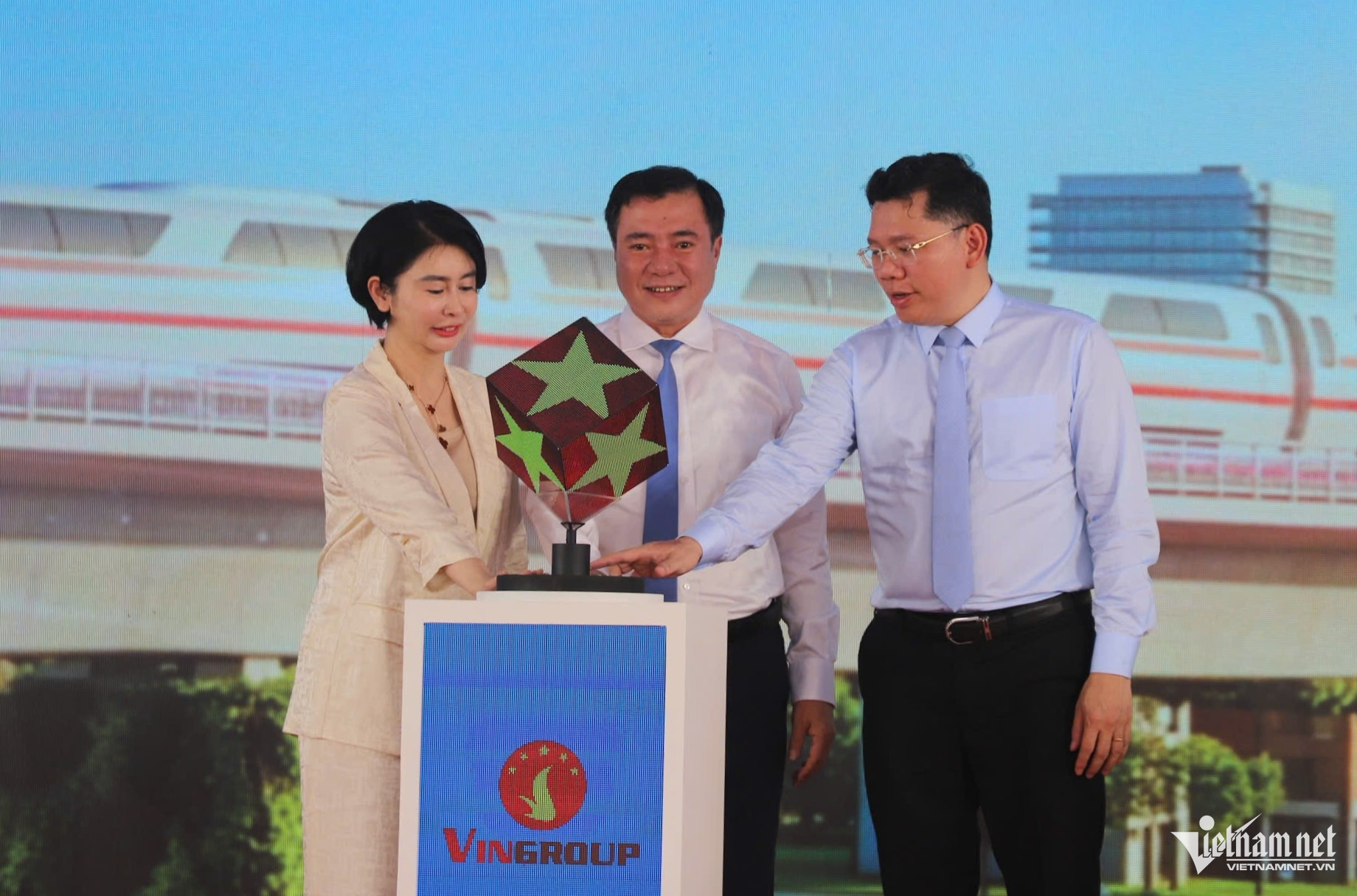
Nearly a year after the project's groundbreaking in December 2025, a series of preparatory works has been completed, including geological surveys, construction of access roads and bored pile foundations at the Can Gio depot, the main Can Gio bridge and several other major bridges, including Dan Xay, An Nghia, Rach Ran, Rach La and Song Cha.
The recent successful trial casting of the first concrete bridge girder has also given contractors greater confidence as they move into a more intensive phase of construction across the project.
The latest construction drive will concentrate resources on the underground Ben Thanh Station, the Saigon Port area where tunnel boring machines (TBMs) will be deployed, the Rach Dia and Ong Doi bridges, and the Can Gio approach viaducts.
During peak construction, an estimated 10,000 workers, engineers and specialized technical personnel will be deployed across the construction sites.
To maintain the demanding schedule while ensuring quality, the investor said industrialized construction methods would be extensively applied.
Around 1,300 full-span precast prestressed concrete box girders will be manufactured at three casting yards along the route over 15 months. Each yard is expected to produce one to two spans per day.
The construction sites have also received 32-meter casting molds and specialized equipment capable of transporting and installing girders weighing up to 900 tonnes.
The railway involves several major engineering structures of considerable technical complexity.
At the starting point, the underground Ben Thanh Station will extend more than 565 meters, with an excavation depth of approximately 34 meters. It will connect directly to Ben Thanh Station on Ho Chi Minh City's Metro Line 1, which runs between Ben Thanh and Suoi Tien.
The route will then pass through a TBM-bored tunnel stretching more than two kilometers beneath the Saigon Port area, excavated using a machine with a diameter of 13 meters.
This section will connect to a 321.7-meter cut-and-cover tunnel and a 266-meter U-shaped open tunnel.
One of the project's most prominent structures will be the main Can Gio Bridge crossing the Soai Rap River.
Designed as a cable-stayed bridge with a steel truss girder and two A-shaped pylons, the structure will feature a 360-meter main span and more than four kilometers of approach viaducts on both sides.
Speaking at the construction launch ceremony, Ho Chi Minh City People's Committee Vice Chairman Hoang Nguyen Dinh described the railway as a strategic infrastructure project that would help expand the city's development space and create new growth drivers during the 2026-2030 period.
He emphasized that successful implementation would require close coordination among government agencies, investors and local communities, as well as public support.
City leaders also called on VinSpeed to proactively mobilize reputable contractors, cooperate with leading international railway technology groups and establish a high-level expert council.
The council would oversee and promptly address complex technological components, including power supply systems, signaling and communications infrastructure, and automatic train control systems.
Under the current schedule, local authorities are expected to complete land clearance by the fourth quarter of 2026.
Construction is scheduled for completion in the fourth quarter of 2028, followed by trial operations before the railway enters commercial service in 2029.
Once operational, the approximately 54-kilometer railway, designed for speeds of up to 350 kilometers per hour, is expected to reduce travel time between central Ho Chi Minh City and Can Gio to around 13 minutes.
The project is also expected to strengthen transport connectivity and create new opportunities for the city's marine economy.
Tuan Kiet

