 Vietnamnet.vn

 Podcast



A 15-year-old boy in Ho Chi Minh City has survived a rare and life-threatening case of severe dengue hemorrhagic fever that caused pancreatic damage - an ultra-rare complication with only 70 reported cases globally over the past 43 years.
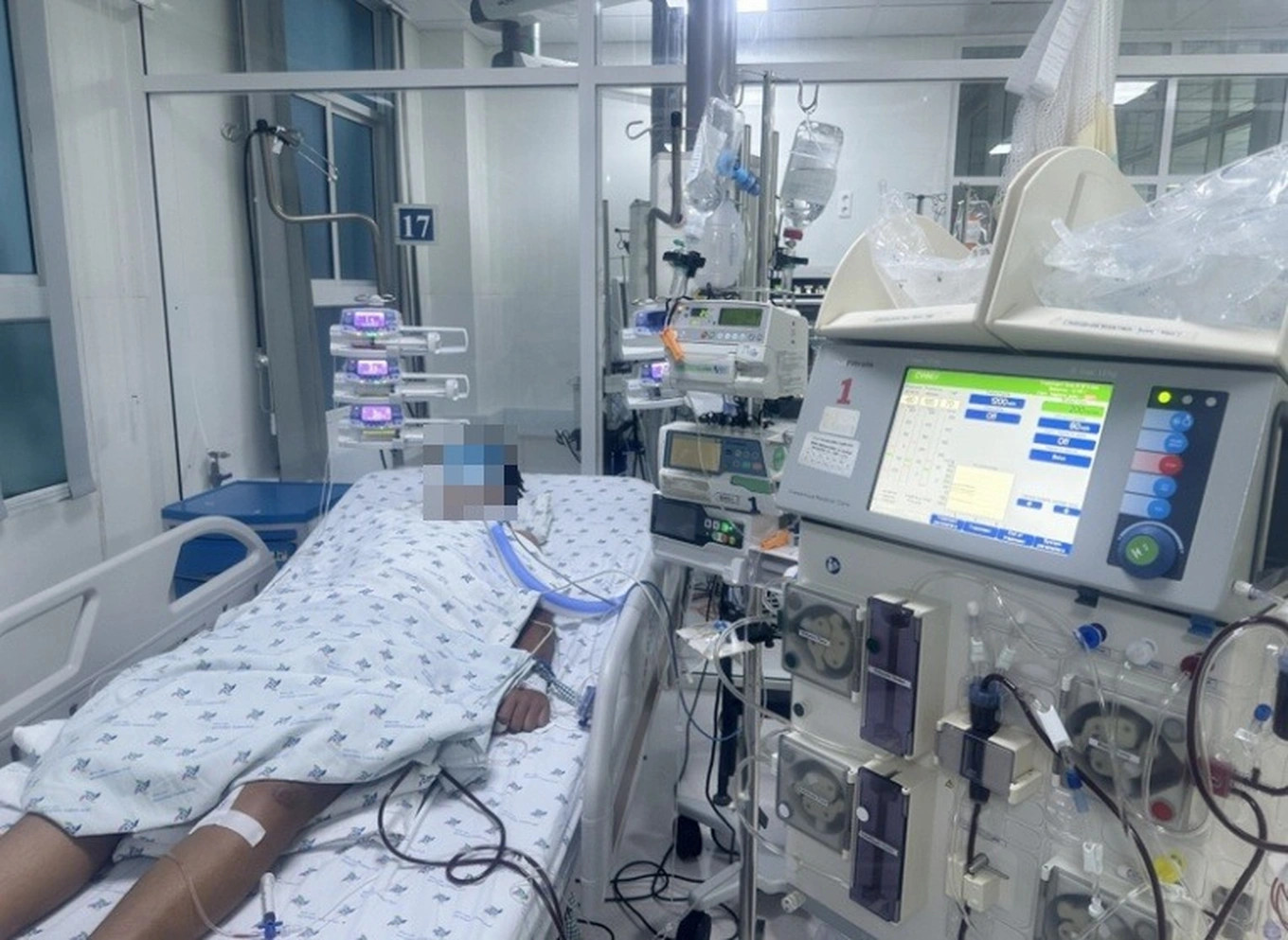
On December 29, Children’s Hospital City (Ho Chi Minh City) announced that its team had successfully treated the boy after a prolonged and complex medical battle.
The patient, N.D.N.D., arrived at the hospital in critical condition. Three days prior to admission, he had suffered from persistent high fever that did not respond to antipyretics, along with coughing and a runny nose. By the fourth day, his condition deteriorated rapidly, with symptoms including vomiting brown fluid three times, extreme fatigue, and cold limbs.
At a local clinic, he was diagnosed with severe dengue shock. His pulse was undetectable and his blood pressure unmeasurable. After emergency fluid resuscitation according to the dengue protocol, the boy was transferred to Children’s Hospital City for advanced treatment.
Upon arrival, he had a weak pulse, cold extremities, low blood pressure (90/70 mmHg), mottled skin, and a prolonged capillary refill time of 4–5 seconds.
Doctors diagnosed the child with severe dengue shock and immediately initiated aggressive anti-shock therapy. This included 10% albumin infusion, vasopressors guided by central venous pressure and invasive arterial blood pressure monitoring.
Despite these measures, the patient’s condition worsened. He suffered from prolonged shock, coagulation disorders, gastrointestinal bleeding, and respiratory failure.
The care team had to intubate and place him on a ventilator, while also administering blood transfusions, fresh frozen plasma, cryoprecipitate, and platelet concentrates.
Additionally, he experienced severe liver and kidney damage (liver enzymes exceeding 1,500 U/L, blood creatinine over 450 µmol/L), as well as extremely rare pancreatic damage. His pancreatic enzyme levels (amylase and lipase) were both above 1,000 U/L.
Doctors performed continuous renal replacement therapy (CRRT) and provided liver and pancreatic support throughout treatment.
Dr. Nguyen Minh Tien, Deputy Director of Children’s Hospital City, noted that from 1981 to 2024, only 70 cases of dengue-related pancreatic injury have been documented worldwide. The exact mechanism remains unclear, but prevailing theories include:
Direct invasion of pancreatic cells by the dengue virus, causing inflammation and edema
Microvascular damage leading to pancreatic ischemia
Excessive immune responses (cytokine storm)
Coagulation disorders causing pancreatic hemorrhage
During the intensive care period, the patient also contracted a hospital-acquired infection. His condition fluctuated between improvement and deterioration due to multiple organ dysfunction.
After nearly four weeks of critical care - including five rounds of continuous blood filtration, multi-organ support, and broad-spectrum antibiotics - the boy began to recover.
His liver, kidney, and pancreatic functions eventually returned to normal. He was successfully weaned off the ventilator and regained full consciousness.
Dr. Tien urged parents to remain vigilant against dengue fever, especially during peak seasons. He advised the use of mosquito nets, eliminating mosquito breeding sites, and monitoring symptoms closely.
Parents should seek immediate medical attention if a child has a fever lasting more than two days, along with any of the following: unusual drowsiness or restlessness, abdominal pain, nose or gum bleeding, vomiting blood, black stool, cold limbs, or refusal to eat and drink.
Phuoc Sang
.svg)
