 Vietnamnet.vn

 Podcast



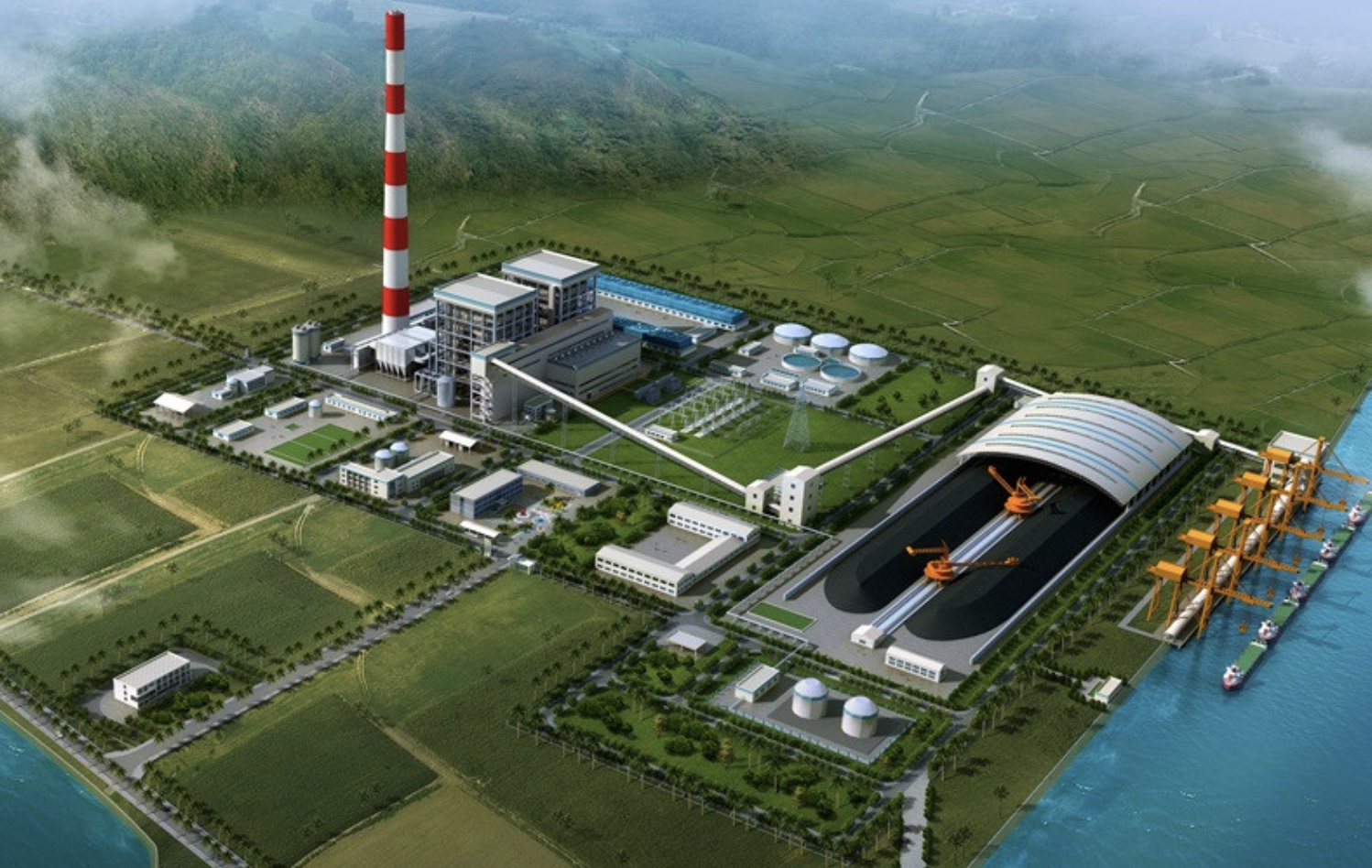
Delayed for years and marred by numerous violations, the fate of the An Khanh - Bac Giang thermal power plant project - worth over $1 billion USD - is now under intense scrutiny by Vietnam’s Government Inspectorate.
The project, classified as Group A and Level I industrial infrastructure, is developed by An Khanh - Bac Giang Thermal Power Joint Stock Company.
It is located in Vu Xa commune, Luc Nam district, Bac Giang province - now renamed Cam Ly commune, Bac Ninh province.
Approved for investment in 2017, the project was valued at over VND 23,600 billion (approx. $1 billion USD) and structured as an independent power producer (IPP) model. It was to be financed through equity, commercial loans, and other sources.
With an installed capacity of 650MW, the plant was initially slated for commercial operation in 2023. The deadline was later extended to December 2025. The plant was expected to supply a significant amount of electricity to northern Vietnam.
However, for years, the Ministry of Industry and Trade (MOIT) has flagged the project in its reports due to prolonged delays.
In 2022, a report on progress under the revised Power Development Plan VII noted that although a commercial loan had been negotiated with the Industrial and Commercial Bank of China (ICBC), shifting policies from the Chinese government forced the investor to seek domestic financing instead.
Multiple violations uncovered
On August 21, 2025, the Bac Ninh Provincial People’s Committee submitted a supplementary report on the An Khanh - Bac Giang project to the Government Inspectorate, following Decision No. 696/QD-TTCP.
The province confirmed the project qualifies for land rent exemption.
Since only 11.6 hectares of the approved 89.7-hectare site had been allocated - and no revenue had yet been generated - the local tax authority had not yet scheduled a tax audit. As such, no decision had been issued to revoke the land rent exemption.
Moreover, even without the preferential land rent exemption policy for special-investment projects, the investor was not required to pay rent when land was allocated in 2017.
At the time of inspection, the project was behind schedule due to unresolved land clearance issues and lack of funding.
Twenty items listed in the EPC (engineering, procurement, and construction) contract had not been implemented. The slag disposal area, conveyor belt corridor, and slag brick factory - covering approximately 47.9 hectares - had not yet undergone compensation or clearance.
Regulatory breaches and oversight failures
In its inspection findings on struggling energy projects under the MOIT’s jurisdiction, the Government Inspectorate revealed that the ministry had submitted the project for capacity expansion from 100 MW to 650 MW without fully consulting relevant agencies.
This increase in scale was deemed unnecessary, and no thorough financial capability assessment of the investor was carried out.
Several individuals involved in preparing and appraising the project’s feasibility study lacked required qualifications and failed to follow regulations.
The project’s ash and slag disposal site (47.94 hectares) and warehouse/port area (14.68 hectares) were both found to violate floodplain and dyke safety corridors - areas where construction is prohibited.
Furthermore, the investor lacked the necessary equity capital and failed to meet the criteria for government-guaranteed loans. This resulted in repeated delays due to unstable financing.
The company also failed to make the required investment performance deposit, as instructed by the Bac Giang Department of Planning and Investment.
The Inspectorate concluded that the project did not qualify for land allocation under the category of serving socio-economic development.
Therefore, Bac Giang province's decision to establish the Vu Xa industrial cluster and acquire land for this project violated Article 62 of the 2013 Land Law.
Alarmingly, the company was also found to have illegally expanded its construction beyond the allocated boundaries, breaching Decision No. 396.
Financial consequences and accountability
The Government Inspectorate highlighted that An Khanh’s disbursement of investment capital did not meet the conditions agreed upon with the Bac Giang Tax Department.
As a result, the company must reimburse the state budget for the previously exempted land rental, along with late payment penalties.
Regarding the project’s extensive delays, the Inspectorate attributed responsibility to the MOIT, its subordinate units (including the former General Department of Energy and the Department of Local Industry, now the Department of Innovation and Green Transition), and various local agencies in Bac Giang and Bac Ninh provinces - including the Departments of Planning and Investment, Natural Resources and Environment, Agriculture and Rural Development, Construction, and Taxation - as well as the Luc Nam District People's Committee and the project investor.
Government action and recommendations
Following the inspection, the Government Inspector General recommended that the Prime Minister direct the Minister of Industry and Trade and the Chair of the Bac Ninh People’s Committee to identify and hold accountable all relevant individuals and organizations for the shortcomings, violations, and delays in project implementation.
The MOIT was urged to enhance supervision and enforcement for all aspects of project appraisal, approval, and execution.
The Bac Ninh Provincial People’s Committee was instructed to review and revoke land areas improperly allocated within dyke safety corridors, flood drainage zones, and other illegally filled or encroached areas.
It must also take corrective action against An Khanh for unauthorized land use and illegal construction.
Should any criminal violations be uncovered during this process, the matter must be referred to appropriate legal authorities for investigation and prosecution.
Tam An
.svg)
