 Vietnamnet.vn

 Podcast



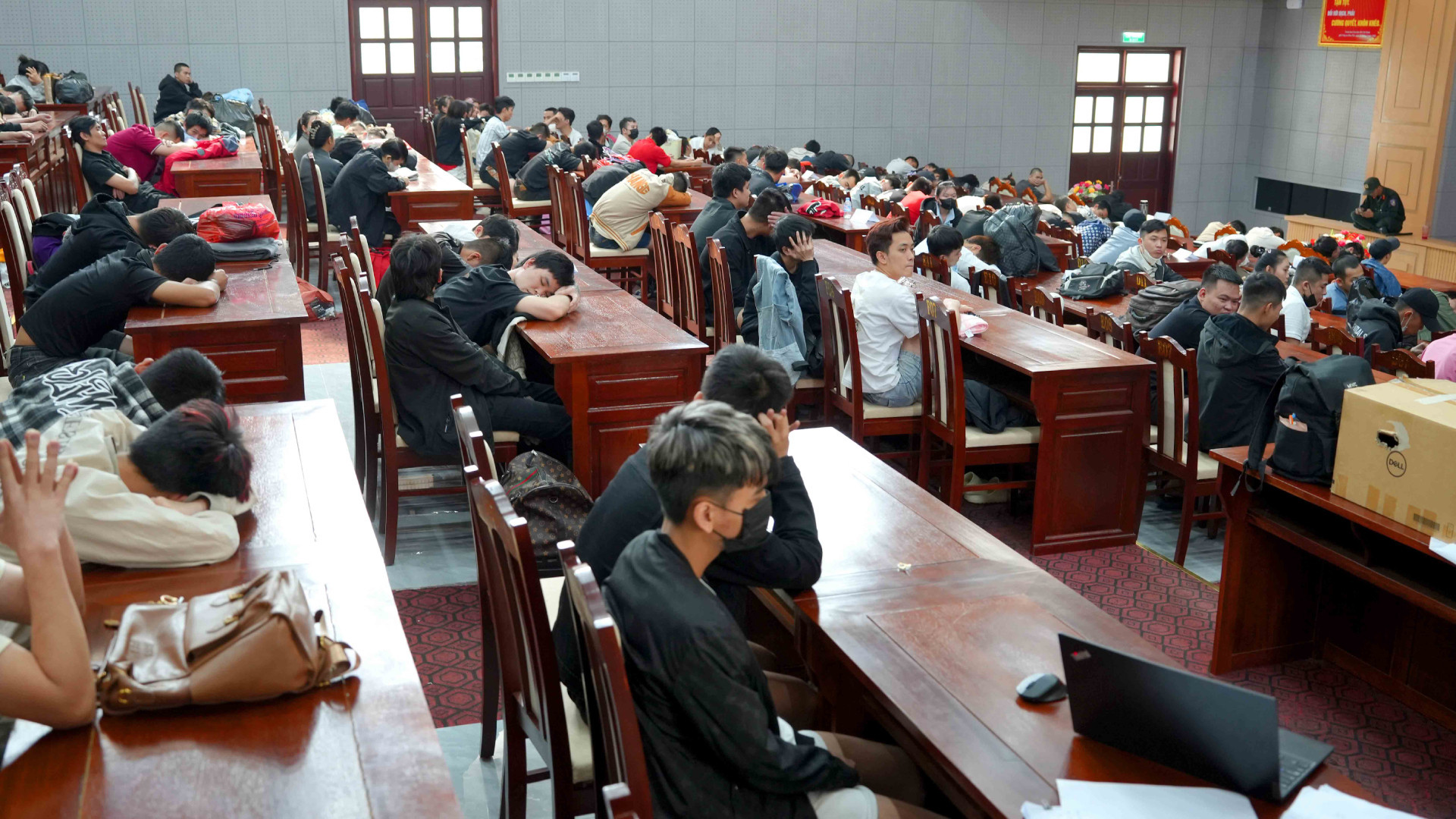
Hundreds of individuals involved in “easy job, high salary” scams in Cambodia were returned to Vietnam. Photo: V.T
All suspects have been charged and placed in temporary detention on allegations of using computer networks, telecommunications systems and electronic devices to appropriate assets.
From job seekers to fraud participants
According to Dong Nai Provincial Police, the case stems from an extensive investigation into organized online scam networks operating across national borders.
Many of those involved were initially drawn in by promises of “easy jobs with high pay” advertised on social media platforms. They later left Vietnam illegally and ended up working at scam compounds, including operations based in Poipet casino complexes in Cambodia.
Once there, they were instructed to use applications such as WhatsApp, Zara, Gap, Instagram and Facebook to carry out fraudulent schemes targeting unsuspecting internet users.
Large-scale repatriation and legal action
On March 17, nearly 400 Vietnamese citizens connected to the network were handed over by Cambodian authorities at Hoa Lu International Border Gate.
Following their return, border forces imposed administrative penalties on 331 individuals. Among them, 328 were fined a total of more than VND2.4 billion (approximately US$98,000) for illegally crossing the border, while three others were sanctioned for failing to present valid passports.
Through investigative measures, authorities gathered sufficient evidence to formally prosecute and detain 343 suspects by March 27.
Coordinated international effort
The crackdown is part of a broader campaign led by Vietnam’s Ministry of Public Security to combat increasingly sophisticated transnational cybercrime.
In recent years, authorities have stepped up cooperation with law enforcement agencies in Laos and Cambodia to dismantle fraud rings that exploit digital platforms and operate beyond national borders.
A growing and evolving threat
Investigators say the scale and organization of the network reflect a worrying trend, as online scams become more complex and harder to detect.
The case also underscores the risks faced by individuals seeking overseas employment through informal or unverified channels, many of whom unknowingly become entangled in criminal operations.
Authorities are continuing to expand the investigation and have warned the public to remain vigilant against fraudulent job offers circulating online.
Hoang Anh
.svg)
