 Vietnamnet.vn

 Podcast



About a week before admission, the boy’s family noticed that his abdomen had become unusually swollen and distended, accompanied by persistent vomiting.
Concerned by these abnormal signs, the family first brought the child to a local hospital for examination. He was later transferred to Children’s Hospital 2 for specialized treatment.
Doctors conducted ultrasound scans, CT imaging, and blood tests. The results confirmed that the boy had a retroperitoneal germ cell tumor - a rare and unusually large teratoma-like mass that required urgent hospitalization.
At the hospital’s Department of Hematology and Oncology, doctors initially planned four cycles of chemotherapy to shrink the tumor before surgery.
However, the treatment did not proceed as expected. After the first rounds of chemotherapy, the child’s condition failed to improve. The tumor continued to enlarge, compressing nearby organs and causing increasing breathing difficulties.
Facing signs of growing teratoma syndrome - an extremely rare complication described in medical literature - the medical team held consultations with international professors.
The final decision was to proceed with surgery to remove the tumor.
According to the doctors, this was far from a routine procedure. Preoperative CT imaging showed that the tumor was covering the inferior vena cava, the largest vein in the abdomen, and was closely associated with the renal vascular pedicle and several other complex blood vessels.
Even a small mistake could have directly threatened the child’s life.
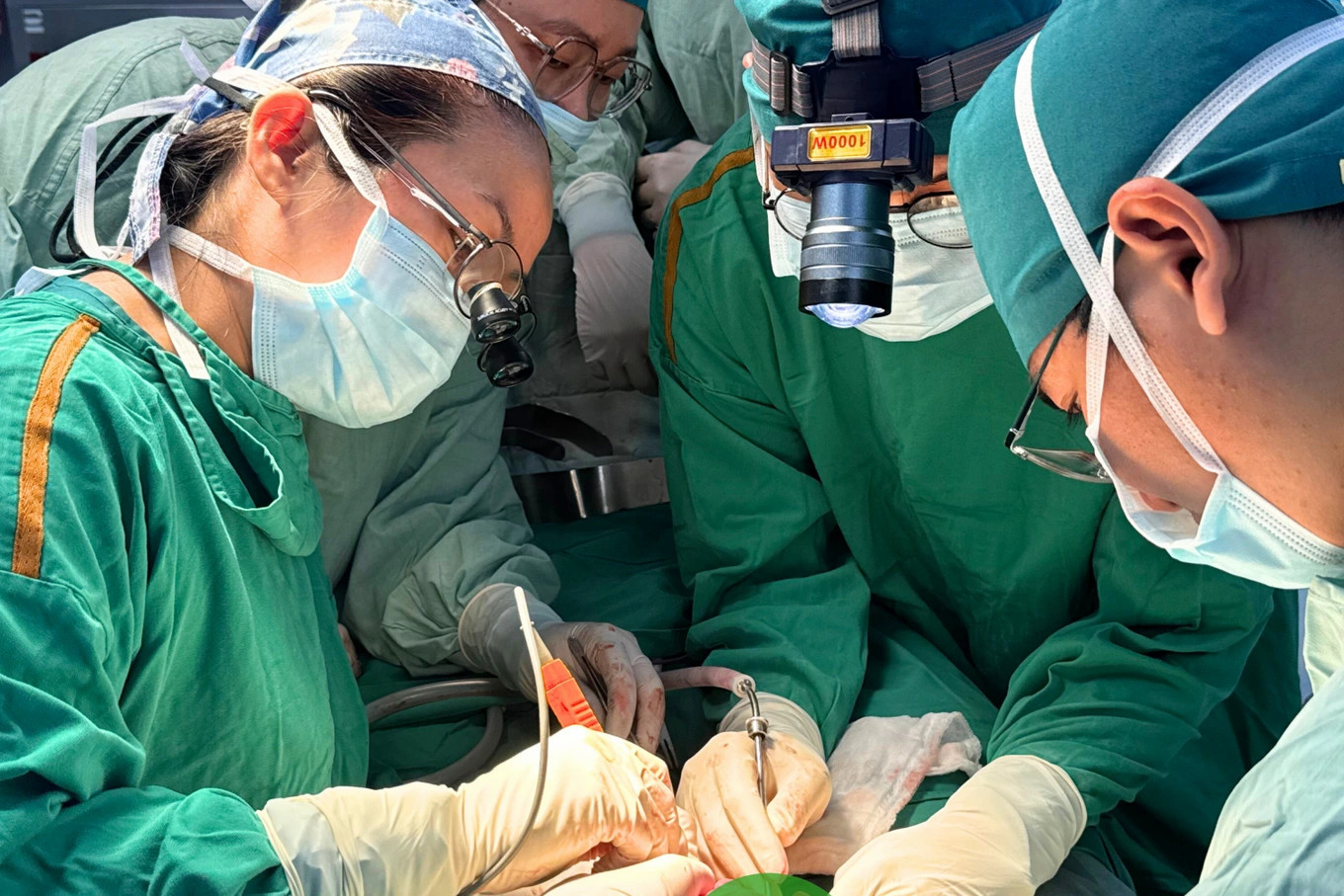
The surgical team carefully dissected the tissue layer by layer while preserving all critical blood vessels.
After more than five hours of tense surgery, the tumor weighing 1.3kg was successfully removed intact.
Following the operation, the infant gradually began to recover and will continue chemotherapy according to the treatment protocol.
Doctors noted that this was a teratoma containing malignant components that had grown to a large size and showed signs of resistance to chemotherapy - a situation rarely seen among the teratoma cases treated by the hospital each year.
They also emphasized that not every abdominal swelling indicates a teratoma or cancer.
However, when children show any unusual symptoms, parents should take them to medical facilities so pediatric specialists can examine and manage the condition promptly, preventing the disease from progressing to a more severe stage.
PV
.svg)
