 Vietnamnet.vn

 Podcast



Born and raised in the highlands of Son Tay Thuong commune in Quang Ngai, Dinh Van Kien grew up immersed in the rhythms of Ca Dong life - evenings filled with gong performances, communal traditions, and simple meals of upland rice by the fire in traditional stilt houses.
The Ca Dong are a local subgroup of the Xo Dang people, whose cultural identity is deeply rooted in the mountains. For Kien, those early experiences quietly shaped a connection that would later define his path.
A journey interrupted, a path rediscovered
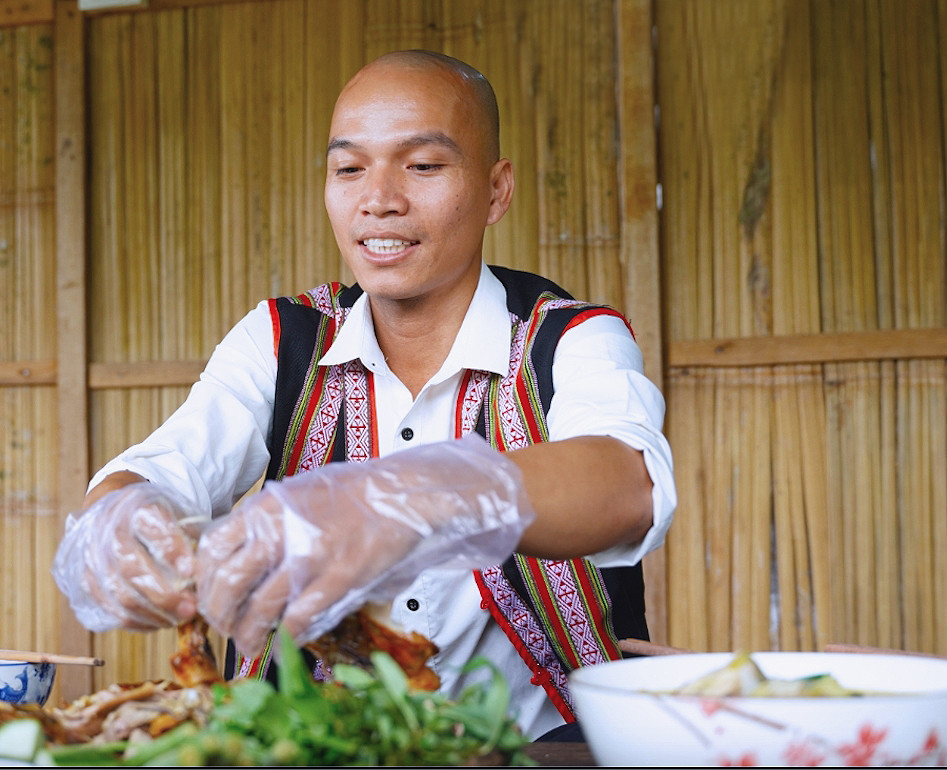
Unlike many of his peers, Kien had the opportunity to pursue formal education. He graduated in vocal performance from the Hue Academy of Music, carrying with him aspirations of a life shaped by artistic freedom beyond his village.
But just as those ambitions began to take form, an unexpected traffic accident forced him to return home for a long recovery.
It was during this period that something shifted.
Eating meals prepared by his mother - forest vegetables, cassava leaves, mixed rice dishes - he found himself reconnecting with memories long set aside. Each dish, he realized, held more than flavor. It carried stories of resilience, of adapting to harsh mountain conditions, and of traditions preserved across generations.
That realization became the seed of a new idea.
Telling stories through food
When his health improved, Kien decided to stay.
He leased land from relatives, secured loans, and together with his wife and family began building a small restaurant along a hillside, surrounded by forest and terraced fields.
The space reflects the spirit of the mountains - rows of stilt houses, open air, and a quiet closeness to nature.
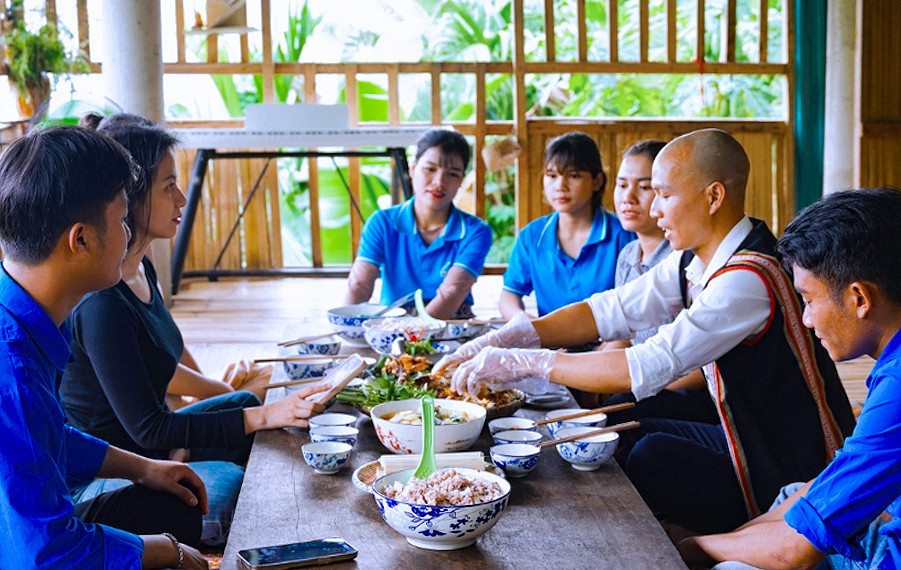
Most dishes are prepared using traditional Ca Dong methods, though Kien thoughtfully adapts presentation and flavors to suit a wider range of visitors. A plate of wild vegetables may be arranged more delicately. Bamboo-tube rice is infused with coconut water for added depth. Cassava leaf dishes are seasoned to balance authenticity with accessibility.
Signature offerings include grilled river fish and stir-fried forest ferns with tiny shrimp caught in nearby streams. At the heart of every meal is upland rice - grown once a year on hillside fields using natural methods passed down through generations.
But for Kien, the food is only part of the experience.
As he serves each dish, he shares the stories behind it - how it is made, where it comes from, and what it means to his people.
Building a living cultural space
As more visitors began to arrive, drawn by both the landscape and the stories, Kien expanded his vision.
In 2024, he developed a homestay model that blends cuisine with cultural immersion. Three traditional stilt houses were built using bamboo, wood and other natural materials, carefully preserving the architectural identity of the Ca Dong.
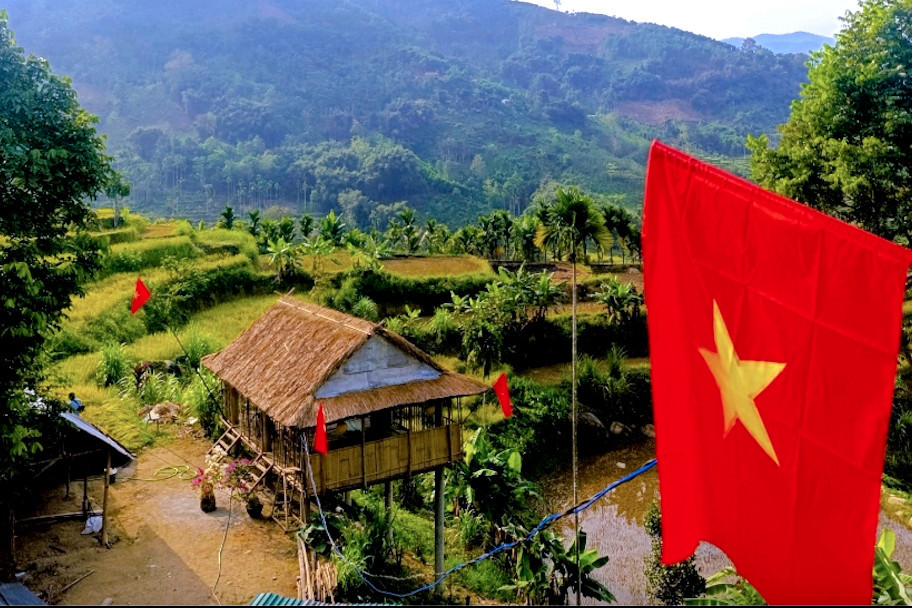
Set beside the clear waters of the Nuoc Min stream, the homestay opens onto terraced fields and dense green forests, offering a rare sense of calm.
Inside, the space becomes a quiet museum of everyday life. Traditional gongs are displayed with care. Woven baskets, handmade tools and household objects are arranged thoughtfully, each carrying its own story. Kien takes time to explain their meaning, helping visitors understand not just what they see, but the life behind it.
For those interested, he connects guests with local artisans who perform gong music and guide hands-on cultural experiences.
A quiet impact beyond the village
Kien also uses social media to share his journey - images of stilt houses, mountain landscapes, meals prepared over open fires, and moments of connection with guests. The storytelling remains simple and authentic, much like the life it reflects.
His model has begun to create jobs for local residents, from cooking and housekeeping to cultural performances, offering a modest but meaningful source of income.
More than a business, it is a way of keeping something alive.
The Ca Dong people, part of the Mon-Khmer language family, have no written script but possess a rich cultural system of language, rituals, festivals and music. Their traditions are carried through sound, memory and daily life.
Through his work, Kien is ensuring those stories continue to be told - not in museums or textbooks, but in shared meals, lived experiences and quiet conversations between strangers who arrive as guests and leave with something deeper.
Le Phuong
.svg)
