 Vietnamnet.vn

 Podcast



On a storm-lashed night in Dak Lak, unmanned aircraft hovered above stranded homes, guiding residents to safety. Years of quiet R&D have now propelled Vietnamese UAV makers into demanding markets from South Korea to the US.
From flood rescue flights to exporting 5,000 UAVs
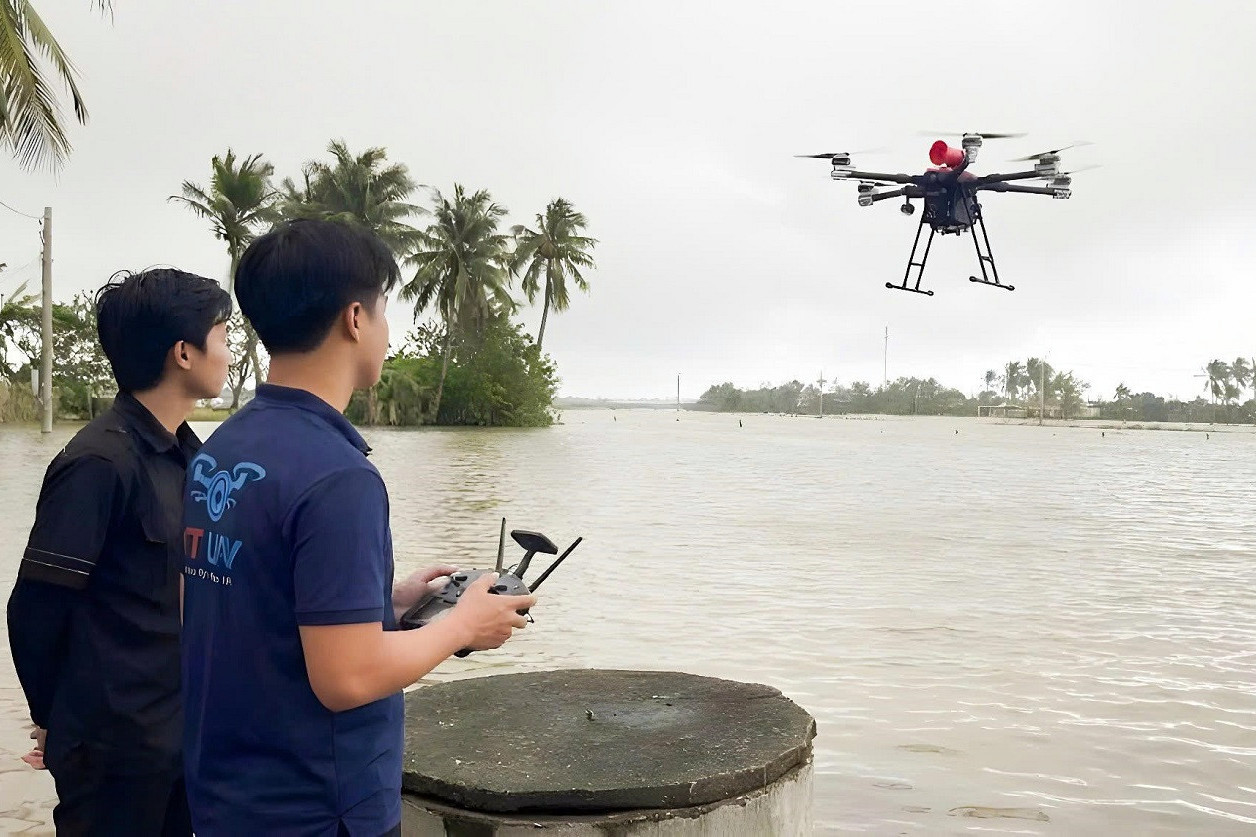
In the middle of a stormy night in Dak Lak, hundreds of households were cut off by rising floodwaters. All lines of communication had gone silent, save for the blinking lights of low-flying UAVs sweeping over rooftops. Loudspeakers mounted on the aircraft pierced the cold darkness, urging residents to stay calm, move toward safe shelter, while life buoys, milk cartons and medical kits were carefully lowered from above.
Behind those flights was CT UAV, a company that has spent more than a decade quietly pursuing UAV technology. Phan Van Han, head of the rescue team, recalled how one engineer stepped on a nail in the floodwaters yet insisted on finishing the mission because “people need us.” That spirit, fused with years of persistent research, laid the groundwork for generations of UAVs known for exceptional durability, stability and resistance to strong winds.
In 2020, amid the COVID-19 pandemic, CT Group established Dr One - a name reflecting both the ambition of being “Doctor No.1” and the word Drone itself. It was seen as Vietnam’s first bold scientific dream in the UAV field.
Choosing a path centered on research and development was always costly, long term and risky. While CT Group committed to mastering core technologies, some shareholders favored distribution - a quicker, safer route to profit. Financial strain compounded by the pandemic gradually drained Dr One’s momentum, and the venture ultimately had to close.
When everything seemed to collapse, CT Group made a decisive choice: not to give up and not to let hard-earned lessons go to waste. The research team arrived at a vital conclusion - survival depended on mastering core technology and achieving an R&D pace faster than market shifts. CT UAV was born as a rebirth. It was not merely a brand transformation, but a strategic commitment to heavy R&D investment and expanded international cooperation.
That persistence led to a milestone on August 12, 2025, when CT UAV signed a contract to export 5,000 UAVs to South Korea, witnessed by Party General Secretary To Lam and South Korean Prime Minister Kim Min Seok.
CT UAV now operates five research and manufacturing plants. The company is also preparing to build a 400-hectare UAV industrial complex with a test airfield, large-scale production facilities and a specialized training school. Its goal is to become ASEAN’s leading UAV enterprise by 2027 and export tens of thousands of UAVs annually.
Mastering a modern military UAV ecosystem
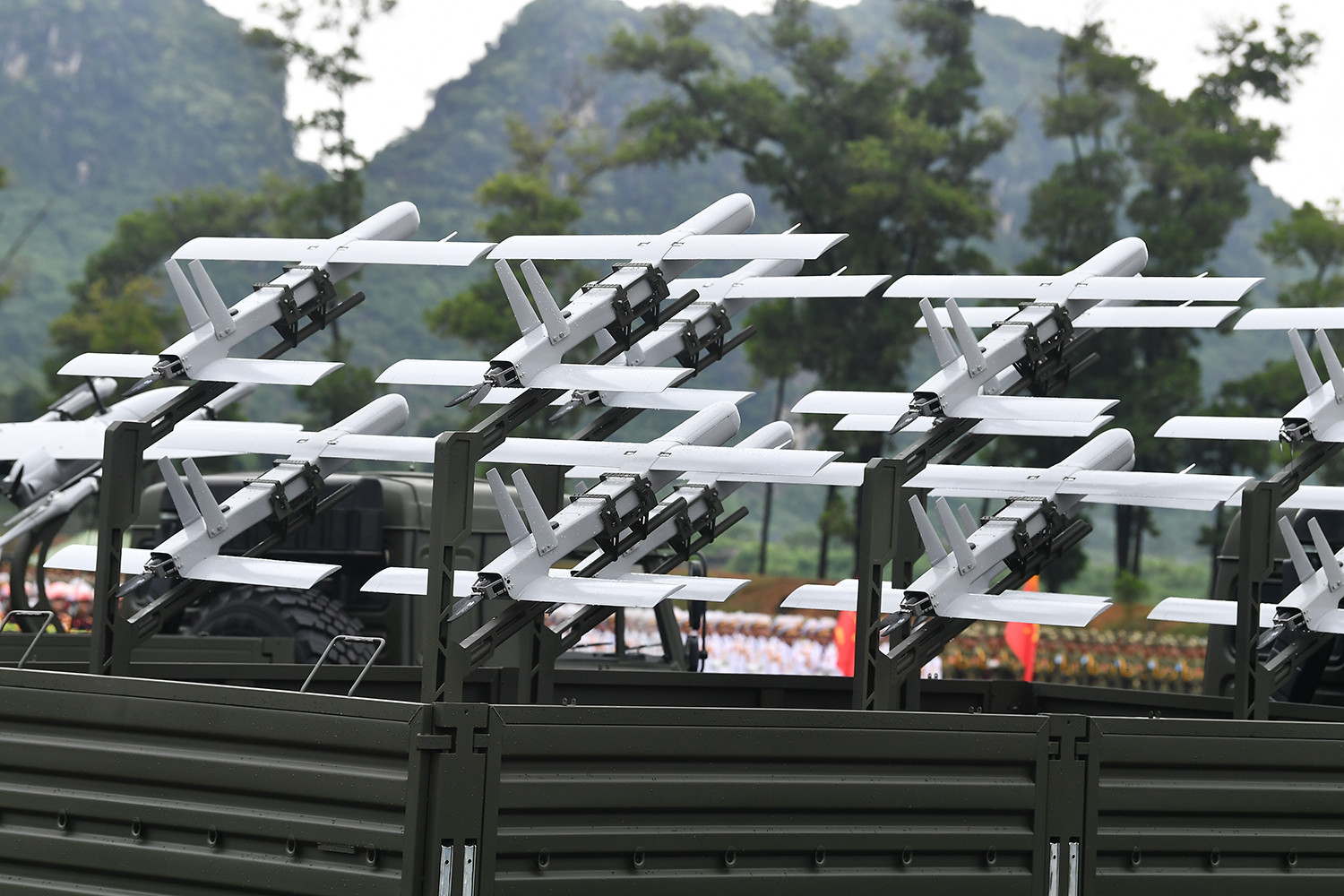
Viettel plays a central role in Vietnam’s military UAV sector.
While CT UAV represents the civilian and industrial segment, Viettel plays a central role in Vietnam’s military UAV sector. In less than a decade, it has built a comprehensive UAV ecosystem capable of reconnaissance, territorial surveillance and precision strike missions.
Viettel’s reconnaissance UAVs are designed to adapt to Vietnam’s weather conditions, terrain and high humidity - environments where many imported models struggle.
Its long-range multi-mission VU-MALE line exemplifies deep research capabilities. With a flight range exceeding 1,000 kilometers, it meets strategic surveillance demands over vast areas. Beyond reconnaissance, Viettel has also developed the VU-C2 loitering munition UAV, integrated with artificial intelligence that enables automatic target search, detection and lock-on at attack speeds surpassing 130 km/h. This marks a significant step, placing Vietnam among nations capable of autonomously producing tactical UAVs.
Viettel’s development must be viewed alongside globally recognized UAV platforms. Compared to the Bayraktar TB2 of Türkiye, Viettel’s UAVs may carry less weapon payload but offer advantages in flight endurance and operating costs. Against Iran’s Shahed-136, the VU-C2 is smaller, more maneuverable, equipped with more advanced AI and better suited for short-range tactics. Compared with China’s Wing Loong, Viettel’s UAVs remain competitively priced while retaining full technological autonomy, avoiding dependence on tightly controlled foreign components.
Lieutenant General Tao Duc Thang, Chairman of Viettel, said that from now until 2030 the group will act as the nucleus of a high-tech defense industry complex, proactively advising and proposing new-generation weapons and technical equipment to the Central Military Commission and the Ministry of National Defense.
Viettel is also increasingly focusing on UAV development for the low-altitude economic ecosystem. Most striking is its cross-sector connectivity. Beyond defense, Viettel UAVs are being deployed in civilian fields such as power transmission line inspection, forest management, firefighting support and terrain surveying.
When Vietnamese UAVs appear in the US and Europe
Alongside these two major players, the emergence of Hera - developed by startup RTR Vietnam - reflects the vitality of Vietnam’s UAV ecosystem. Hera is foldable and compact enough to fit in a backpack. It can fly for 56 minutes without payload and carry 1 kilogram for 53 minutes. Its design prioritizes rapid deployment, making it suitable for security forces, rescue teams and patrol operations.
Notably, Hera has been supplied to US national security forces, US police departments and Dutch police. These are highly demanding markets with stringent requirements on security standards, anti-jamming capabilities, durability and flight stability. The acceptance of a fully Vietnamese-developed UAV signals that the country’s technological capacity has reached parity with established players.
RTR Vietnam has also secured patents in the US and Australia - a rare achievement in the UAV field, where most patents are concentrated in the US, Israel and China. This not only brings commercial value but also affirms that Vietnam can develop core technologies and protect intellectual property on international markets.
Michael Vu Nguyen, General Director of Boeing Vietnam, said Vietnam has the capacity to master UAV technology. He cited RTR Vietnam as an example: a startup powered entirely by Vietnamese engineers and technology that has obtained patents in the US and Australia.
Representing the Vietnam UAV Network, Tran Anh Tuan, its Standing Vice Chairman and CEO, noted that recent restrictions by the US and its allies on importing UAVs and components from China have opened significant opportunities for Vietnam to integrate more deeply into the global value chain. If it can capitalize on these opportunities and overcome challenges in core technologies, he believes “Vietnam can become a leading UAV hub in ASEAN within the next decade, with Made in Vietnam products serving not only domestic demand but reaching global markets.”
A new era for Vietnamese UAVs
The Vietnam UAV Network, bringing together nearly 100 experts and scientists worldwide, is emerging as a key support force helping domestic enterprises access advanced technologies, international standards and market development strategies. Its objective is to foster a US$5 billion UAV industry by 2035, with Make in Vietnam products present in multiple countries.
CT UAV, Viettel and RTR Vietnam now form three spearheads of Vietnam’s UAV sector. They share a common goal: to position Vietnam as a nation that masters UAV technology - serving economic development, safeguarding national defense and security, and integrating deeply into global supply chains.
The rise of these three enterprises demonstrates that Vietnam is not merely catching up with the world but steadily carving out its own identity while conquering global markets.
Thai Khang
.svg)
