 Vietnamnet.vn

 Podcast



At a deeper level, it is a cultural choice - a choice to live in harmony with nature, to consume responsibly, to pursue development without sacrificing the environment, and to place human well-being at the center of every policy decision.
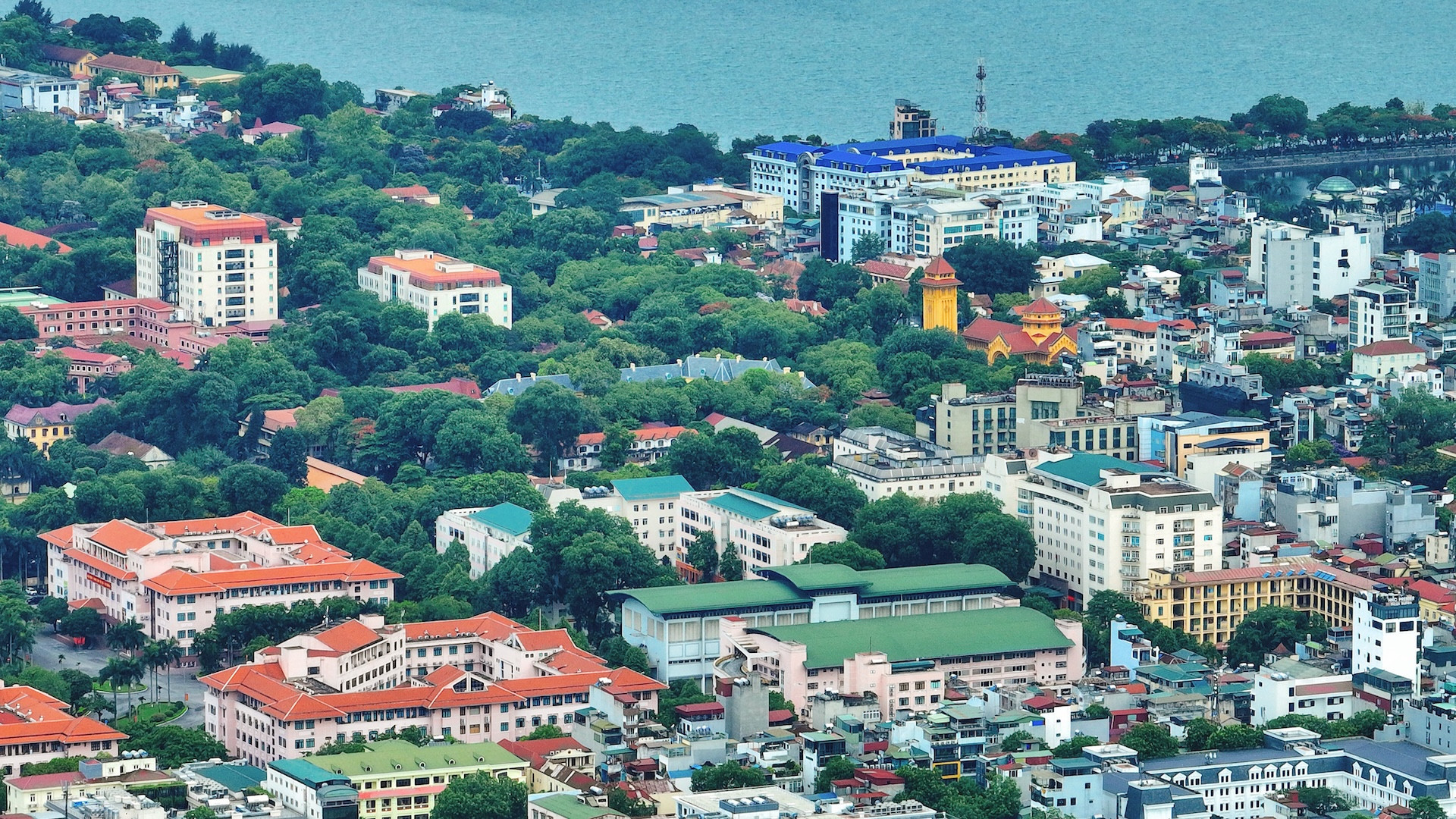
There are mornings when, walking down a street in Hanoi after the rain, watching water drip from the trees, seeing cleaner roads and clearer skies, one suddenly realizes that the peace of a city does not come only from towering buildings or broad avenues. It comes from the green spaces that remain protected, from rivers that have not been forgotten, from parks where children still have room to run, from the habit of not littering, from a person quietly picking up a plastic bag beside a lake, from a family beginning to sort waste in the small kitchen of their home.
These things may seem small, yet they form the foundation of a much larger transformation - a shift from development through exploitation to development through preservation; from growth driven by wasteful consumption to growth grounded in responsibility; from treating the environment as a secondary concern of the economy to recognizing it as an essential condition for human survival.
In his article, For an Ecological Civilization, a Green Vietnam, and a Peaceful, Sustainable Ocean, General Secretary and State President To Lam emphasized the need to build a society capable of creating prosperity within ecological limits, viewing nature as a condition for existence, a national asset, and a legacy for future generations. The article also places environmental safety and peaceful, sustainable oceans within a broader relationship that includes development, security, justice, ethics, and national endurance.
It is a profoundly insightful perspective. If green development is viewed merely as a set of technical standards, governments may issue regulations, launch programs, and organize campaigns, yet still fail to create lasting change. Green transformation gains real vitality only when it becomes culture - a way of thinking and a way of life.
Green culture begins with a simple question: What do we want to leave behind for future generations? A nation may become wealthier in material terms, but if it grows poorer in rivers, forests, clean air, beaches, and living spaces, can that prosperity truly be considered complete? A city may possess more modern infrastructure, but if children lack places to play, older people lack shade, and residents must live amid pollution, noise, and waste, can such modernity truly be called humane?
Green development, therefore, is not about slowing down the nation's aspirations. On the contrary, it is the means by which those aspirations can travel farther, more securely, and more beautifully. A country entering a new era cannot compete solely through economic growth rates. It must also compete through quality of life, environmental stewardship, and the courage to choose a responsible path to development. In today's world, a civilized nation is not simply a wealthy one. It is a nation that understands its limits before nature, uses science to protect life, and places people and the future at the heart of every decision.
Vietnamese culture has long carried a tradition of living in harmony with nature. Villages emerged beside rivers, rice fields, communal wells, bamboo groves, mountains, and coastlines. Generations of Vietnamese people have lived alongside the rhythms of seasons, rainfall, tides, forests, and seas. In folk life, nature has never been merely a resource. It has also been memory, spiritual space, and a place where people learn humility and gratitude. Seen from this perspective, green development is not foreign to Vietnam, nor is it an imported concept. It is a modern continuation of a longstanding ethic of balance, restraint, preservation, and responsibility toward future generations.
Yet traditions become strengths only when awakened through new actions. We cannot claim to love nature while continuing to dump waste into rivers. We cannot express pride in our seas and islands while allowing plastic waste to drift into the ocean. We cannot speak of civilized cities while arbitrarily cutting down trees, encroaching upon public spaces, or building without respect for landscapes and collective memory. We cannot speak of sustainable development if businesses still regard environmental costs as expenses to be avoided, or if local authorities continue to prioritize investment attraction at any price over the quality of life of their citizens.
The movement "All People for a Green - Clean - Beautiful Vietnam" has been launched with concrete goals, including reducing waste, sorting waste at the source, limiting single-use plastics, expanding green spaces, creating cleaner landscapes, adopting clean technologies, and complying with environmental protection regulations. What gives this movement meaning is not simply its slogans but its ability to bring green goals into everyday life. When a neighborhood installs waste-sorting bins, when a school encourages students to carry reusable water bottles, when a traditional market reduces plastic bag use, when an office plants more trees and saves electricity, or when a community joins together to clean a beach, green development is no longer a distant topic discussed at international conferences. It becomes part of every street, every alley, and every household.
This demonstrates that building a green culture cannot be assigned to a single sector. It must become the responsibility of the entire political system and society as a whole. The state must create institutions, enact policies, oversee implementation, and strictly punish actions that damage the environment. Businesses must innovate, embrace transparency, and move from a mindset of "produce first, clean up later" to one of designing products and processes that avoid harm from the outset. Schools must cultivate children's love for nature through meaningful experiences rather than memorized lessons. Journalists, artists, and public figures must promote green lifestyles through compelling and relatable stories. Families must nurture habits of responsibility, cleanliness, and conservation. Every citizen must become an active participant in green culture.
Most importantly, green behaviors must become social norms. There was a time when wearing motorcycle helmets was a new habit. It later became a regulation and ultimately a way of life. Green culture requires a similar journey. Waste sorting at the source, reducing single-use plastics, conserving water and electricity, choosing environmentally friendly transportation, protecting public spaces, preserving trees, avoiding littering, and rejecting wasteful consumption may begin as voluntary actions and later become regulatory requirements. Ultimately, however, they must become acts of personal conviction. When people do the right thing not because they fear punishment but because they believe it is the decent thing to do, culture has truly taken root.
Green development must also be linked to fairness. We cannot ask people to change if they are not given the means to do so. We cannot expect small businesses to pursue green transformation if they lack capital, technology, information, and market access. We cannot protect forests, oceans, and rivers without ensuring sustainable livelihoods for the communities that depend on them. A humane green transition leaves no one behind. Poor households, workers in affected industries, coastal communities, women, children, and vulnerable groups must be visible in every policy decision. Green development without fairness cannot be truly sustainable. Green development without humanity cannot become culture.
At a deeper level, green development is where culture meets the future. Every tree planted today may provide shade for years to come. Every restored river may return memory and vitality to an entire region. Every act of conservation within a family may contribute to the responsibility of a wider community. Every choice to avoid plastic bags, prevent littering, or reduce wasteful consumption may seem insignificant, but millions of small choices can create transformative change.
Vietnam is entering a new stage of development with strong ambitions for advancement. The country needs rapid growth, modern industry, smart cities, major infrastructure projects, and new sources of competitiveness. Yet the faster we move, the more carefully we must maintain balance. The farther we reach, the more firmly we must preserve our roots. Those roots are people, culture, nature, living environments, and the harmony between development and preservation.
When green development becomes a cultural choice, environmental protection will no longer be treated as an afterthought. It will become the starting point of a civilized development model. When culture informs economics, growth gains ethics. When culture informs governance, policies gain responsibility. When culture shapes daily life, every citizen becomes a guardian of the future.
And when a child grows up in a city with more trees, in a village with less waste, beside a cleaner beach and a clearer river, that child will understand that love for one's country is not found only in solemn words. It is also found in the way we protect every piece of land, every drop of water, and every stretch of sky that belongs to this nation.
A green Vietnam will not be defined solely by clean industrial parks, renewable energy fields, smart cities, or international commitments. Above all, it must be a Vietnam where people know how to live responsibly with nature, create prosperity without harming the environment, embrace modernity without losing balance, and rise confidently while preserving the green of its forests, the purity of its rivers, the tranquility of its seas, and the well-being of its people.
Dr. Bui Hoai Son
.svg)
