 Vietnamnet.vn

 Podcast



Authorities said the large-scale network distributing contaminated pork was uncovered after an investigation. Hundreds of tons of infected meat failing food safety standards had been slaughtered, transported, and sold on the market over an extended period.
Alarmingly, part of this supply is believed to have reached institutional kitchens, including schools. The case sparked public outrage, as students, among the most vulnerable groups, were directly affected.
Disregard for public health
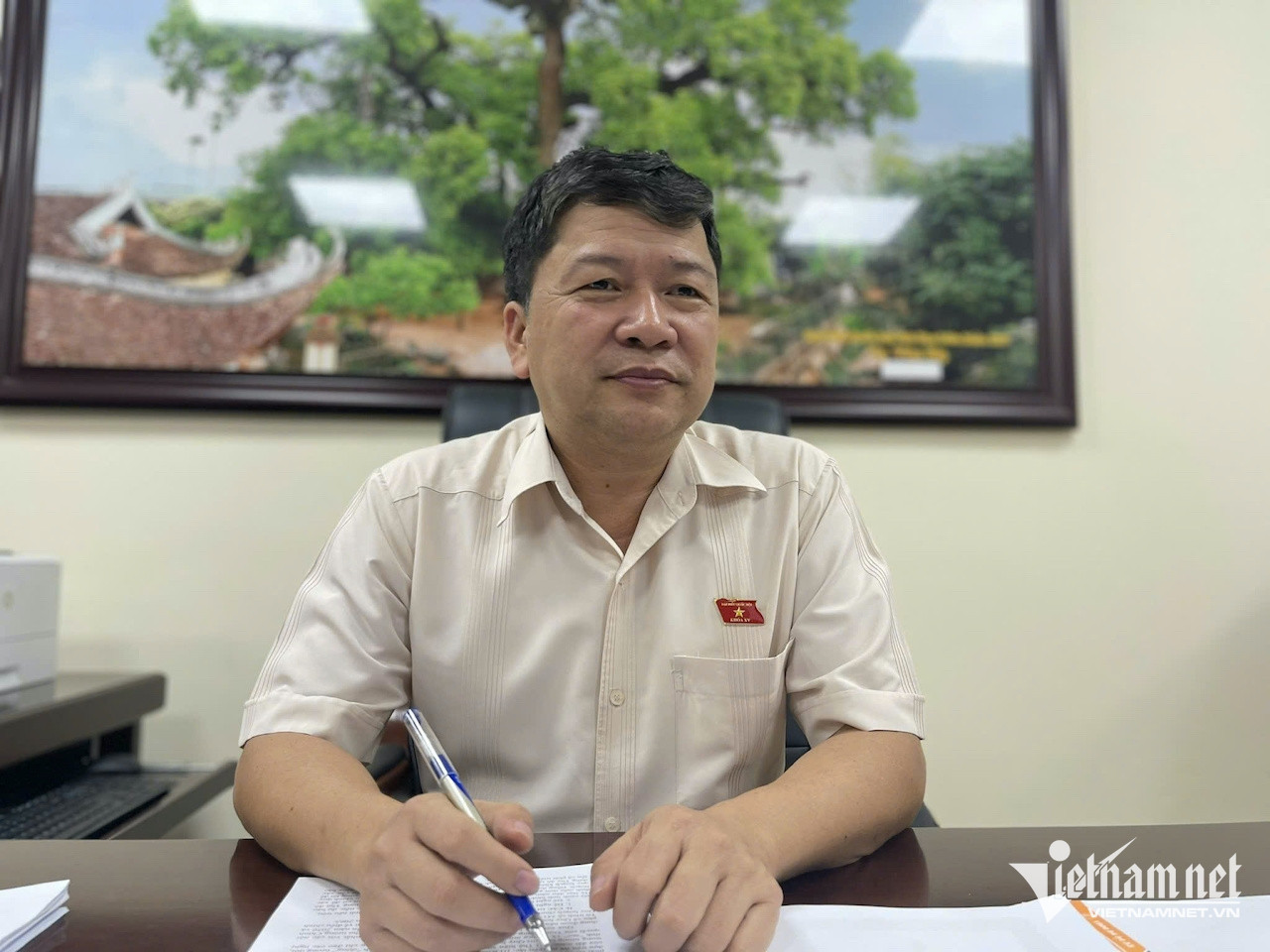
Ta Van Ha, vice chair of the National Assembly’s Committee for Culture and Social Affairs, said the case shows not only serious violations but also broader concerns over food safety.
He said that distributing diseased pork shows blatant disregard for public health, especially dangerous when such food enters school environments.
Consumption of contaminated food can cause immediate issues such as food poisoning and digestive disorders, while also posing long-term risks to children’s physical development and overall health.
Bui Thi An, former National Assembly deputy, condemned both the violations and the lack of business ethics in supplying unsafe food to collective kitchens, including schools.
“Children go to school to study but also to be cared for physically and mentally. Since the scandal broke, many parents have become deeply worried about their children’s meals and health,” she said.
Business ethics, authorities’ oversight
Explaining why unsafe food continues to find its way into schools, Bui Thi An pointed to business ethics and oversight failures as key issues.
She highlighted accountability gaps across the supply chain, including veterinary control. Pork infected with African swine fever should have been destroyed under regulations, raising the question of how it was able to reach the market.
Recalling the issue of food safety and hygiene that has been reflected many times by National Assembly delegates, voters, and the press, Ha noted that although functional agencies have regularly inspected and handled cases, even applying administrative and criminal sanctions, this incident shows that violations remain complex.
“Not a few people, for immediate profit, disregard their conscience and the health and lives of the people,” Ha said.
He pointed out a worrying loophole in supervision, especially across the entire supply chain—from farming and slaughtering to the distribution and consumption of food.
If one link is neglected, the entire system will be affected, creating conditions for dirty food to slip into the market. A comprehensive review is needed to identify where the weaknesses lie, in order to find corrective solutions; at the same time, it is necessary to handle violations strictly in cases of intentional violations for profit.
Many opinions suggest that the process of controlling food entering schools must be scrutinized most stringently.
Ha emphasized the role of the education sector in ensuring school food safety, as it involves a large number of students. He argued that schools must place the issue of food safety on par with the task of education, building a strict control process from the stages of reception, sample storage and preservation to processing.
Schools cannot rely solely on trust in the catering unit but need to coordinate closely with health and agricultural agencies to increase periodic and unexpected inspections.
Additionally, according to Ha, current food safety management is gradually shifting from pre-inspection to post-inspection, but for sensitive areas like food entering schools, one cannot rely only on post-inspection.
“The incident that just occurred is a typical example. If there is no pre-inspection, and we allow it to happen before conducting post-inspection, the harmful effects are huge,” Ha said.
Hanoi Mayor Vu Dai Thang has directed the Department of Education and Training to review the organization of semi-boarding meals, promptly overcome shortcomings, and ensure transparent food information. Additionally, he requested the Department of Science and Technology to complete and officially put into operation the food safety management and traceability system before April 15. The system allows management agencies, businesses, and household businesses to update data, making it easy for people to look up daily food supply sources.
N. Huyen
.svg)
