 Vietnamnet.vn

 Podcast



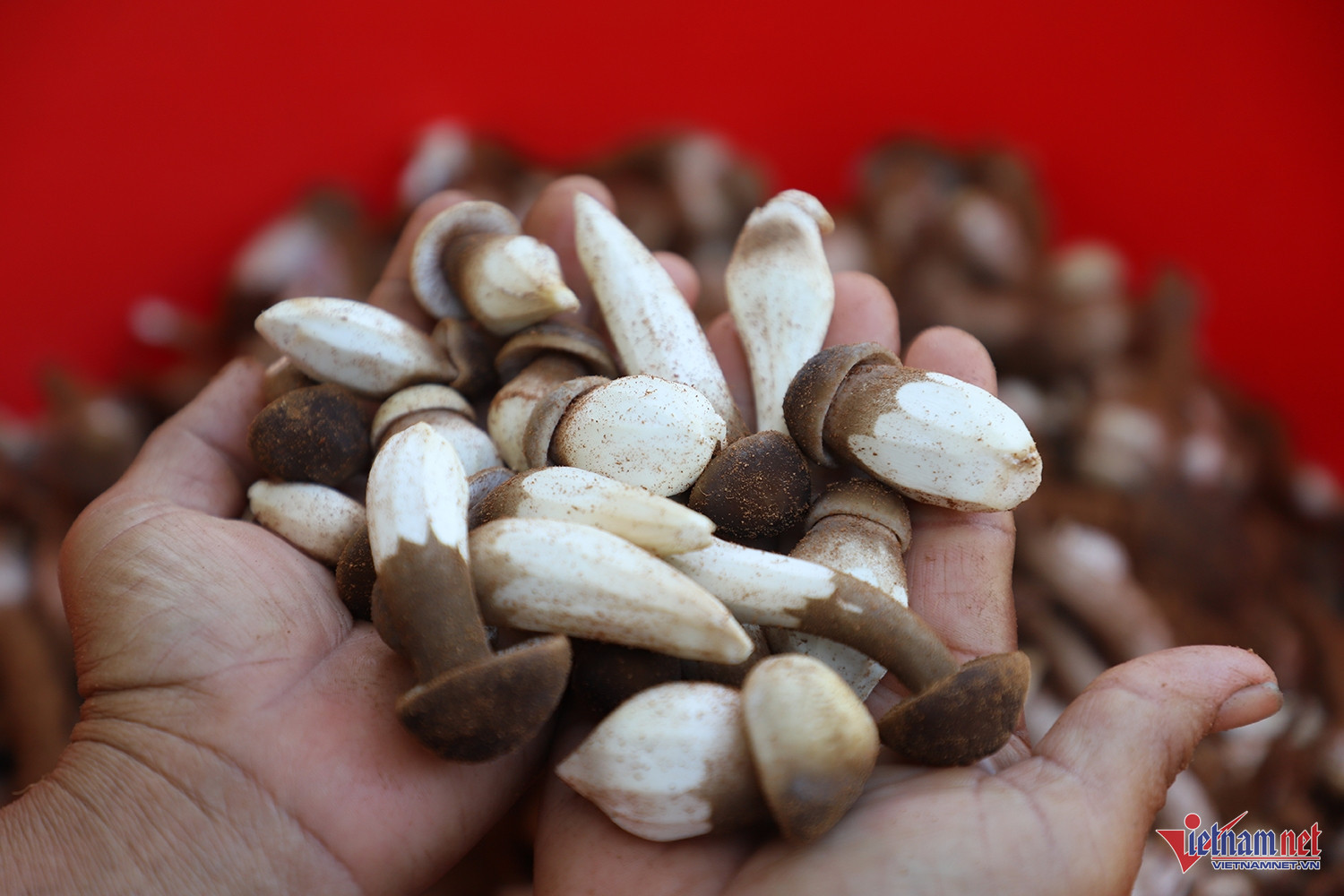
In the early morning, in a house next to a shrimp pond in Lich Hoi Thuong commune (Can Tho City), Dat, 27, begins his day by harvesting mushrooms to deliver to customers on time.
After the harvest, he checks environmental parameters on his smartphone, and then adjusts the cooling and misting systems to maintain a temperature of 25-28 degrees Celsius and a humidity level above 85 percent.
This has been part of Dat’s daily routine since he began his high-tech black termite mushroom farming model after a long period of experimentation.
Graduating in control engineering and automation technology from Can Tho University of Technology in 2020, when the Covid-19 pandemic broke out, Dat continued his studies in two additional majors: business administration at the University of Economics HCMC and high-tech agriculture at Van Lang University.
After graduation, he worked for a plant protection chemical company in his hometown. However, real-world experiences in an area heavily affected by climate change, saline intrusion, and acid sulfate soils caused Dat to reflect deeply.
“Traditional farming is becoming increasingly unstable. I wanted to apply what I have learned to build a new model that depends less on weather and creates sustainable value right here in my hometown,” he said.
In early 2024, Dat decided to experiment with growing black termite mushrooms on an area of 10 sqm with about 500 fruiting (substrate) bags. Due to incomplete techniques, each bag yielded less than 100 grams, lower than the standard level of 150-200 grams per bag.
Undeterred, he adjusted the process, shortening the harvest time from 6 months to 4 months to reduce costs, while also promptly removing green mold-infected bags to prevent disease.
With initial capital from his family, Dat renovated old warehouses into production areas. The high-tech mushroom growing area initially covered 30 sqm, then expanded to 100 sqm with two separate zones. Most of the capital was invested in an automatic irrigation system and environmental monitoring equipment using IoT sensors.
Through a smartphone, Dat adjusts factors such as temperature, humidity, light, and CO2 concentration in real time. “Every five minutes, the system updates the data once. Thanks to that, I can control the mushroom-growing environment more accurately.”
The biggest difference compared to traditional mushroom farming lies in stability, he said. The growing environment is tightly controlled, helping to reduce disease risks, ensuring uniform mushroom growth, and increasing productivity by 30–40 percent.
Currently, Dat’s facility maintains around 10,000 mushroom growing bags, producing 8–10 kg per day. With selling prices ranging from VND300,000 to VND350,000 per kg, the model brings in tens of millions of VND each month.
Beyond fresh mushrooms, Dat has also invested in a freeze-drying machine to produce dried mushrooms. The drying process lasts about 30 hours, preserving shape and nutritional value. On average, 10 kg of fresh mushrooms yields 1 kg of dried mushrooms, sold at VND3.6 million per kg.
The facility’s fresh and dried black termite mushroom products have achieved 3-star OCOP (one commune, one product) certification and are marketed to restaurants, markets, and e-commerce platforms.
Dat said agriculture today is no longer about “farming the old way” but requires knowledge, technology, and a business mindset.
“If young people are truly passionate, know how to utilize science and technology, and persist in learning, they can absolutely succeed. Don't be afraid to return to the countryside, as rural areas are where the most opportunities lie for modern agriculture and sustainable startups,” he said.
Tu Hai Long, an officer at the Economic Office in Lich Hoi Thuong commune, said that Dat’s black termite mushroom cultivation model was methodically researched and tested, and is now bringing economic efficiency.
“The local authority is coordinating with distributors to support market access, while creating conditions for youth and young union members to access cultivation techniques. Dat is also very enthusiastic about sharing his experience and guiding young people who want to start businesses in high-tech agriculture,” Long said.
Tran Tuyen
.svg)
