 Vietnamnet.vn

 Podcast



Chau Thi Nuong, 48, from Co To commune in An Giang province, has been recognized as an “Outstanding Vietnamese Farmer 2025” by the Central Committee of the Vietnam Farmers' Union. She currently owns a 4-hectare mushroom farm spanning Co To commune and Thoi Son ward.
Born into a family with six siblings, Nuong pursued an education career and became a secondary school teacher. After nearly five years of teaching, she shifted her path to study pharmacy and opened a store selling agricultural supplies.
“During the Covid-19 pandemic, I noticed a growing community demand for clean food and medicinal products, especially since the climate in the Bay Nui area is ideal for cultivating them,” she shared.
Initially, Nuong purchased mushroom spawn from other farms. However, recognizing her dependency, she reached out to lecturers from universities in An Giang and Can Tho to research mushroom growth characteristics.
In the beginning, she faced multiple challenges. Lacking experience and essential equipment, she suffered significant losses due to spawn contamination and crop failure. Through persistence and continuous learning, she overcame these issues and gradually improved her harvest yields.
After successfully cultivating black termite mushrooms, she expanded her model and gained support from locals. In 2020, she established the Ta Dinh Agricultural Cooperative (now renamed Co To Cooperative), with a mission to promote circular agriculture.
Explaining the model, Nuong, now Director of the Cooperative, shared that her family owns nearly 10 hectares of rice and corn fields. After harvest, rice straw, corn stalks, cornmeal, and rice bran are processed into mushroom spawn substrates.
Once mushrooms are harvested, the leftover biomass is either composted or used as feed for red worms. The resulting worm castings are used to fertilize rice and corn crops, while the worms themselves serve as chicken feed.
“This model not only reduces agricultural waste but also creates clean, high-value products cultivated through a fully closed-loop process,” Nuong emphasized.

Nuong is finding initial success in mushroom cultivation. Photo: Tran Tuyen
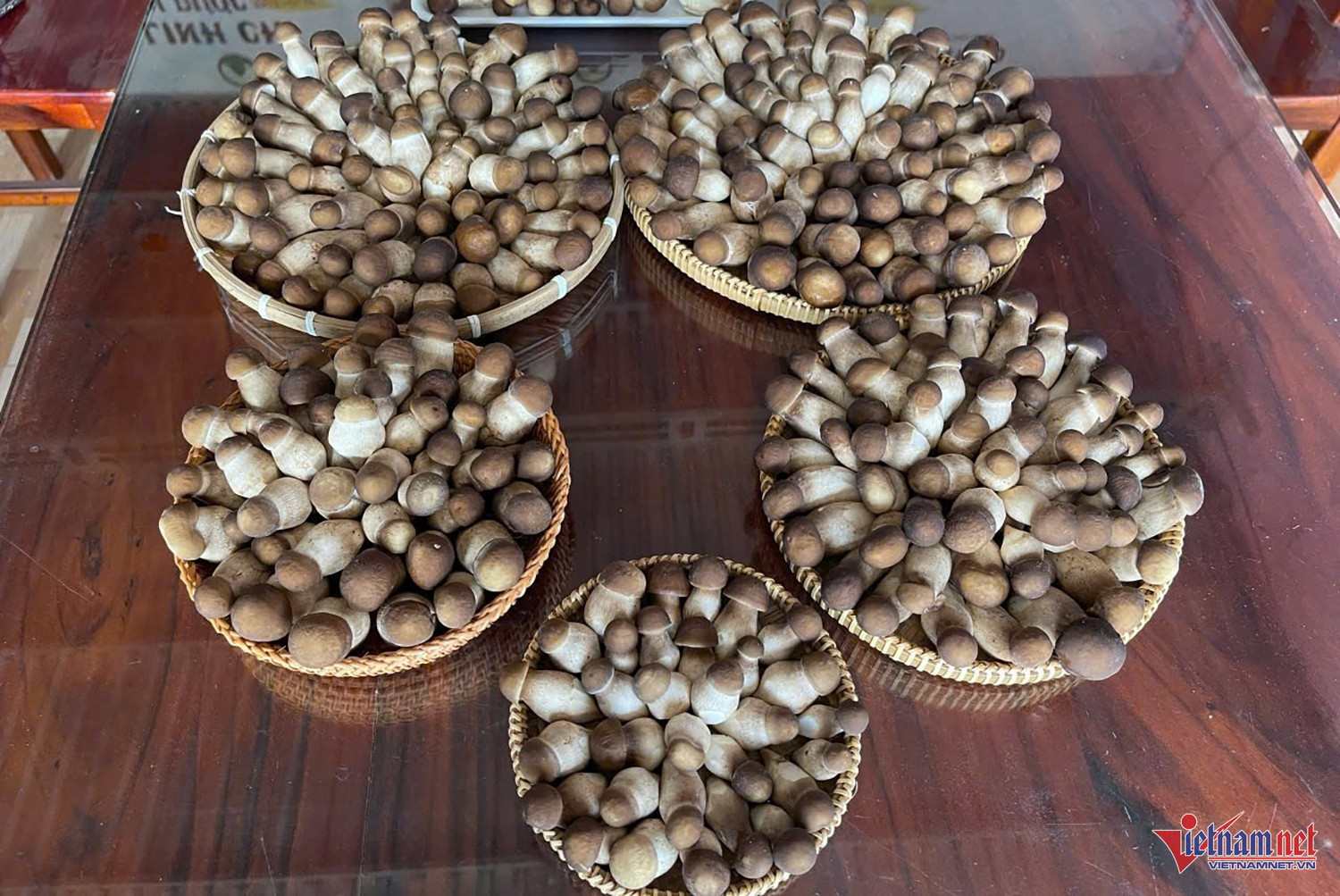
Black termite mushrooms are harvested early in the morning and sold to traders. Photo: Tran Tuyen

The farm also processes various cordyceps-based products. Photo: Tran Tuyen
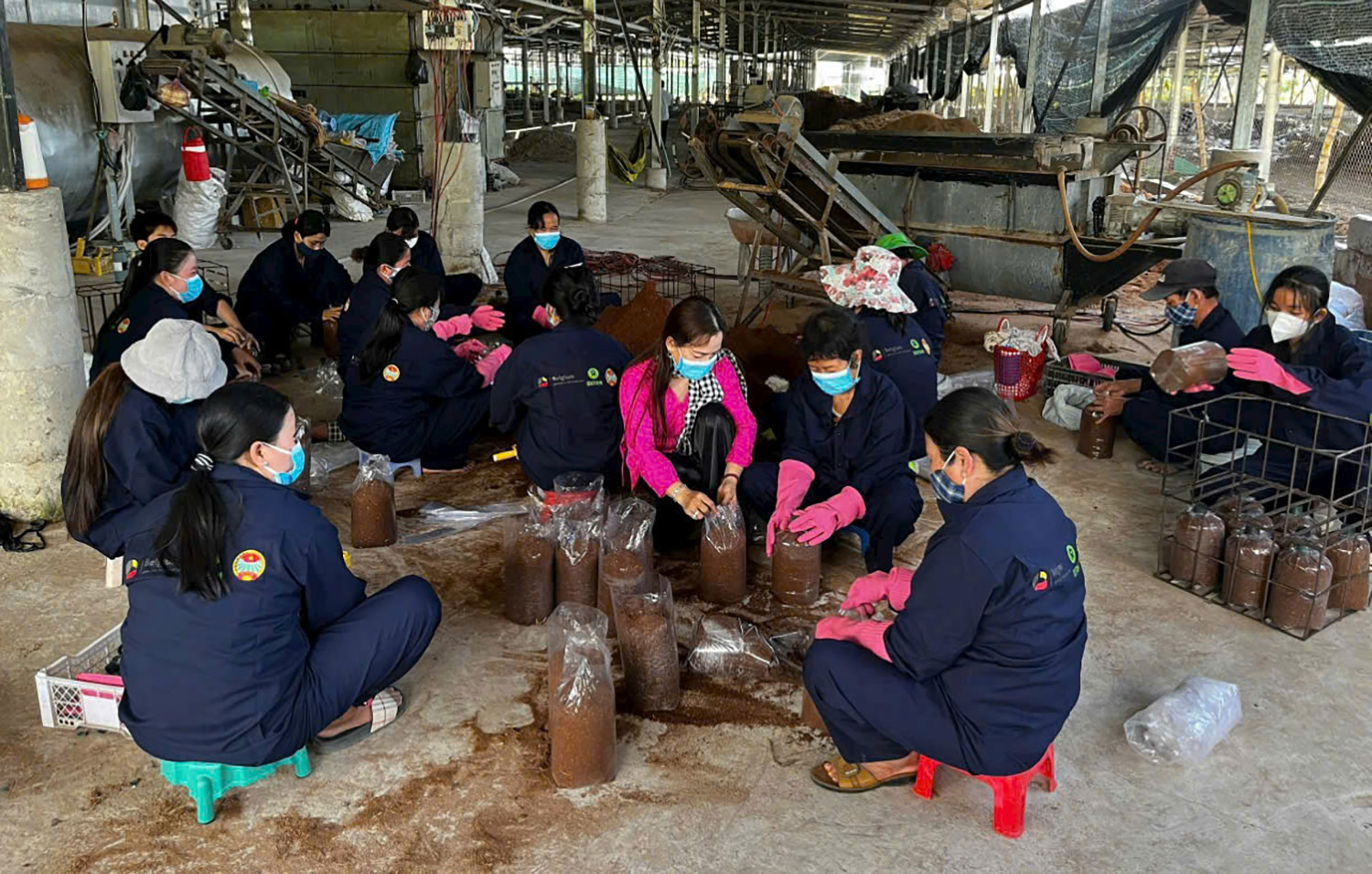
Black termite mushrooms can be grown year-round using this system. It takes around four months from planting to harvest. Her farm currently yields 40-50kg of black termite mushrooms daily, sold at prices ranging from $8 to $10 per kilogram depending on the market. The mushrooms are distributed within the province and to wholesale markets in Ho Chi Minh City.
In addition, Nuong's farm also cultivates oyster mushrooms, lingzhi mushrooms, and cordyceps. Among these, lingzhi requires the most complex techniques, as it must be maintained at a humidity of 28-32°C to avoid spoilage.
Not stopping at raw materials, Nuong invested in a drying system to preserve the medicinal properties of the mushrooms. The cooperative now produces a range of value-added products such as instant lingzhi tea and mushroom snacks, which are well received by the market and generate annual revenues of over $40,000.
Her farm currently provides stable employment for 20 workers, 80% of whom are Khmer women who previously struggled to find jobs in their hometowns.
“Many Khmer women used to migrate to Ho Chi Minh City or Dong Nai for factory work, leaving their families behind. Now, they can work near home with a stable monthly income of $240 to $360,” Nuong said.
During peak seasons, the workforce expands to nearly 30. Many women who have been with the farm for some time receive training support and go on to open their own mushroom farms to support their families.
Currently, three of her products – large lingzhi mushrooms, Nuong Farm cordyceps, and Nang Nuong black termite mushrooms – have been certified with a 3-star OCOP rating. Nuong is actively working on registering additional products for certification.
Tran Tuyen
.svg)
