 Vietnamnet.vn

 Podcast



On September 16, during the national conference to implement four new resolutions of the Politburo, PM Pham Minh Chinh said that AI must be introduced into schools.
“We are studying and directing the introduction of AI at the primary education level, starting from grade 1, with the spirit of ‘learning while playing’,” he said.
Ho Duc Thang, Director of the National Institute of Digital Technology and Digital Transformation under the Ministry of Science and Technology (MST), mentioned the teaching of AI at general school at the ministry’s regular September press conference on September 26.
Thang emphasized that AI is one of the most strategic technologies. When introducing AI into primary education, the goal is not to turn students into technology engineers but to help them become familiar with and safely approach AI.
Due to their young age, primary students lack the ability to filter information, so they cannot be allowed to freely use tools like ChatGPT. “All AI applications introduced into teaching must undergo thorough review to ensure the highest levels of safety and ethics,” he said.
Instead of focusing directly on students, equipping teachers with AI skills to design effective and appropriate lessons should be prioritized.
International experiences offer valuable lessons for Vietnam. For instance, Singapore implements short modules to help students understand safe and responsible AI concepts. Estonia focuses on training teachers. South Korea once replaced textbooks with digital applications too early, but it was ineffective.
He pointed out that to adopt AI, sufficient infrastructure is essential, including basic Internet access in remote and disadvantaged areas.
“If AI is implemented without adequate infrastructure, it could create inequality right from the primary education level,” Thang said.
Popularizing AI in schools is inevitable, but it requires clear objectives, cautious steps, and successful piloting before scaling up to ensure effectiveness and minimize risks.
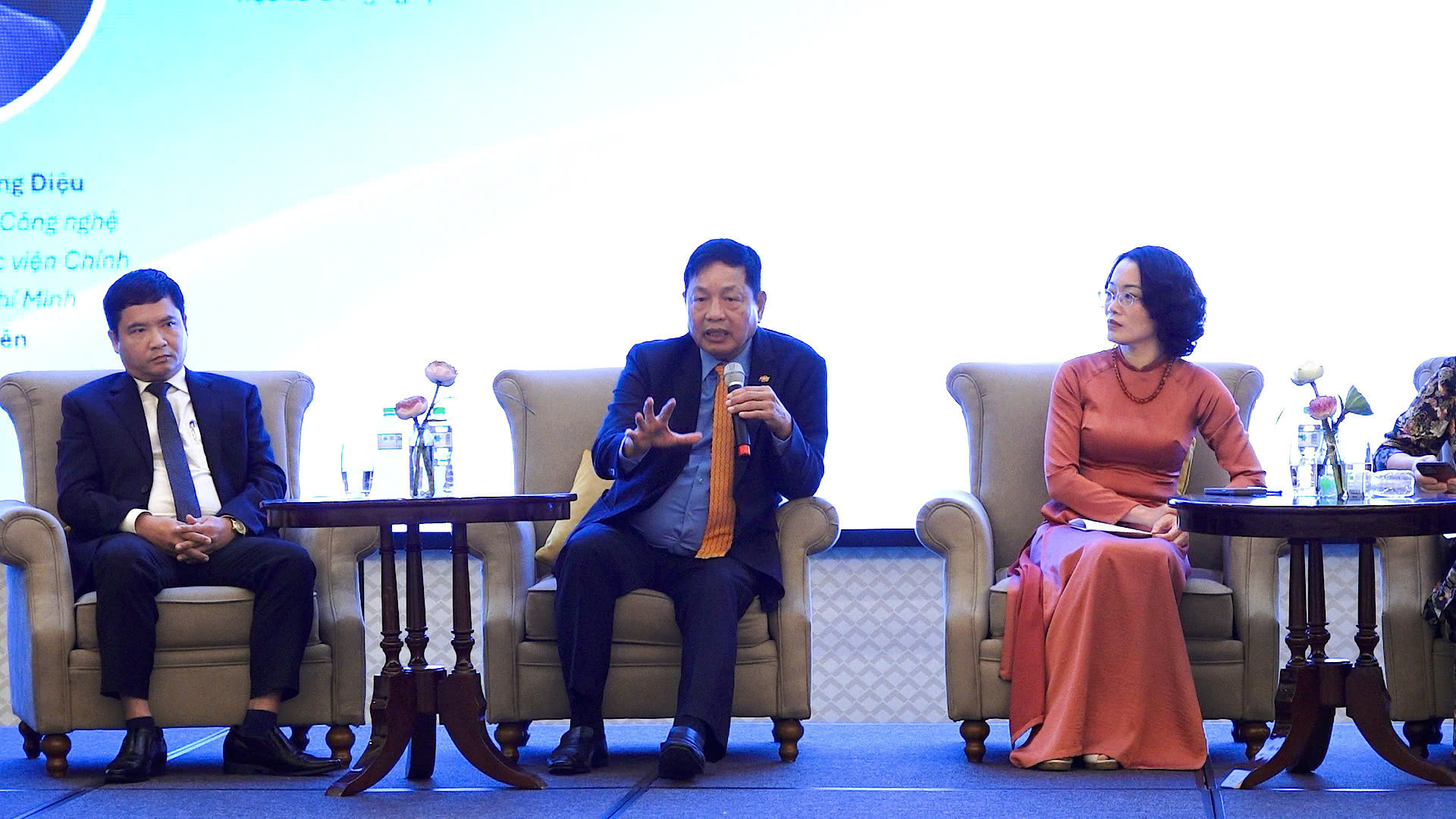
Previously, at the seminar “The Unlimited Power and Unpredictable Challenges of Artificial Intelligence (AI) – Impacts and Policy Responses,” Truong Gia Binh, Chair of FPT, said: “If Vietnamese children learn AI from Grade 1, work with AI, and grow up with AI, they can adapt to any future changes driven by AI when they reach adulthood. The most important thing is to teach, learn, and assess with AI, and it must be done as soon as possible.”
Binh emphasized that no one can predict what future jobs will look like. Therefore, teaching methods, learning approaches, and assessment systems must be radically transformed using AI, and this must be done swiftly.
AI is a key technology of the 4.0 Industrial Revolution, capable of reshaping the global order, and is thus highly prioritized by nations, especially major powers.
With a strategic vision, the Communist Party of Vietnam issued Resolution No57, identifying science, technology, innovation, and national digital transformation, including AI, as the golden key to help the country escape the middle-income trap, reduce the risk of economic lag, and achieve the strategic goal of becoming a developed, high-income nation by 2045.
Developing strategic technologies, including AI, is a top-priority breakthrough and a key driver for rapidly developing modern productive forces, innovating national governance, and advancing socio-economic development.
According to Minister of Science and Technology Nguyen Manh Hung, AI presents a tremendous opportunity for Vietnam to become a developed, high-income nation. Vietnam must seize this opportunity, mobilize all resources for AI integration, double Vietnam’s intellectual capacity, boost labor productivity, achieve double-digit economic growth, enhance national competitiveness, improve governance, and better protect the nation.
Minister Nguyen Manh Hung noted that Vietnam’s AI declaration is Human-Centered, Safe, Self-Reliant, Collaborative, Inclusive, and Sustainable.
Truong Gia Binh, Chair of FPT, said: “Minister Nguyen Manh Hung often reminds us to think 10X, to aim for breakthroughs, and AI is that 10X breakthrough. AI can increase labor productivity tenfold. In the past, the gap between us and the world’s advanced nations was vast due to previous technological revolutions. However, those revolutions never delivered such a dramatic productivity leap. Thus, this revolution poses immense challenges but also offers tremendous opportunities.”
Binh further emphasized that the most critical solution is educational reform. “I proposed radically transforming the teaching, learning, and assessment methods. If Vietnamese children learn with AI, work with AI from Grade 1, and grow up with AI, they can adapt to any future changes driven by AI when they reach adulthood.”
Thai Khang
.svg)
