 Vietnamnet.vn

 Podcast



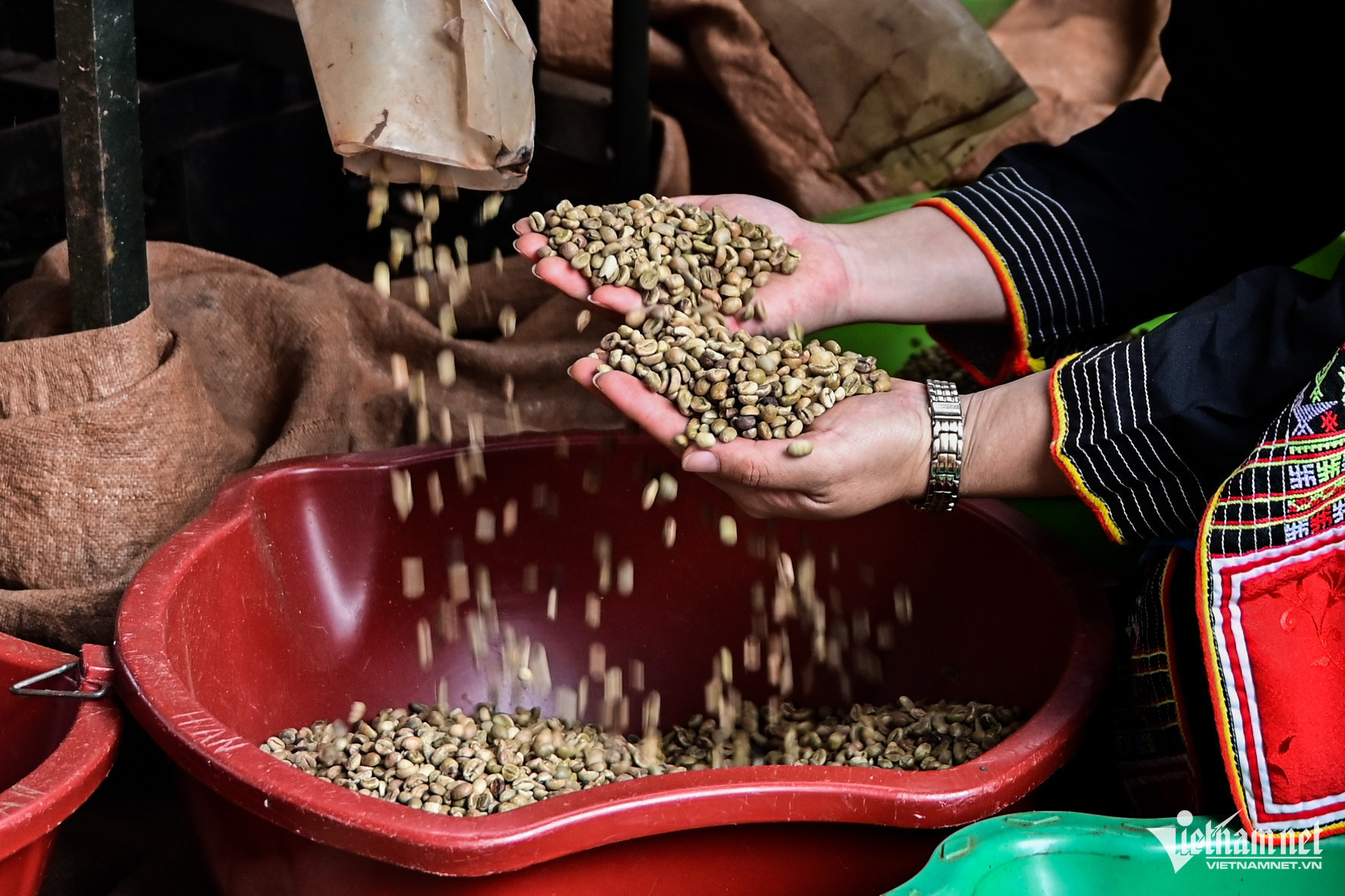
With a total cultivation area of over 730,000 hectares, Vietnam harvested approximately 1.9 million tonnes of coffee last year. Of that, nearly 1.6 million tonnes were exported, earning the country nearly USD 9 billion. Exports to Europe made up about 50% of total volume, but significant growth was also seen in African and Asian markets.
The figures were announced by Nguyen Nam Hai, Chairman of VICOFA, during a press conference held on January 23 to review the sector’s performance in 2025 and set priorities for 2026.
“The past three years have seen coffee prices rise steadily, significantly improving farmers’ incomes. As a result, farmers now have more resources to reinvest in their crops, boosting both yield and quality,” Hai said.
He added that if favorable weather continues, Vietnam’s coffee output could increase by 5–10% in 2026, with export revenue expected to exceed USD 10 billion.
Vietnam remains unknown in the global coffee brand landscape
Despite being the world’s second-largest coffee exporter, Vietnam remains relatively unknown among global consumers for its coffee products.
The root of this issue, according to Hai, lies in the fact that 87% of Vietnam’s coffee exports are still in raw green bean form, with only 13% comprising processed or instant coffee.
“This is the paradox of Vietnam’s coffee sector,” Hai noted. “We export millions of tonnes, but the world rarely sees Vietnamese labels on supermarket shelves.”
He pointed to countries like Guatemala as a model. “Few people knew Guatemalan coffee until a targeted marketing campaign by the Specialty Coffee Association and a branding agency made it visible globally - within just three years,” he said.
Vietnamese coffee brands such as Trung Nguyen, L’amant, King Coffee, and Intimex have made efforts to develop more value-added products in recent years. However, Hai acknowledged that progress remains modest compared to the country’s vast potential.
He emphasized the need for a robust national strategy to promote Vietnam’s coffee brand worldwide - but noted that the cost of such campaigns can be a significant hurdle. A single global promotional push could cost as much as USD 1.6 million over one to two years, which VICOFA cannot shoulder alone.
The association is calling for greater support from government ministries and agencies to help take Vietnamese coffee to the global stage.
Agricultural exports exceed USD 70 billion in 2025
Also at the January 23 press conference, the Ministry of Agriculture and Environment reported that Vietnam’s total agricultural, forestry, and fishery exports reached USD 70.09 billion in 2025 - an increase of 12% over the previous year.
Crop exports brought in USD 37.25 billion (up 13.7%), while livestock products reached USD 627.8 million (up 17.4%). Seafood exports hit USD 11.32 billion (up 12.7%), and forestry products added another USD 18.5 billion (up 6.6%).
By region, Asia remained Vietnam’s largest market, accounting for 45.2% of agricultural exports, followed by the Americas (22.8%) and Europe (13.2%). Notably, exports to Africa rose by 68.1%, while those to Europe and the Americas increased by 34.2% and 7.2%, respectively.
In terms of individual markets, China accounted for 22.3% of agricultural exports, followed by the U.S. at 20.6% and Japan at 7.1%.
Tran Chung
.svg)
