 Vietnamnet.vn

 Podcast



Linh Trang
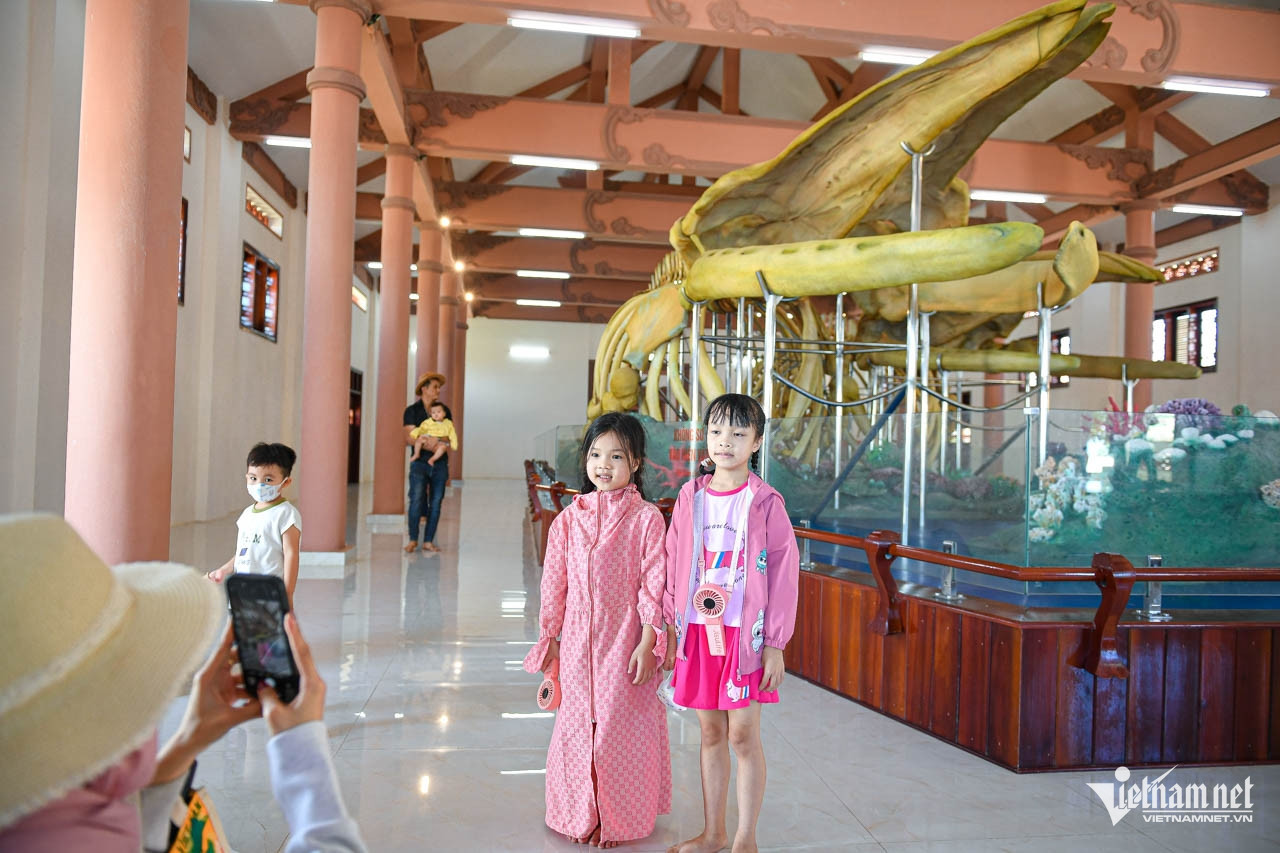
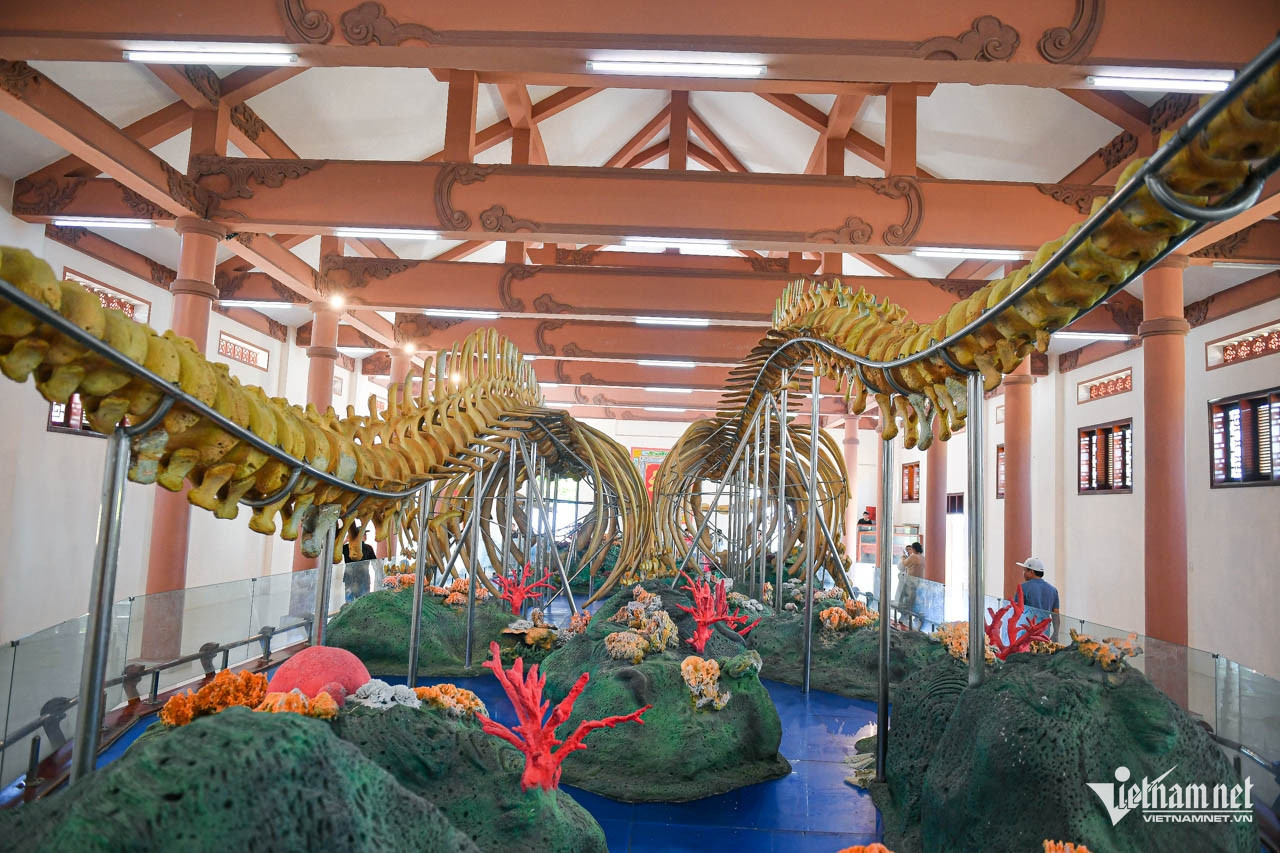
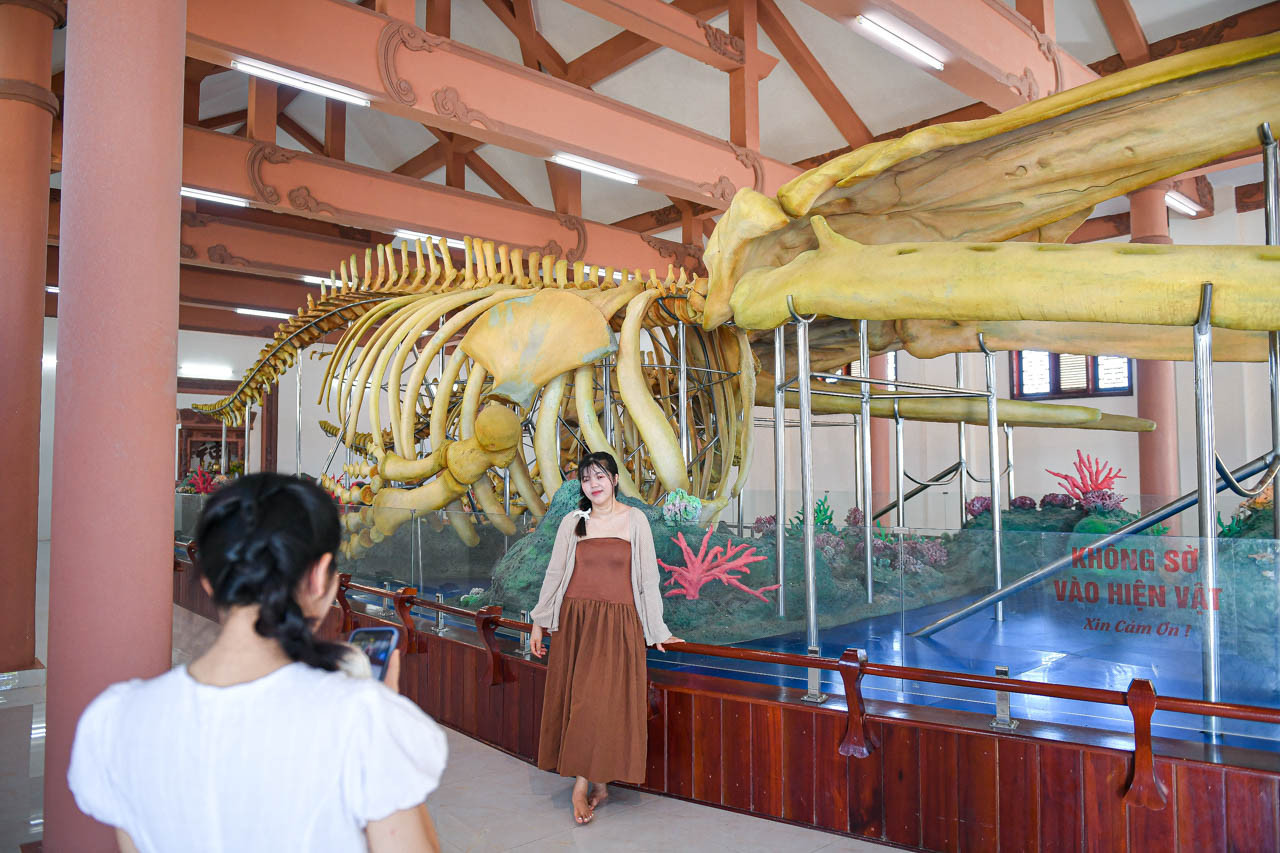
The Whale Skeleton Exhibition House and Tan Shrine in Dong An Vinh Hamlet is one of Ly Son Island’s most intriguing attractions. Here, visitors can marvel at two enormous whale skeletons, known locally as “Ong” (the Whale God), and hear fascinating legends deeply rooted in the islanders’ beliefs.
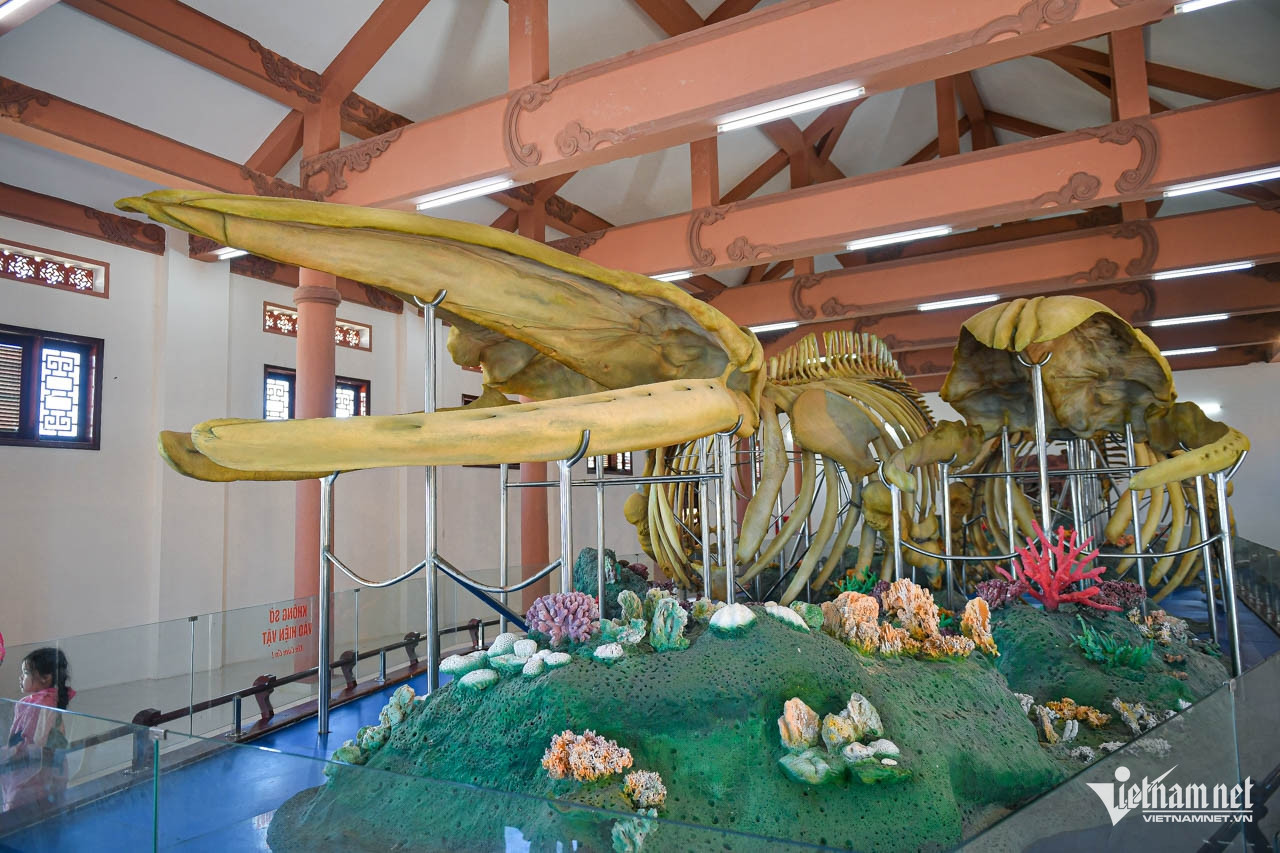
These skeletons have been preserved and worshipped by local communities for generations. In 2020, Ly Son Island invested VND 14 billion (about USD 540,000) to build an exhibition house and restore the two skeletons. In September 2024, the Vietnam Records Organization recognized Tan Shrine as “the largest whale skeleton display on a Vietnamese island.”
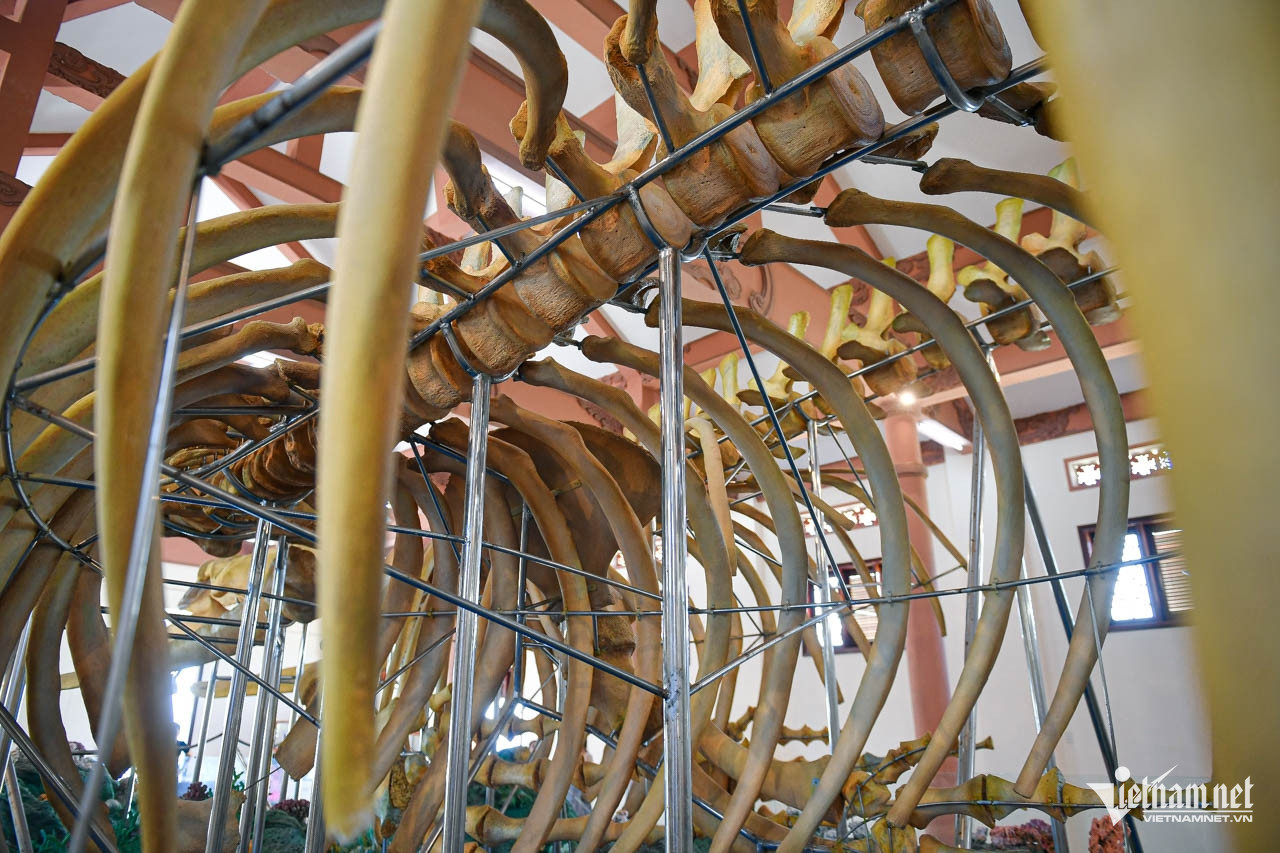
The larger skeleton, named “Ong Ca” and honored as Dong Dinh Dai Vuong, measures 22 meters long and 4 meters high, with ivory-colored jawbones 4.7 meters long. The smaller skeleton, named “Duc Ngu Nhi Vi Ton Than,” is 18 meters long. Both have 50 vertebrae, 28 ribs, and restored skulls, reinforced with steel and crafted using specialized resin techniques.
One skeleton was originally 30 meters but was reduced to 22 meters after restoration due to damage; the other, once 25 meters, now measures 18 meters.
In the spiritual life of Ly Son’s fishermen and other coastal villages, whales are revered as guardians who save sailors from storms. Researchers believe whale worship in Vietnam originated with the Cham people, later adopted by the Vietnamese and Chinese communities. During the Nguyen dynasty, Emperor Gia Long conferred titles upon whales, encouraging people to worship them.
According to local accounts, both whales washed ashore in the early 19th century, when the island was still sparsely populated. The legend says that when Dong Dinh Dai Vuong died, his intact body weighed over 55 tons, making it impossible to move ashore for burial. The village’s ritual committee prayed for divine intervention, and a powerful wave miraculously carried the whale into a prepared grave. Villagers saw this as a sacred sign and built a shrine in gratitude.
In the past, islanders collected whale oil in jars for storage, later using it to coat and preserve the bones. Tan Shrine, originally built in 1832 during the 13th year of Emperor Minh Mang’s reign, was rebuilt in 1901 and again in 2002 after coastal erosion threatened it.
Every year, on the 3rd day of the 5th lunar month, locals gather here for ceremonies of thanksgiving and prayers for a bountiful fishing season.
The shrine is built in the shape of the Chinese character “Tam” (three), with a front hall, main sanctuary, and rear chamber. Roofs are decorated with “two dragons flanking the moon” and vivid dragon and phoenix motifs. It is listed as a provincial-level heritage site in Quang Ngai.
Today, the Whale Skeleton Exhibition House and Tan Shrine remain important cultural and spiritual landmarks, serving research, heritage preservation, and tourism development.

The exhibition house and Tan Shrine are located by the sea
 |
 |
The whales washed ashore in the early 19th century when the island was sparsely inhabited
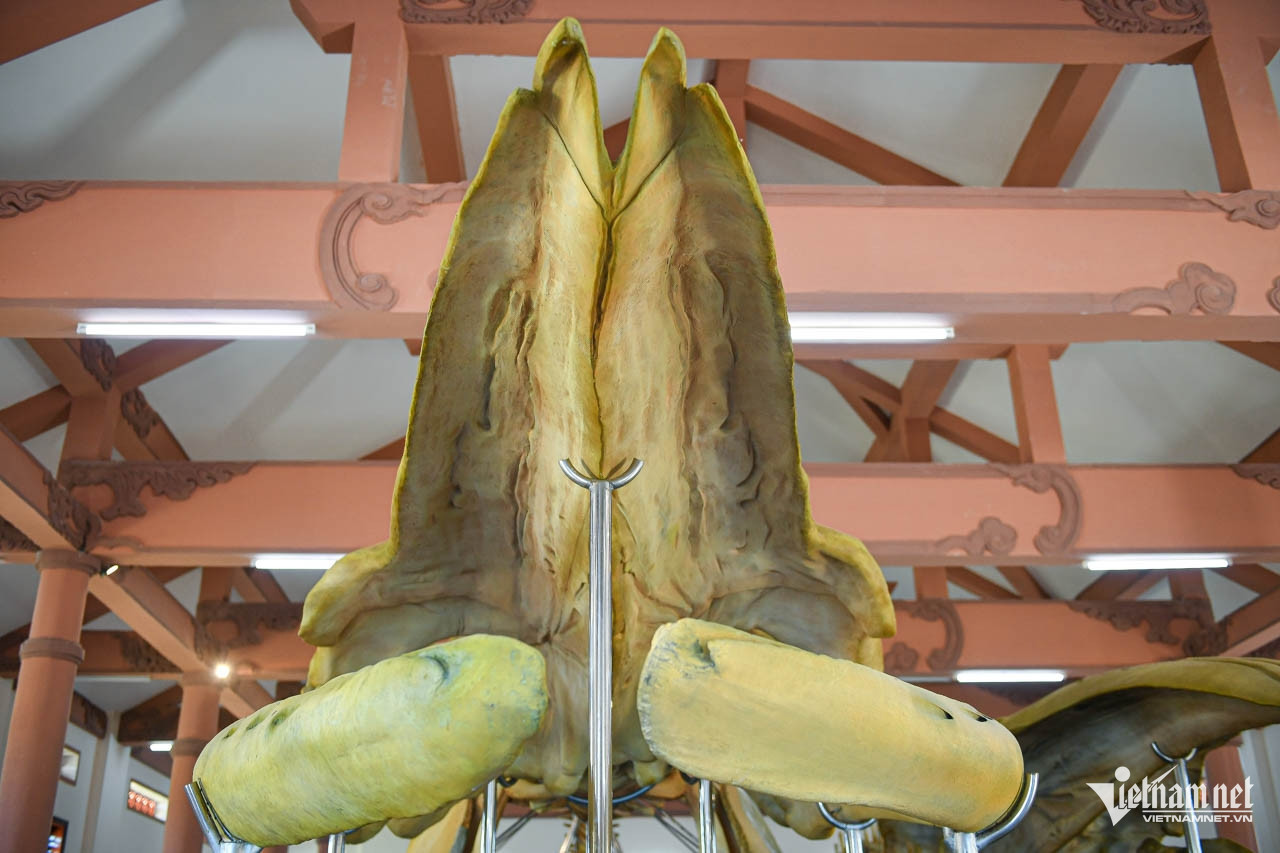
The two whale skeletons attract many tourists
Tan Shrine is a place of whale worship

.svg)
