 Vietnamnet.vn

 Podcast



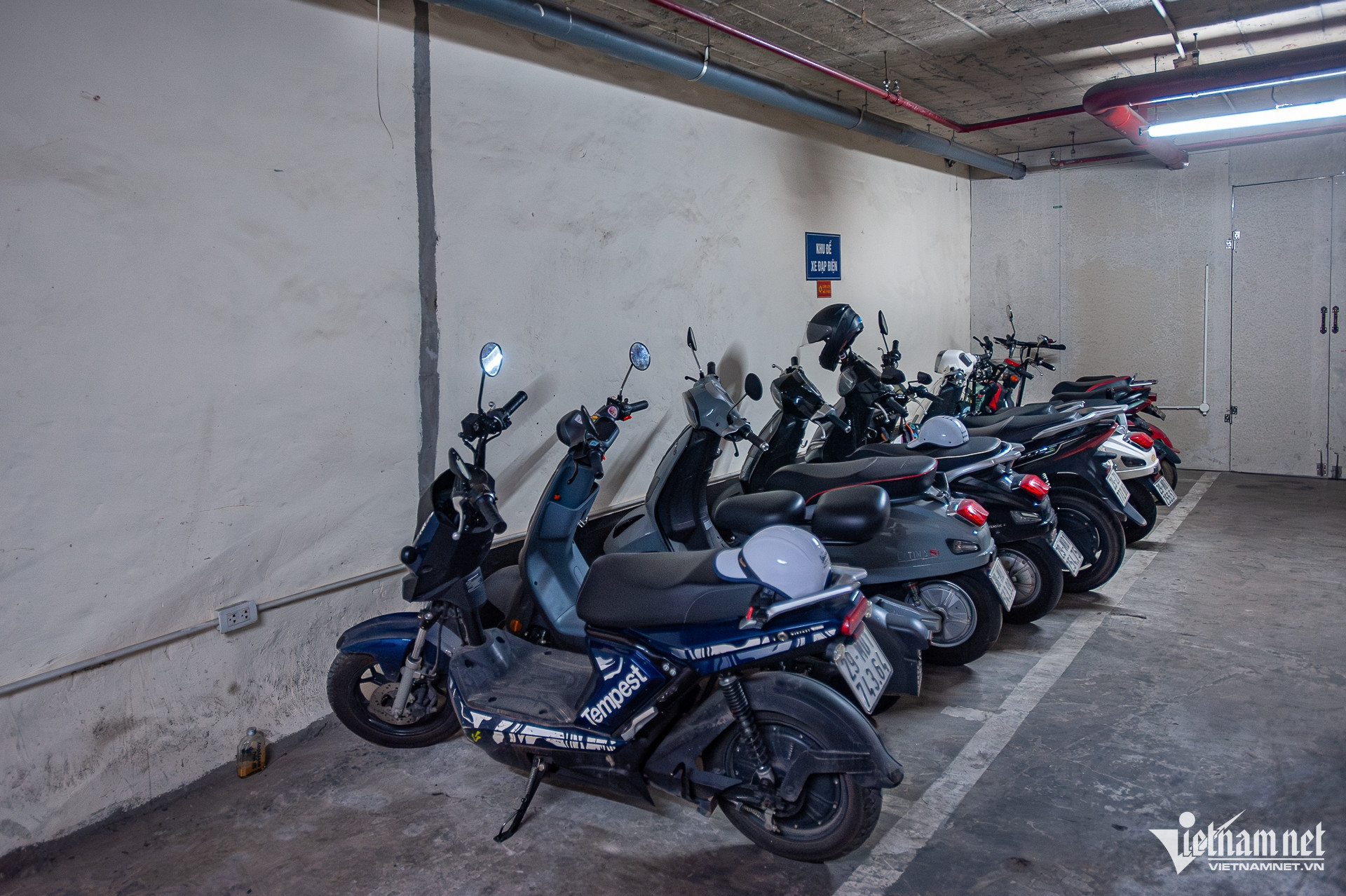
In recent days, management boards of several apartment complexes such as HH Linh Dam (Hoang Liet, Hanoi) and CT1 Thach Ban (Long Bien, Hanoi) have suddenly announced a temporary suspension or termination of accepting electric motorbikes and e-bikes in basement parking areas, immediately triggering heated debates.
Residents, especially those living in the affected buildings, have strongly reacted, saying they are placed in a passive, inconvenient situation and that limiting electric vehicle parking goes against the green transition trend.
However, from the perspective of developers and management boards, the people directly operating the buildings and bearing safety responsibilities and legal risks if incidents occur, this pressure is far from small.
Is the management board "afraid" of responsibility?
The management unit of Hanoi's largest condominium complex with over 40,000 residents, HH Linh Dam, explicitly stated in its notice that, "the rapidly increasing number of electric motorcycles and electric bicycles has led to garage overcrowding and potential safety risks." The risk of fire prevention was mentioned first.
According to the management boards, electric motorcycles and bicycles use batteries, a component with a high risk of fire and explosion if there is a short circuit, collision, or incorrect charging procedure.
When the number of electric vehicles is excessive in the basement's enclosed space, an incident could lead to rapidly spreading flames, producing high levels of toxic gases, hindering evacuation, and threatening the lives and assets of residents. Furthermore, they asserted that the current number of vehicles has exceeded the safe load capacity according to the building's design.
Similarly, in a recent notice to residents, the management board operating the CT1 Thach Ban building (Long Bien, Hanoi) stated that the parking lot for electric vehicles on the first floor was originally designed for only about 25 spots, but now accommodates up to 60 vehicles, making it "very difficult to arrange further parking."
"The operating management board recognizes the potential risk of fire and explosion during the parking and charging of electric vehicles on the first floor. Furthermore, there is no separate designated area that meets the standards and technical safety for electric vehicle parking and charging, nor is there specialized firefighting equipment for electric bicycles and motorcycles using Lithium-ion batteries," the CT1 condominium management board’s notice stated.
Besides Hanoi, some condominiums in HCMC and Da Nang are also considering implementing restriction measures. Some buildings are considering separating electric vehicle parking areas or temporarily suspending acceptance of electric vehicles and prohibiting charging during peak hours to ensure safety.
These consecutive actions show that the concerns from the management boards are well-founded. The reasons cited by the buildings all revolve around common points: the risk of fire and explosion from the electric vehicle charging process, especially in modified vehicles or those using unregulated batteries without a Battery Management System (BMS).
The real fear
Operators of apartment buildings admit that accepting, storing, and supervising electric motorcycles and electric bicycles carries significant risks. They face daily scenarios where residents arbitrarily tap into power lines for charging, park vehicles and batteries outside designated areas, even bring batteries up to apartments, or use chargers of unknown origin.
In an enclosed environment like a basement, just one overheating device or short circuit can create a rapidly spreading and uncontrollable incident, while the fire prevention and fighting infrastructure and equipment in many buildings have not kept pace.
This reality keeps the management board on edge, as they must simultaneously meet residents' parking needs and ensure fire prevention and fighting safety, a factor for which, if an incident occurs, they are the first ones held responsible.
A representative from the Bac Ha Tower BQL (Thanh Xuan ward, Hanoi) stated that in general, the basement of each tower was designed and equipped with only about 20-30 electrical sockets, mainly for cleaning, tidying, and on-site repairs. Meanwhile, the number of electric motorcycles and bicycles regularly parked at each tower is now up to 60-70 vehicles.
"These electrical sockets are not designed for electric vehicle charging, yet residents still park and plug in their vehicles here. Many people even arbitrarily pull wires, split, and connect sockets to charge their vehicles. If the number of electric motorcycles and bicycles increases rapidly, the management board will be quite perplexed," the representative shared.
The BQL of another condominium in Thanh Liet ward expressed sympathy for the decisions of condominiums like HH Linh Dam and CT1 Thach Ban because the infrastructure is inadequate, a problem that is difficult to solve overnight.
Hoang Hiep
.svg)
