 Vietnamnet.vn

 Podcast



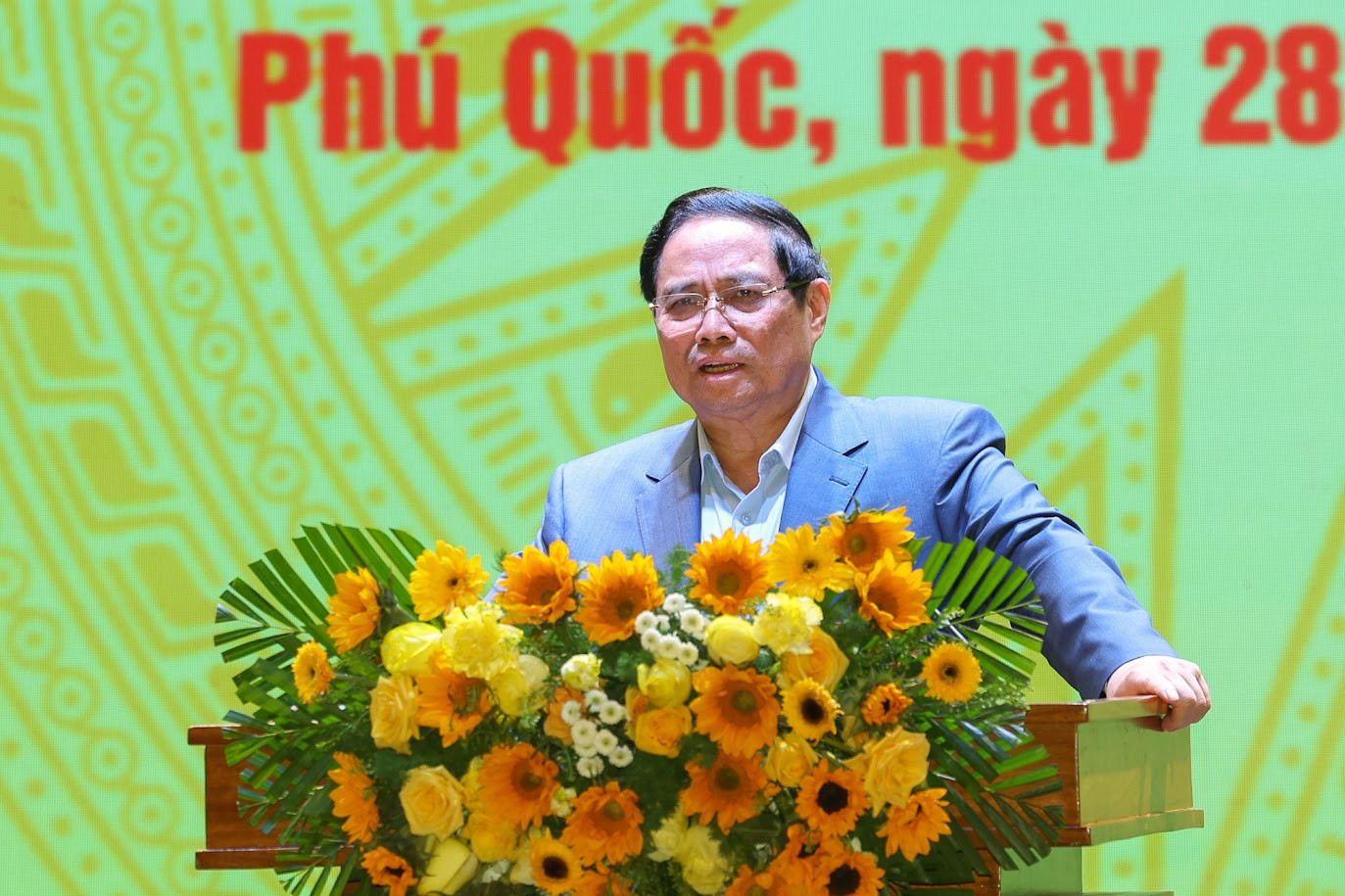
Prime Minister Pham Minh Chinh chaired the second meeting of the APEC 2027 National Committee in Phu Quoc – Photo: VGP/Nhat Bac
Attending the meeting were Deputy Prime Minister Bui Thanh Son, who also serves as Chairman of the National Committee, leaders of central ministries and agencies, officials from An Giang province, and representatives from several businesses.
The committee noted that preparations for APEC 2027 have been proactive, coordinated, and rapidly implemented by relevant bodies at all levels. Key milestones have been achieved on schedule and with promising early results. The committee’s organizational structure is now in place and functioning steadily, with five sub-committees covering Content, Logistics, Security–Health, Communications–Culture, and Protocol, alongside the APEC 2027 Secretariat.
Multiple domestic and international workshops have been conducted to shape the agenda for APEC Leaders’ Week. Draft schedules for ministerial, senior official, and high-level meetings are under development. Communication plans, branding concepts, and security frameworks are also being finalized.
A particular focus has been on infrastructure projects in Phu Quoc. All 21 priority projects have completed investor and contractor selection. Seven of them are either on schedule or ahead of it, including the expansion of Phu Quoc International Airport and the construction of the APEC Conference Center and related facilities.
Delegates also reviewed progress, identified challenges, and proposed key issues requiring government guidance, while discussing major priorities for the next phase of preparation.
Deputy Foreign Minister Nguyen Minh Hang, who heads the APEC Secretariat, emphasized coordination across all fronts. Deputy Head of the Government Office Pham Manh Cuong, leading the Logistics Sub-Committee, addressed physical readiness and infrastructure timelines. Deputy Foreign Minister Le Thi Thu Hang, chair of the Communications and Culture Sub-Committee, shared strategies to promote Vietnam’s image.
Participants agreed that 2026 must be dedicated to completing all aspects of preparation - from content to logistics, human resources, protocol, and security - so that full implementation can commence in 2027. The overarching master plan and supporting project proposals must be finalized and submitted for approval in accordance with the set roadmap.
Concluding the meeting, Prime Minister Pham Minh Chinh reaffirmed the strategic importance of the event. He echoed General Secretary To Lam’s statement that APEC Leaders’ Week in Phu Quoc is a rare and significant opportunity to showcase Vietnam as a dynamic, innovative, and friendly nation. It also serves as a major catalyst for growth in Phu Quoc, An Giang, and the entire Mekong Delta region.
The Prime Minister said that successfully hosting APEC 2027 is not only a matter of local pride but a strategic step in enhancing Vietnam’s international standing in an era of deep integration and global competition.
Commending the establishment of the five sub-committees, he urged all units to work proactively and efficiently, with a clear mission to deliver a summit that is impressive, aligned with Vietnam’s stature, and optimized for both substance and visibility.
He instructed the committee to create a detailed roadmap, conduct regular evaluations, address challenges quarterly, and fine-tune the organizational structure to match current realities. A comprehensive master plan for APEC 2027 must be submitted for approval as the foundation for sub-committees to begin operational work.
The Prime Minister emphasized that the summit’s theme must be relevant, strategic, and reflective of Vietnam’s role. It should address both global and domestic concerns while aligning Vietnam’s interests with those of APEC and ASEAN.
He encouraged accompanying topics for ministerial, multilateral, and committee-level meetings that explore solidarity, sustainable development, digital and green transformation, science and technology, AI, multilateralism, and cultural exchange - as well as business forums.
He stressed the importance of progressing from small-scale to larger events, selecting culturally significant venues to spotlight Vietnam’s heritage, and integrating conference schedules with hospitality services such as accommodation, sightseeing, and shopping.
The Prime Minister also called for efficient, transparent use of funds, combined with efforts to attract sponsors. Logistics must be lean, modern, and secure. Infrastructure investments must be forward-looking, serving national development beyond APEC - particularly for An Giang and Phu Quoc.
He ordered the development of a distinctive logo, cohesive branding, and an official website for APEC 2027. These must be visually engaging, easy to navigate, and blend cultural authenticity with modern aesthetics.
Echoing the views of committee members, the Prime Minister requested that ministries and provinces align with their mandates and swiftly finalize the master plan. The document must be comprehensive yet concise, with clear annexes and references, ready for submission by March 2026.
He urged all stakeholders to act with clarity, urgency, and ambition: “We must prepare for APEC 2027 with long-term vision, deep thought, and bold execution - making the most of this opportunity to present Vietnam as a confident, self-reliant, peaceful, and hospitable nation.”
All efforts must be coordinated with “high determination, strong efforts, decisive action, and a results-first mindset.” He stressed clear task assignment, timelines, and accountability across all agencies, while maximizing every available resource to ensure a breakthrough year of preparation in 2026 and a successful APEC Summit in 2027.
VGP
.svg)
