 Vietnamnet.vn

 Podcast



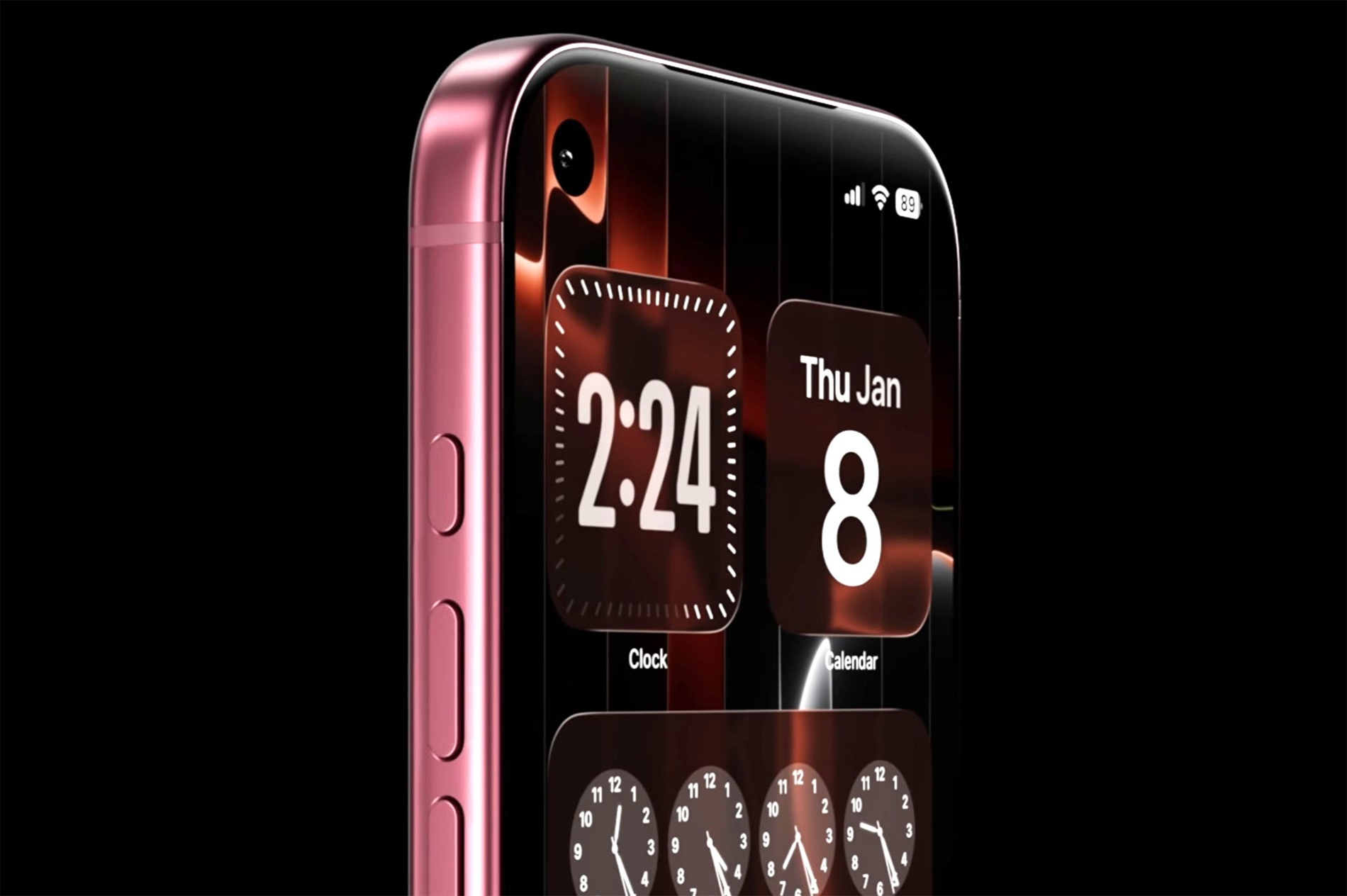
According to the latest reports from South Korea’s tech industry, Apple is introducing new technical requirements for high-end OLED panels in its upcoming iPhones. This move could pave the way for significant design changes starting with the Pro line.
Infrared beneath the display
In preparation for its next-generation iPhones, Apple is said to be narrowing down technical specifications for display components. A report from South Korea reveals Apple now demands under-display infrared (UDIR) technology, paired with next-gen LTPO OLED panels, specifically for the upcoming iPhone 18 Pro Max.
Embedding infrared sensors beneath the screen is seen as a critical step if Apple wants to minimize or eventually eliminate visible front-facing cutouts.
Still, this doesn’t necessarily mean a seamless screen is arriving just yet. The shift represents a foundational architectural change, not an immediate visual transformation.
Under-display infrared means the IR sensors - currently housed within the notch or Dynamic Island - would move behind the OLED layer. Face ID operates by projecting infrared light onto the user’s face to create a depth map, which it compares to encrypted biometric data stored on the device.
To achieve an iPhone free of any notches or prominent camera holes, the entire sensor system must function through several layers of display. UDIR is the key to overcoming this significant hardware barrier, which explains the mounting industry attention - even in the absence of a confirmed commercial product.
But having the underlying technology doesn’t automatically ensure a complete feature rollout. Apple could adopt a phased approach - concealing only some of the sensors while others remain visible.
A smaller Dynamic Island or just a single camera hole would still align with current rumors. In fact, Apple has explored similar ideas in the past.
Face ID under display has surfaced repeatedly in supply chain reports over the years, though often accompanied by inconsistent timelines and vague descriptions.
So far, none of these rumors have materialized into a real commercial iPhone design.
Why Samsung and LG remain central to Apple’s plans
Reports suggest only Samsung Display and LG Display currently possess the capabilities to meet Apple’s strict requirements for both LTPO and UDIR on a mass production scale. As a result, the two Korean giants maintain their lead roles in Apple’s roadmap for premium iPhones.
Although Apple has spent years diversifying its display supply chain - bringing in players like BOE for select models - veteran OLED manufacturers still hold the upper hand when it comes to cutting-edge technologies.
Under-display infrared adds another layer of complexity. OLED panels naturally absorb and scatter infrared light, which hampers sensor performance and increases production risk.
To tackle this, Samsung and LG have invested heavily in specialized materials and ultra-precise manufacturing processes to deliver acceptable yield rates while preserving brightness, color accuracy, and durability.
Their expertise gives them a clear edge, especially as Apple continues to raise the bar for display performance.
Face ID under display: Why it’s still an unsolved puzzle
Apple’s push for UDIR shows the company is preparing for under-display Face ID - but that should not be mistaken for confirmation it will debut on the iPhone 18 Pro Max.
Face ID is more than a single sensor. It involves an integrated system of infrared emitters, dot projectors, and receivers, all of which must operate in perfect harmony.
Concealing all these components under an OLED screen, while maintaining speed, accuracy, and reliability - particularly in low-light conditions - remains a formidable challenge.
OLED layers reduce the amount of infrared light that passes through, directly impacting facial recognition performance.
Past reports have shown that Apple’s roadmap for under-display Face ID has been repeatedly delayed, shifting from one iPhone generation to the next.
Some sources have tempered expectations, suggesting smaller cutouts or incremental transitions. Others believe a truly seamless solution could still be years away.
Apple’s hardware history shows it’s willing to wait until the user experience meets its standards. Despite long-standing rumors, under-display Touch ID never made it to the iPhone. Even Face ID itself was rolled out gradually after years of refinement.
For now, Dynamic Island remains a pragmatic compromise, balancing engineering constraints, front-camera placement, sensor needs, and UI design.
Under-display infrared technology signals Apple’s long-term vision - but when we’ll actually see an iPhone with a completely uninterrupted screen remains an open question.
Hai Phong
.svg)
