 Vietnamnet.vn

 Podcast



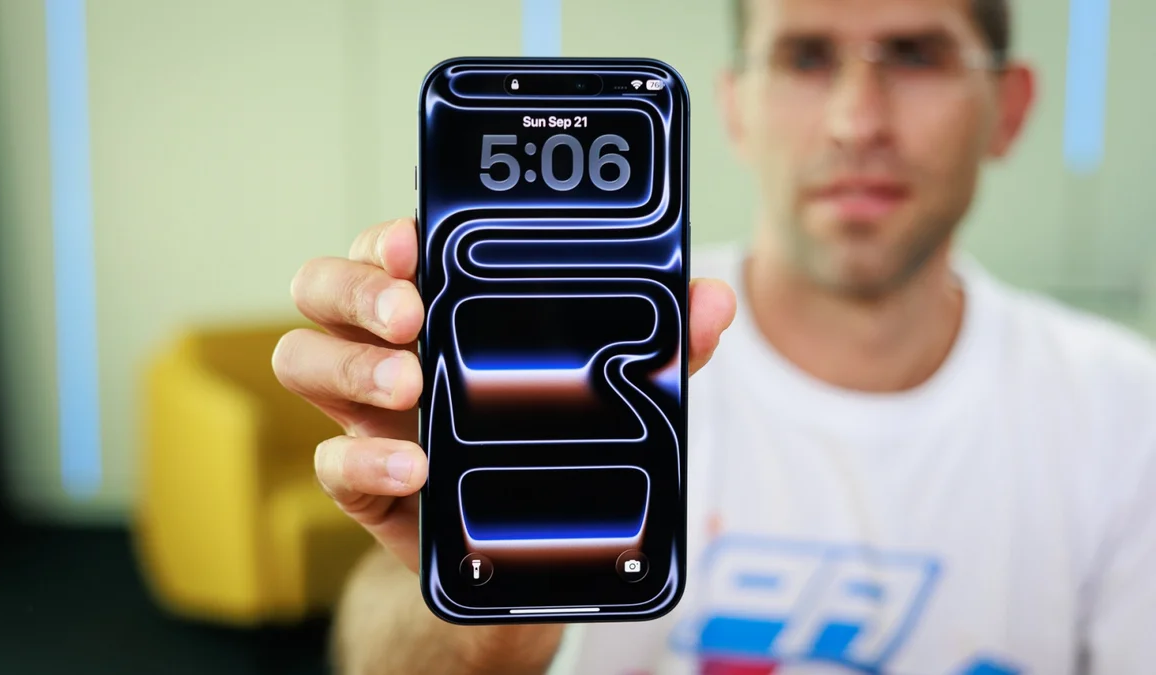
However, analysts say that even with a substantial price increase, Apple's profit on each device could still be lower than it earns from the iPhone 17 Pro Max.
For months, industry sources have predicted that both the iPhone 18 Pro and iPhone 18 Pro Max will debut at considerably higher starting prices than the iPhone 17 Pro lineup.
Some analysts estimate the increase could range from US$200 to US$300, prompting speculation that Apple is simply seeking to maximize profits.
A new analysis published by Counterpoint Research, however, suggests a different explanation.
According to the report, the primary reason for the anticipated price increase is not higher profit targets but rapidly rising component costs.
Memory prices emerge as the biggest cost driver
The global semiconductor market has seen sharp price increases for NAND flash and DRAM memory chips this year.
The trend has affected a wide range of products, including Android smartphones, tablets and Apple's own iPad and Mac product lines.
According to Counterpoint Research, memory has become the fastest-rising cost component in premium smartphones, placing significant pressure on Apple ahead of the iPhone 18 Pro Max launch.
In previous generations, Apple benefited from declining component prices.
The 256GB iPhone 17 Pro Max is estimated to have a bill of materials of about US$410, compared with US$485 for the iPhone 16 Pro Max and US$453 for the iPhone 15 Pro Max.
Although these figures represent estimated hardware costs rather than total manufacturing expenses, they indicate that Apple has enjoyed meaningful savings on components in recent years.
Component costs could exceed US$800
That trend is expected to reverse with the next-generation iPhone.
Counterpoint Research said it is still too early to determine the exact production cost of the iPhone 18 Pro Max, but preliminary estimates suggest the 1TB model could have a bill of materials exceeding US$800.
That would represent a dramatic increase from the roughly US$500 estimated for the equivalent iPhone 17 Pro Max.
If those projections prove accurate, Apple may have little choice but to increase retail prices to maintain its financial performance.
Even if prices rise by US$200 to US$300, analysts believe the company's gross margin per device could still be lower than that of the current generation.
Not every component is becoming more expensive
There is one positive development for Apple: not every component is seeing higher costs.
Analysts expect the display cost of the iPhone 18 Pro Max to decline slightly thanks to improvements in manufacturing efficiency.
Several other components are also expected to become less expensive than those used in the previous generation.
However, those savings are unlikely to offset the steep increase in memory prices.
In the 256GB iPhone 17 Pro Max, the combined cost of RAM and storage is estimated at around US$41.
For the iPhone 18 Pro Max, however, the 12GB RAM alone is expected to cost considerably more.
The camera system is also expected to become more expensive as Apple adopts new image sensors and imaging technologies, adding further pressure to overall production costs.
Prices could approach US$1,900
Apple is still several months away from officially unveiling the iPhone 18 Pro Max, meaning all pricing estimates remain speculative.
Nevertheless, many analysts expect the 256GB model to start at around US$1,399, approximately US$200 higher than the iPhone 17 Pro Max.
The 512GB version could be priced at around US$1,649, while the 1TB model could reach US$1,899 if Apple passes the full increase in production costs on to consumers.
Even at those higher prices, Apple's profit per device could still decline after accounting for research and development, manufacturing, shipping, distribution, marketing, software development and other operating expenses.
Lower profit per iPhone does not necessarily mean Apple faces financial pressure.
In 2025, the company reported approximately US$112 billion in net profit, remaining one of the world's most profitable businesses.
As a result, even if Apple earns US$50 to US$100 less on each iPhone 18 Pro Max than on the iPhone 17 Pro Max, it would still have ample resources to maintain operations and continue investing in future products.
Analysts say the bigger question is how consumers will respond.
If prices increase as expected, demand for the iPhone 18 Pro Max will depend largely on whether buyers believe its performance, camera improvements and AI capabilities justify the higher price.
Hai Phong
.svg)
