 Vietnamnet.vn

 Podcast



While several Chinese smartphone makers are adopting silicon-carbon batteries capable of reaching 7,000mAh or even 10,000mAh, industry rumors suggest Apple will continue relying on conventional lithium-ion technology, prioritizing battery longevity, reliability and safety.
That does not necessarily mean the iPhone 18 Pro Max will fall behind in battery life. According to multiple leaks, Apple's next flagship could deliver all-day performance comparable to, or even exceeding, some Android phones equipped with much larger batteries.
Battery capacity tells only part of the story
According to recent leaks, the iPhone 17 Pro Max could feature a 4,823mAh battery in markets using a nano-SIM and a 5,088mAh battery in eSIM-only versions.
The iPhone 18 Pro Max is rumored to increase those capacities to 5,391mAh and 5,567mAh, respectively.
Although that would represent a significant increase by Apple's standards, it would still trail many flagship Android smartphones that already feature silicon-carbon batteries ranging from 6,500mAh to 7,000mAh.
However, well-known leaker Ice Universe argues that battery capacity alone does not determine real-world endurance.
According to the source, the iPhone 18 Pro Max could match the battery life of Android devices carrying 7,000mAh batteries thanks to improvements across both hardware and software.
A20 Pro chip and iOS 27 could drive better efficiency
One of the biggest rumored upgrades is Apple's A20 Pro processor, which is expected to be manufactured using TSMC's 2-nanometer process.
The new manufacturing technology is expected to improve power efficiency by around 30% compared with the previous generation while delivering higher overall performance.
Apple is also rumored to introduce a new Wafer-Level Multi-Chip Module (WMCM) packaging design.
Instead of placing DRAM directly above the application processor, the memory would reportedly be positioned alongside it.
Although the design change may appear minor, it could significantly improve heat dissipation. Better thermal management would allow the processor to sustain peak performance for longer while consuming less power.
On the software side, iOS 26 already introduced smarter background process management and more efficient resource allocation to extend battery life.
Leaks suggest iOS 27 will further refine these optimizations through additional system improvements and performance tuning, helping maximize battery endurance during everyday use.
Thicker design may accommodate larger battery
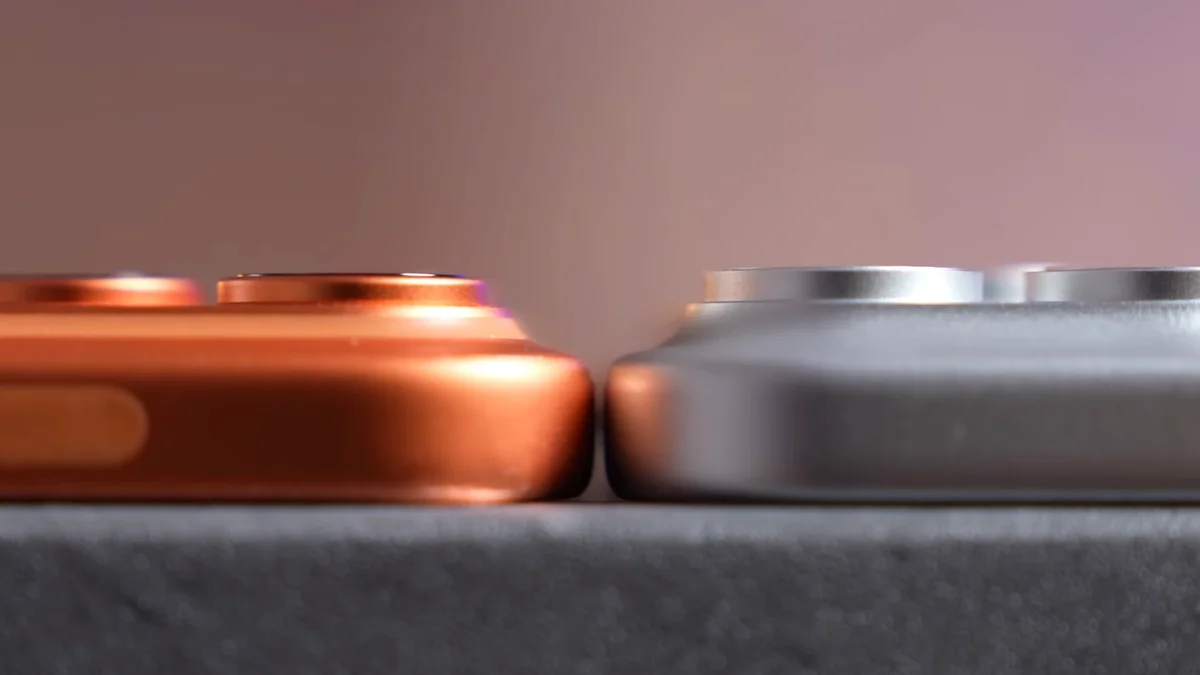
To accommodate the larger battery and upgraded camera system, the iPhone 18 Pro Max is also rumored to become noticeably thicker.
If the iPhone 17 Pro Max measures around 8.8mm, its successor could reportedly increase to somewhere between 9.9mm and 10.9mm.
Its weight could also rise from 233 grams to roughly 240 grams.
The changes suggest Apple may be approaching the practical size limits users are willing to accept for a premium smartphone.
Without adopting silicon-carbon battery technology, increasing battery capacity further with conventional lithium-ion cells would inevitably result in a thicker and heavier device.
Apple therefore appears to be focusing on optimizing every aspect of hardware and software rather than relying solely on a larger battery.
Battery life remains the ultimate selling point
The relatively muted response to Apple's ultra-thin iPhone Air, according to the report, suggests many consumers are willing to sacrifice some thinness in exchange for longer battery life.
For premium smartphones, lasting comfortably through a full day remains one of the most important purchasing considerations.
This may explain why Apple appears to be investing heavily in energy efficiency instead of simply increasing battery capacity.
Even if the rumored 5,567mAh battery becomes the largest ever fitted to an iPhone, it will also need to support brighter displays, faster processors and increasingly demanding Apple Intelligence features, all of which require additional power.
If the current leaks prove accurate, Apple may once again demonstrate that battery life depends on far more than battery size alone. Efficient silicon, improved thermal management and tightly optimized software could allow the iPhone 18 Pro Max to compete directly with the growing number of Android smartphones equipped with 7,000mAh batteries.
As with all pre-release information, Apple has not officially confirmed any of these specifications.
Hai Phong
.svg)
