 Vietnamnet.vn

 Podcast



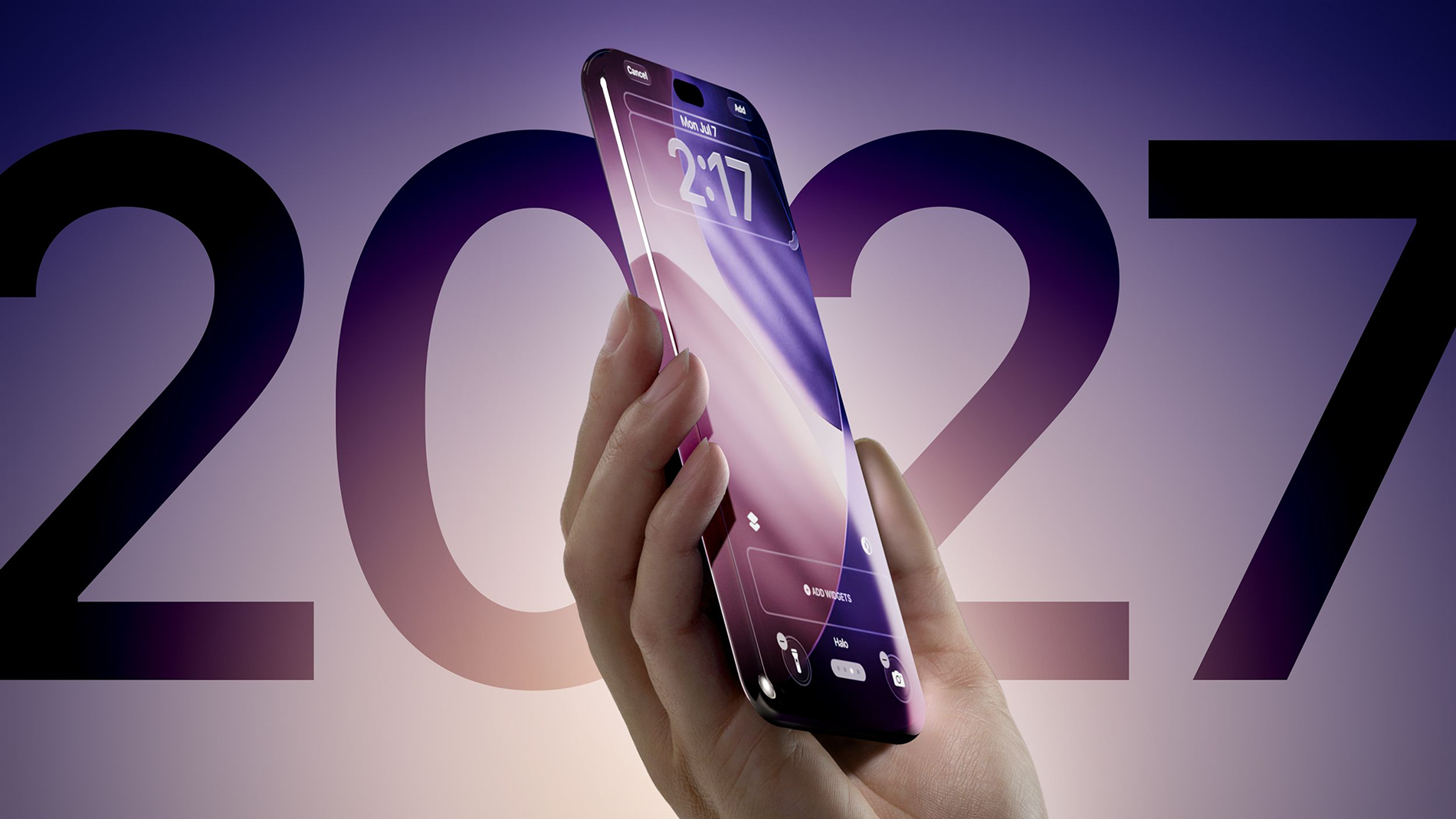
According to supply chain sources in China, the company is working with Samsung to develop a completely new “micro-curved” OLED panel that is thinner, brighter, and more refined than current displays.
This suggests that Apple is not merely making incremental upgrades, but pursuing a symbolic transformation - similar to the shift introduced by the iPhone X in 2017. The highlight this time is a nearly bezel-free display, subtly curved on all four edges to create a more seamless and futuristic feel.
A new display revolution for the iPhone
Unlike the aggressively curved “waterfall” displays seen on some Android devices, Apple is said to be taking a more restrained approach. The company has reportedly asked Samsung to develop a “quad-curved” design with evenly curved edges, but using extremely shallow micro-curves.
This approach offers practical benefits. The gently rounded edges improve grip and reduce the sharp feel of flat sides. At the same time, edge-swipe gestures - a core part of iOS - become more natural.
More importantly, limiting the curvature helps avoid display distortion at the edges, a common issue on heavily curved screens. This reflects Apple’s continued focus on user experience rather than purely aesthetic experimentation.
One of the most notable changes is Apple’s reported push for “pol-less” OLED panels, which remove the polarizing layer found in most current OLED displays.
This aligns with earlier reports from South Korea suggesting Apple will adopt COE (Color Filter on Encapsulation) technology developed by Samsung. Instead of placing color filters on a separate layer, COE integrates them directly into the encapsulation layer.
Removing the polarizer brings several advantages. It significantly reduces display thickness, contributing to a slimmer overall design. It also allows light to pass through more efficiently, resulting in brighter screens while consuming less power - a critical factor as smartphones become increasingly dependent on battery performance.
However, this technology also introduces challenges, particularly in controlling reflections. Without a polarizing layer, managing glare becomes more difficult.
Apple has already begun addressing this issue in recent iPhone models with improved anti-reflective coatings, and further refinements are expected.
Beyond brightness, Apple is also working to improve light uniformity across the display. According to sources, the company is using a “crater-shaped” light diffusion structure.
This design helps distribute light more evenly, preventing areas of uneven brightness - a subtle but noticeable issue on current OLED panels. The result would be a more consistent viewing experience across the entire screen.
A seamless all-glass iPhone: ambition for 2027
The year 2027 will mark two decades since the first iPhone was introduced, and Apple is reportedly planning to celebrate this milestone with a premium “all-glass” iPhone featuring no visible cutouts on the display.
This would require placing all components, including the front camera and Face ID system, beneath the screen - a significant technological challenge.
Display analyst Ross Young believes Apple may not be ready to bring under-display Face ID by 2027. However, other sources suggest it remains a realistic goal.
If the technology is not fully ready, Apple could adopt an interim solution: placing Face ID under the display while retaining a small punch-hole camera. This would serve as a transitional step toward a fully uninterrupted screen.
Recent leaks indicate that Apple is still testing under-display camera technology for its 2027 iPhone, leaving the realization of a truly flawless design uncertain.
Even so, the direction is clear. Apple aims to create a symbolic iPhone that combines absolute minimalism with cutting-edge display innovation.
If successful, the 20th anniversary iPhone may become a defining milestone in smartphone history - much like the iPhone X once ushered in the era of near edge-to-edge displays.
Hai Phong
.svg)
