 Vietnamnet.vn

 Podcast



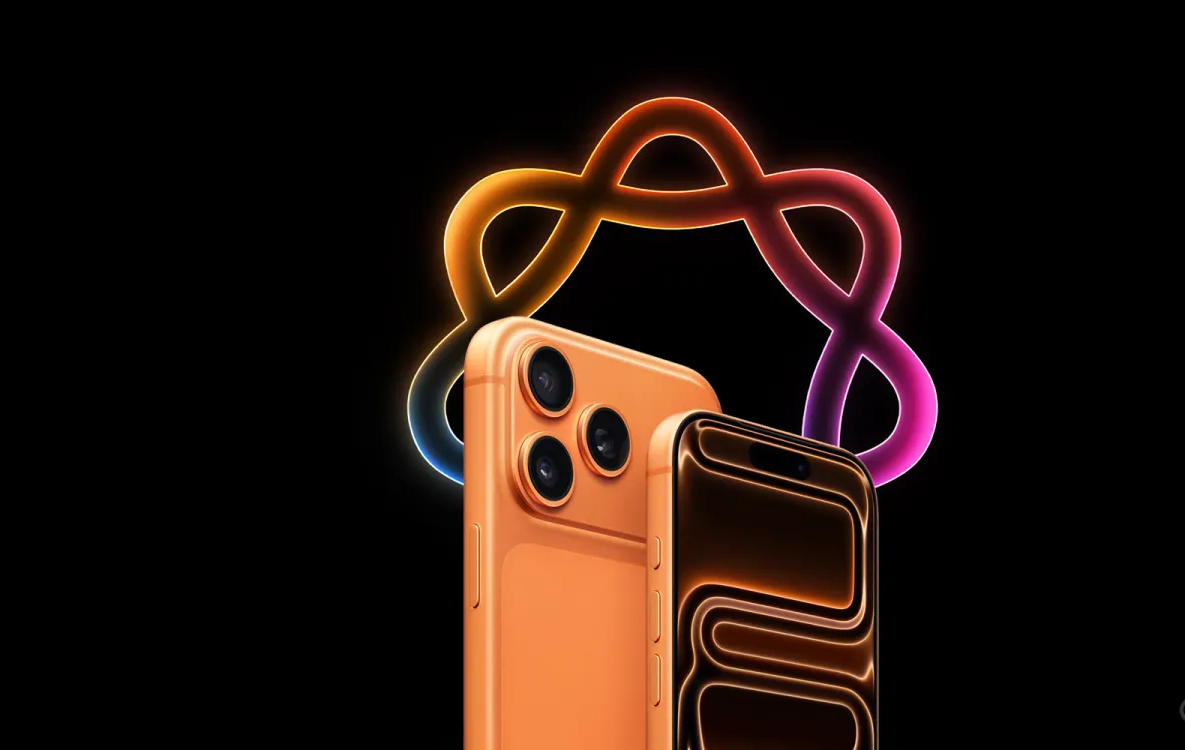
The iPhone may become more important as AI continues to evolve. Photo: 9to5mac
According to him, the iPhone will not be disrupted by AI. Instead, it may become even more essential as the technology continues to evolve.
Speaking on the “This Week in AI” program on April 23, Srinivas, who previously worked in AI research at OpenAI, Google and DeepMind, offered a different perspective on Apple’s position in the AI race.
Rather than viewing AI as a threat, he believes it could reinforce Apple’s core strengths.
“The phone, specifically the iPhone, is not being disrupted by AI,” Srinivas emphasized. He argued that as AI advances, the iPhone is evolving into a “digital passport” - a central hub for storing and verifying personal identity in the digital world.
iPhone in the age of personalized AI
This view contrasts with widespread concerns that Apple is falling behind competitors like OpenAI and Google in AI development.
While acknowledging that gap, Srinivas shifted the focus to other factors: hardware, privacy and control over user data.
He pointed out that the iPhone has long served as the center of a user’s “personal context” - encompassing payment methods, identity credentials, health data, messages, emails and photo libraries - all tied to a single individual over time.
Meanwhile, AI systems are increasingly dependent on context to deliver meaningful and relevant outputs.
This trend is already visible in products such as Perplexity’s “Personal Computer” feature, where AI leverages personal data to generate more accurate responses.
“All of this is deeply personal,” Srinivas said, suggesting that Apple already possesses a valuable layer of data it can continue to build upon.
From this perspective, the iPhone is no longer a device at risk of being replaced, but rather a foundational platform for future AI systems.
As AI capabilities grow, so does the value of personal data - and with it, the importance of the device that stores and manages that data.
Apple Silicon and the shift to on-device AI
A key element of Srinivas’ argument lies in Apple’s hardware strategy, particularly its Apple Silicon chips.
He described this as an “underrated asset,” especially as AI processing increasingly shifts toward personal devices rather than relying entirely on centralized servers.
In his view, many AI tasks will eventually run directly on user devices.
“If agent loops begin running locally, there’s less need for centralized server infrastructure,” he explained.
These processes will be closely tied to elements such as local files, installed applications, messages, emails, notes and images - all stored on the device itself.
On-device AI processing also aligns with Apple’s long-standing commitment to privacy. When sensitive data does not need to be transmitted to external servers, the risk of data breaches is reduced, and users retain greater control.
Apple currently holds a structural advantage: it controls hardware, software and personal data within a tightly integrated ecosystem - a combination few technology companies can replicate at scale.
However, the picture is not entirely optimistic. Despite its platform advantages, Apple has yet to introduce an advanced AI model capable of directly competing with leading systems from OpenAI or Google.
Its virtual assistant Siri, once a flagship AI product, is now widely seen as lagging behind newer conversational systems that have redefined user expectations for natural and intelligent interaction.
In practice, many iPhone users increasingly rely on third-party AI tools to access advanced capabilities. This highlights a paradox: controlling hardware does not necessarily mean controlling the AI experience.
Apple may own the platform, but competitors are shaping much of the AI experience that runs on it.
Even so, Srinivas’ perspective offers a fresh way of understanding the iPhone’s future in the AI era. Rather than being replaced by emerging technologies, the device could become the central hub coordinating all digital interactions - a place where AI not only operates but is continuously enriched by personal data.
In that scenario, the iPhone’s value lies not merely in its hardware, but in its role as a “digital key” connecting identity, data and artificial intelligence into a unified system.
If this vision proves accurate, AI will not disrupt the iPhone - it will elevate it to an even more central role in the digital lives of users.
Hai Phong
.svg)
