 Vietnamnet.vn

 Podcast



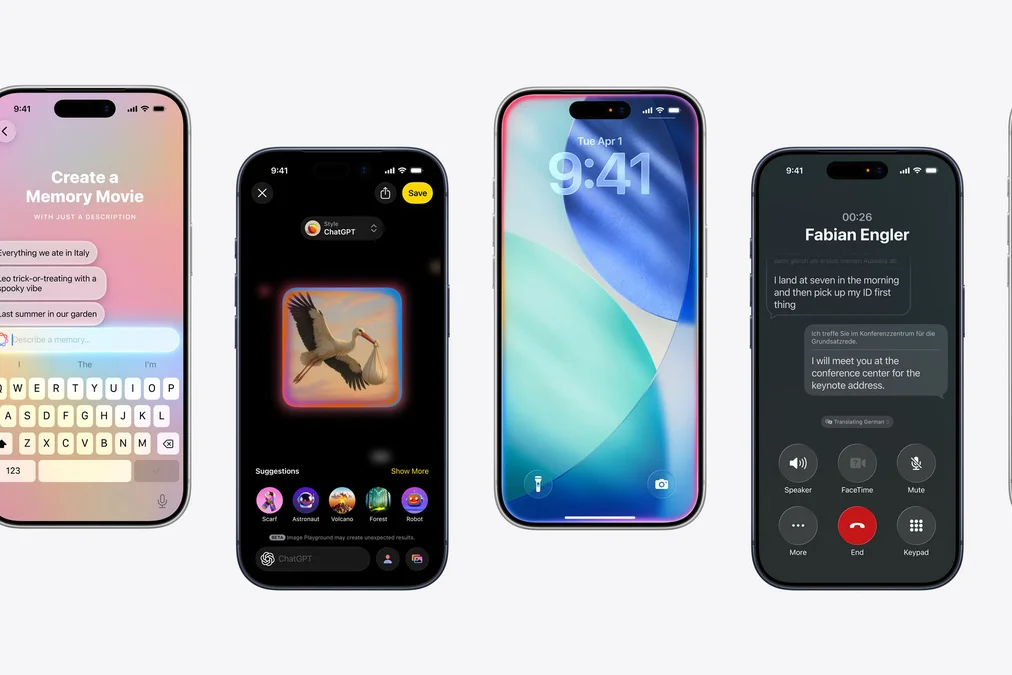
In recent years, artificial intelligence has become the center of the global technology industry. Whether people are deeply interested in AI or not, many have likely heard about the challenges Apple has faced with its Apple Intelligence ecosystem.
When launching the iPhone 16 series, Apple promised a completely new version of Siri that would be smarter, more personalized and better able to understand users. However, nearly a year and a half after that promise, the upgraded Siri has yet to appear.
During this waiting period, Apple announced an AI partnership with Google. At the same time, multiple reports suggested the company might transform Siri into a true chatbot capable of competing with leading AI platforms such as Gemini, ChatGPT and Claude.
Interestingly, a recent survey by PhoneArena indicates that if Apple truly follows this direction, what has been widely criticized as a delay could ultimately become an opportunity for a major comeback.
Chatbots are already part of daily life
Discussing a feature that does not yet exist may seem premature. However, the survey results reveal an important signal: Apple may be heading in the right direction with plans to upgrade Siri into a chatbot-style assistant.
In fact, the popularity of conversational AI has grown so rapidly that a more intelligent, chatbot-like Siri could become a powerful selling point for future iPhones, particularly the iPhone 18 generation.
A survey of more than 800 readers found that only about 10% said they never use chatbots because they do not trust AI. Another 9% said they rarely use them because they do not find them particularly useful.
The rest of the responses paint a very different picture. More than 47% of participants said they use chatbots “all the time.” For this group, interacting with AI has become a daily habit similar to checking email or browsing social media.
Around 20% reported that they frequently use chatbots at work, relying on AI to write content, analyze information or assist with complex tasks. Meanwhile, nearly 14% said they mainly use chatbots for entertainment, experimentation or casual conversation.
Taken together, roughly 80% of respondents indicated that chatbots have become part of their everyday lives. This clearly reflects a broader trend: conversational AI is gradually becoming as common as web browsers or messaging apps.
A major opportunity for Apple
Currently, there remains a noticeable gap between how people actually use AI and what smartphone manufacturers offer on their devices.
At the moment, Apple Intelligence mainly functions as an advanced text editing assistant or an enhancement to features that already existed. Tools such as live translation, the Clean Up function in Photos or Visual Intelligence are useful but not entirely groundbreaking.
Chatbots, however, represent a relatively new technological shift and still feel fresh to many users. If Apple deeply integrates a Gemini-based chatbot into iOS and allows it to access data across the device, it could create an entirely new way to interact with the iPhone.
Imagine users being able to talk directly with their phones to adjust settings, find emails, summarize messages or perform complex tasks through a simple conversation. As more people become accustomed to using chatbots, the idea of “talking to your entire phone” could become an appealing new experience.
One example of how powerful this concept can be is the rapid rise of the OpenClaw project. This AI tool combines access to multiple applications with a messaging-style interface, allowing users to control systems through conversation. The project became so popular that its creator was later recruited by OpenAI.
If Apple can bring a similar idea into its ecosystem - while maintaining the simplicity and smooth experience that iOS is known for, along with strong safety controls - the company could create the next major breakthrough in consumer technology.
After years of incremental hardware improvements, a chatbot-style Siri may represent the next big leap for the iPhone. Such a move could not only help Apple catch up in the AI race but also reshape how people interact with smartphones in the future.
Hai Phong
.svg)
