 Vietnamnet.vn

 Podcast



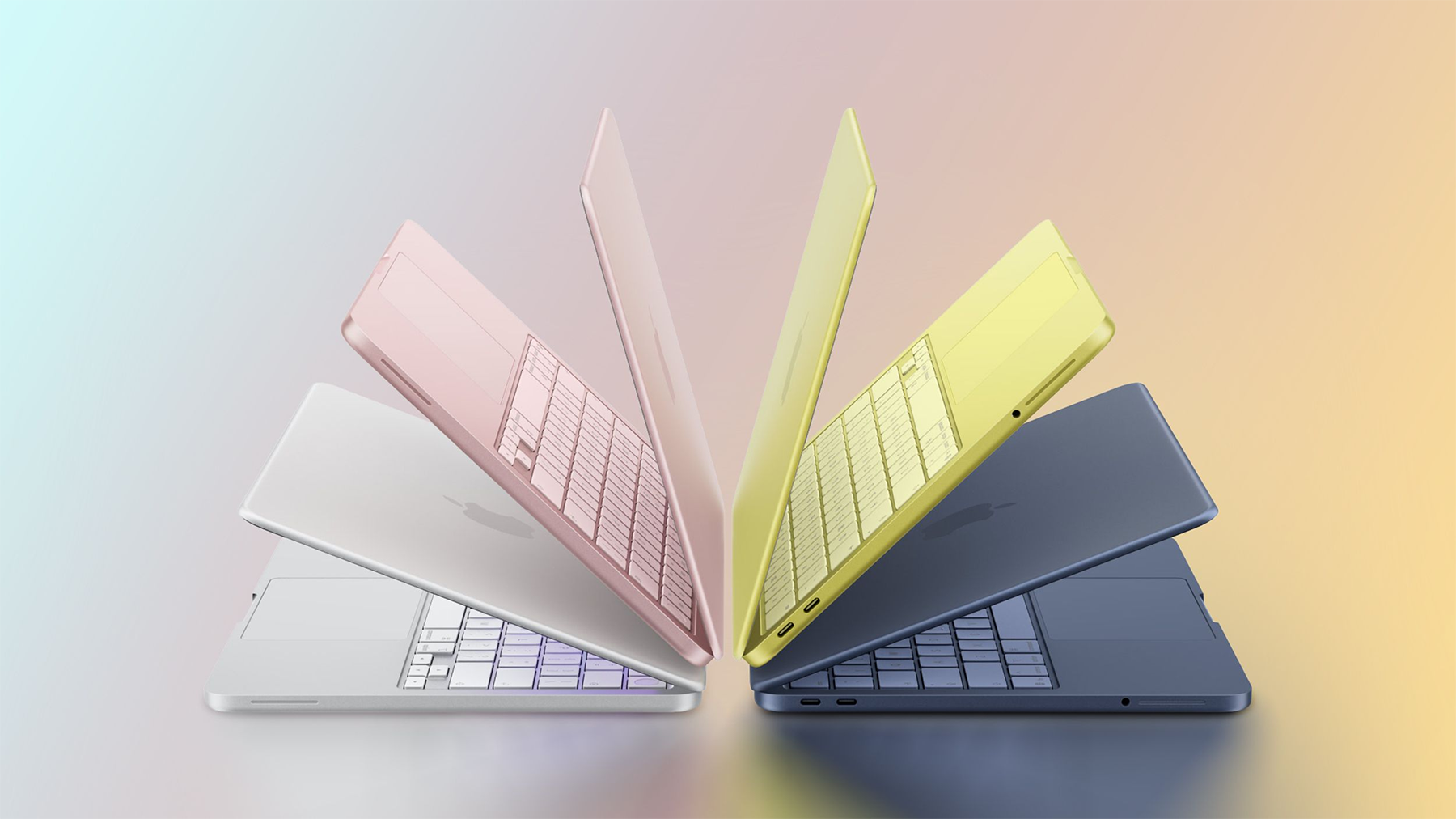
Laptop users appear to love Apple’s MacBook Neo.
But perhaps the people most obsessed with the device are not consumers - they are PC manufacturers.
When MacBook Neo launched in early March, reactions from critics were relatively muted.
Yet the past week has unexpectedly turned into a breakthrough moment for the device, despite Apple making no major announcements or marketing pushes.
Instead, Google and Microsoft unintentionally helped put the spotlight back on Neo through a series of awkward attempts to undermine it.
Both companies tried to prove they were not obsessed with Apple.
Ironically, the harder they tried, the more they appeared to confirm the opposite.
Google and Microsoft unintentionally promote MacBook Neo
The situation began when Google introduced Googlebook, an AI-focused device centered around Gemini AI.
A writer at PC World described it as “the world’s first computer designed against the very concept of the personal computer.”
Googlebook’s software philosophy revolves around an AI-first experience, placing artificial intelligence at the center of the product.
But in terms of hardware design and overall direction, the device bears a striking resemblance to MacBook Neo.
It feels less like an entirely new product category and more like an open attempt to recreate the success Apple achieved only months earlier.
Google has not yet released detailed specifications, only describing the device as a more “premium” version of a Chromebook.
However, the idea of “premium” within the Chromebook ecosystem remains relative, especially when many Chromebooks currently sell for under $200.
Given its role as a primarily AI-driven and Android-emulation device, analysts doubt manufacturers such as Acer or Dell will equip Googlebook with top-tier components.
Instead, observers expect a thin, lightweight and stylish laptop with an affordable price tag - likely around $599.
What stands out most is that Google does not appear to be creating an entirely new product philosophy.
Rather, the company seems to be trying to “capture lightning in a bottle” again by imitating the formula behind MacBook Neo.
While Google indirectly acknowledged Apple’s success by following its lead, Microsoft responded in a completely different way: attempting to prove MacBook Neo is not actually impressive.
In an almost comical move, Microsoft reportedly commissioned a whitepaper - an academic-style research document - dedicated to analyzing the issue in a serious and “objective” manner.
The paper concluded that consumers were mistaken in believing Neo was an excellent budget laptop.
According to the researchers, users would supposedly be better off buying significantly more expensive laptops made of plastic, loaded with pre-installed bloatware - or both.
What makes the situation even stranger is that Microsoft appeared to believe publishing the paper would help its position.
Because once a company hires experts to produce research convincing people not to buy a rival’s product, it has arguably already lost the argument.
And when a corporation spends money proving something “does not matter,” it often reveals just how threatening that thing truly is.
The entire PC industry feels unsettled
In reality, the awkward reactions from PC makers are not surprising.
MacBook Neo is not only selling well in the affordable laptop segment - it is making the entire PC industry uncomfortable.
From the moment it launched, many comparisons showed Neo outperforming Windows laptops in areas traditionally dominated by the PC ecosystem.
Since then, PC manufacturers have appeared increasingly anxious.
What makes the situation fascinating is that the industry cannot decide whether Neo is an exceptionally good product worth copying or a weak product unworthy of concern.
At times, the same company appears to argue both positions simultaneously.
Shortly after MacBook Neo launched, Asus CEO S.Y. Hsu described the device as “a shock to the entire industry,” while revealing that the broader PC ecosystem had been actively discussing how to compete against it.
Yet only moments later, he claimed Neo was mainly a device for entertainment and content consumption, suggesting it would not have a major impact.
Clearly, a product cannot simultaneously be an “industry shock” and something irrelevant.
Ultimately, the reactions from PC manufacturers and operating system companies reveal a deep philosophical divide.
Apple’s rivals seem fascinated by MacBook Neo.
They do not fully understand why the device succeeded, nor how Apple managed to create that success.
That may explain why no company has fully replicated the so-called “Apple formula” despite years of trying.
Yet they still cannot stop watching.
Again and again, technology companies end up making Apple the centerpiece of their own marketing campaigns.
Meanwhile, Apple largely remains focused on itself.
The company closely studies competitors and undoubtedly learns from innovations across the industry.
Apple acquires startups, recruits talent from rival firms and embraces emerging trends to shape its products.
But Apple treats competitors’ products as starting points to surpass - not templates to copy.
That may be one reason the company continues creating devices others feel compelled to imitate.
More importantly, they are products consumers are genuinely willing to buy.
Hai Phong
.svg)
