 Vietnamnet.vn

 Podcast



Apple is expected to part ways with Qualcomm modems on the iPhone 18 Pro Max, ushering in a new era of connectivity while strengthening the advantages of its tightly integrated ecosystem.
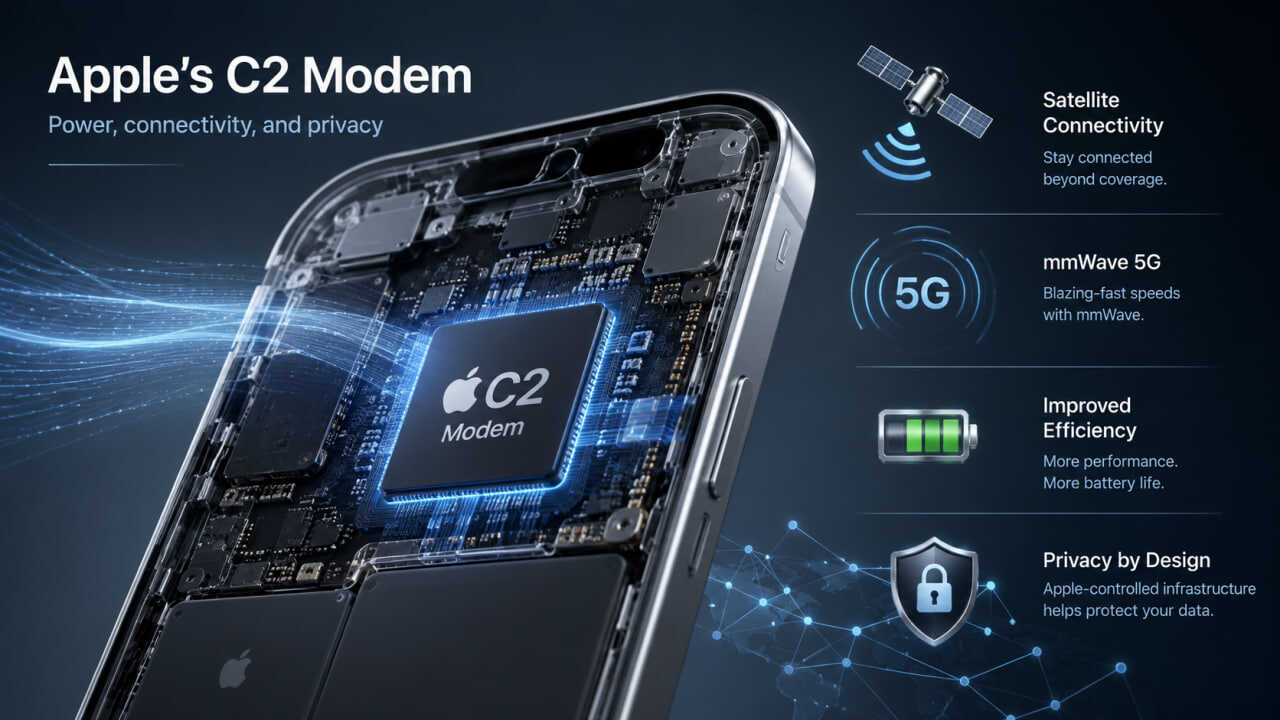
According to multiple sources within the technology industry, Apple is planning to equip the iPhone 18 Pro and iPhone 18 Pro Max with a next-generation 5G modem known as the C2. The move would mark another significant step in the company’s strategy to gain greater control over its core technologies by gradually replacing Qualcomm’s 5G solutions with in-house designs.
Following the debut of the C1 modem on the iPhone 16e and the upgraded C1X version on newer devices, Apple is now believed to be ready to bring its modem technology to its most premium smartphones. Beyond giving the company tighter integration between hardware and software, the C2 modem is expected to deliver three major benefits for iPhone 18 Pro Max users.
C2 modem could significantly improve battery life
One of the greatest strengths of Apple’s self-developed modems is their energy efficiency. Both the C1 and C1X have been praised for their low power consumption, and many industry observers expect the C2 to continue that trend.
Unlike Qualcomm modems, which are designed to support a wide range of devices and operating systems, Apple’s modem is optimized exclusively for its own ecosystem. The close integration between iOS, the A-series processor and the C-series modem allows Apple to manage resources more efficiently, helping extend battery life during mobile network use.
Apple has yet to provide specific figures on how much improvement the C2 modem could deliver. The company previously said that the C1 and C1X contributed to longer battery life on devices such as the iPhone 16e, iPhone Air and iPad Pro M5, though detailed performance data was not disclosed.
Recent reports suggest that the iPhone 18 Pro Max will feature a larger battery than the iPhone 17 Pro Max. Combined with the more energy-efficient C2 modem, users could see a meaningful increase in real-world battery life, particularly during data-intensive activities such as video streaming, FaceTime calls and online gaming.
Enhanced privacy through precise location restrictions
As privacy becomes an increasingly important concern for users, Apple is also leveraging its custom modem technology to introduce security features that would be difficult to implement through third-party solutions.
One such feature is "Limit Precise Location," introduced by Apple this year and currently available only on devices powered by Apple-designed modems.
According to Apple’s official documentation, mobile carriers can estimate a user's location based on the cellular towers their device connects to. The new feature reduces the precision of location data that carriers can collect, strengthening user privacy protections.
When enabled, the cellular network can still determine a user's general area, such as a district or neighborhood, but it becomes much more difficult to pinpoint an exact address or specific location.
Notably, the feature does not affect signal quality, network performance or everyday usage. Users can continue making calls, sending messages and accessing the internet normally while benefiting from additional privacy safeguards.
At present, the feature is supported only on a limited number of devices, including the iPhone Air, iPhone 17e, iPhone 16e and iPad Pro M5. If the iPhone 18 Pro Max adopts the C2 modem, Apple’s flagship smartphone line will likely gain access to this enhanced privacy layer as well.
More reliable connectivity in weak or congested networks
The third major advantage of the C2 modem lies in its ability to intelligently manage data traffic under challenging network conditions.
In real-world situations, users often encounter network congestion at stadiums, airports, train stations, shopping centers or large public events. Even when signal bars appear strong, internet speeds can drop dramatically due to heavy demand on the network.
Apple says that through deep integration between the modem and the device processor, the iPhone can identify which types of data should receive priority in real time. When the network becomes congested, the processor can communicate directly with the modem to prioritize latency-sensitive activities such as video calls, messaging and interactive applications.
This allows the device to remain more responsive, reducing lag and maintaining a smoother user experience even in environments where network quality is less than ideal.
Such optimization is difficult to achieve when using third-party modem solutions, as coordination between components from different manufacturers rarely reaches the same level as a fully integrated system designed by a single company.
Bringing the C2 modem to the iPhone 18 Pro and iPhone 18 Pro Max would therefore represent more than a simple hardware upgrade. It would mark another milestone in Apple’s long-term strategy to control the key technologies powering its products, much like its successful transition from Intel processors to Apple Silicon chips across the Mac lineup.
Hai Phong
.svg)
