 Vietnamnet.vn

 Podcast



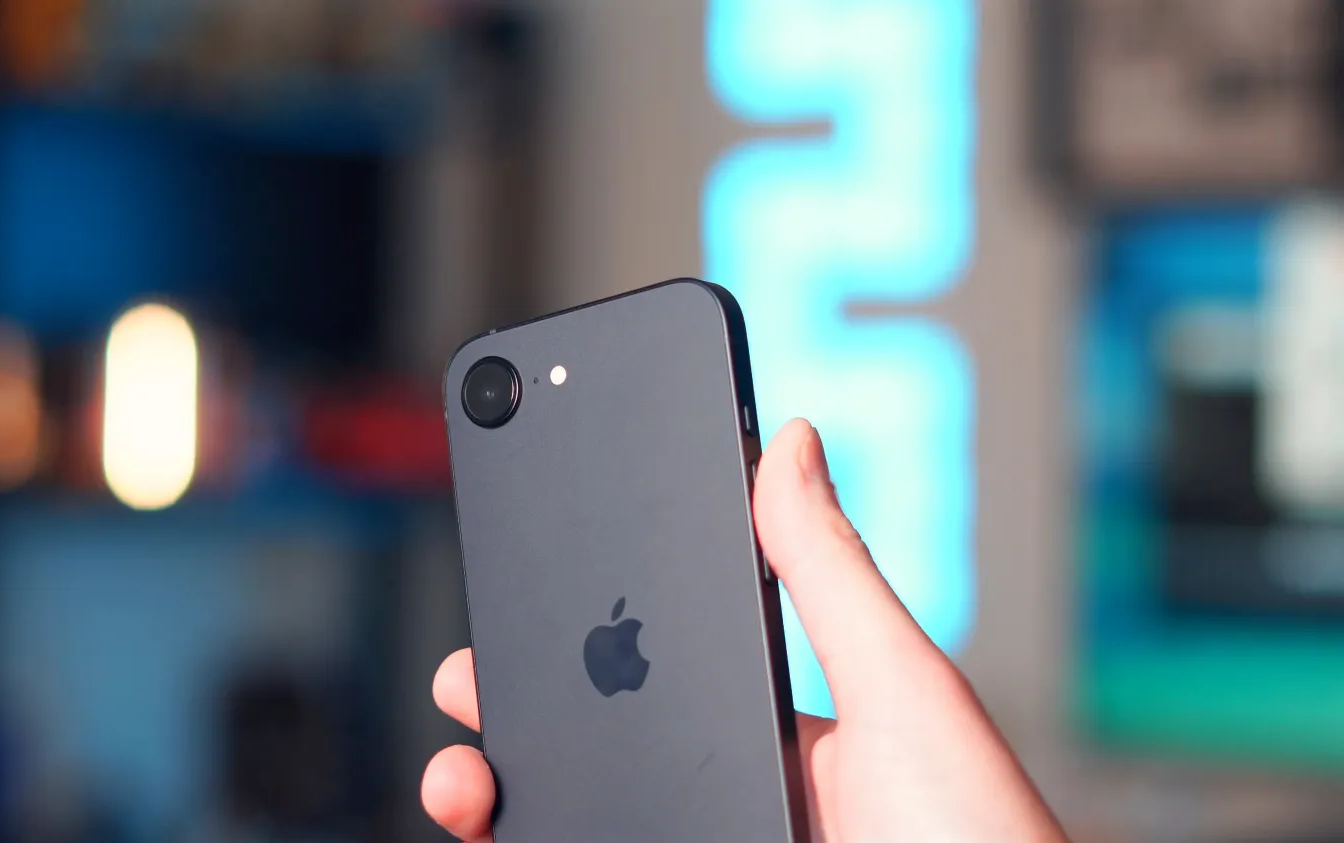
This year’s upgraded version introduced the A19 chip, larger storage options and MagSafe support, but the overall product positioning has remained largely unchanged.
It is still viewed as a slightly more accessible iPhone rather than a device that fundamentally redefines value in the budget segment.
Sales performance has been relatively solid, but not enough to create a major “switching effect” from Android to iPhone.
That stands in sharp contrast to what the MacBook Neo achieved in the PC market.
There was something distinctly different about the MacBook Neo launch earlier this year that the iPhone 16e never managed to replicate.
While the iPhone 16e was perceived as “a decent phone at a decent price,” the MacBook Neo was widely seen as “a very good laptop at an exceptional price.”
MacBook Neo shattered consumer expectations regarding Apple’s ability to deliver an affordable product.
Meanwhile, the iPhone 16e - and even the rumored iPhone 17e - appear to follow a familiar formula: slightly stripped-down iPhones sold at somewhat lower prices, rather than products that genuinely disrupt the market.
The core issue is that Apple still seems to approach the budget segment by repurposing existing components instead of designing a completely new device optimized from the ground up for lower production costs, similar to the strategy used for MacBook Neo.
A cheaper iPhone could become a true game changer
If Apple genuinely wants to penetrate deeper into Android territory, the company may need a far more aggressive strategy.
Under the leadership of John Ternus, such a shift could become possible.
Instead of continuing the iPhone 16e direction, Apple could develop a model such as the iPhone 18e - or perhaps a device branded “iPhone Neo” - specifically engineered to minimize cost while preserving the core iPhone experience.
To achieve that, Apple could accept several reasonable compromises.
For example, the company might use an LCD display instead of OLED to reduce manufacturing costs.
The camera could drop from a 48MP sensor to 12MP, while the processor might rely on an older chip such as the A18 rather than the latest A20 generation.
Another intriguing possibility would be a return to a compact 5.8-inch form factor aimed at users who still prefer smaller smartphones - a category that has nearly disappeared from today’s market.
Despite those reductions, Apple would likely retain aluminum and glass construction to preserve the premium feel that remains one of the iPhone’s biggest advantages over many low-cost Android devices.
The key factor, however, would be pricing.
If Apple could produce a truly compelling iPhone at around $399, the impact on the smartphone market could be enormous.
iPhone Neo could become Apple’s strategic weapon in emerging markets
In the United States, smartphone pricing matters less because most consumers purchase devices through installment plans or carrier subsidies.
But in many other regions - especially developing markets - iPhones remain prohibitively expensive for a large share of consumers.
That is one reason Android continues to dominate globally.
It is not necessarily because consumers dislike iPhones, but because many simply cannot afford them.
An iPhone priced around $399 could dramatically reshape that dynamic.
It could help Apple reach millions of new customers across Southeast Asia, India, South America and Africa -markets where buyers are extremely price-sensitive.
More importantly, such a device would not necessarily replace the iPhone 18e.
Apple could sell both models simultaneously to target different customer groups.
The iPhone 18e could appeal to buyers seeking a more premium experience, while the “iPhone Neo” could become Apple’s first truly mass-market iPhone.
If that happens, Apple may successfully replicate the same strategy that helped MacBook Neo generate major momentum in the PC market: bringing the core Apple experience to far more people at a previously unimaginable price point.
And perhaps that is exactly the breakthrough Apple needs to persuade a new generation of Android users to join its ecosystem over the coming decade.
Hai Phong
.svg)
